

Choosing a name for a child can feel like a small decision with a lasting meaning. Parents often want a name that sounds beautiful but also carries a message of faith, hope, or purpose. If you are considering the name Theo, you may be asking, “What does Theo mean in the Bible?” and “Does Theo have a biblical meaning?”
The short answer is important: Theo is not a personal name found in the Bible, but it is closely connected to the Greek word theos, meaning “God.”
The name Theo is also commonly used as a short form of Theodore, a Greek name meaning “gift of God.” The Greek element theo- comes from theos, the New Testament word commonly translated “God.”
That gives the name a meaningful Christian connection, but we should be careful not to claim that the Bible directly defines the name Theo.
What Does Theo Mean in the Bible?

Theo does not appear as a personal name in the Bible. It is a modern given name and is often used as a shortened form of Theodore. Theodore comes from the Greek Theodoros, formed from theos, meaning “God,” and doron, meaning “gift.” Thus, Theodore traditionally means “gift of God” or “God’s gift.”
Theo itself is therefore best understood through its Greek root rather than as a biblical name.
The Greek word θεός (theos) is an important word in the New Testament. It normally refers to God, the one true God, although its meaning can depend on context. The word occurs frequently throughout the Greek New Testament.
This distinction matters.
It would be inaccurate to say, “The Bible says Theo means this.” The Bible does not provide a definition of Theo as a personal name. A more accurate statement is:
Theo is a Greek-rooted name associated with theos, meaning “God,” while its longer form Theodore means “gift of God.”
For a Christian family, this can make Theo a beautiful reminder of God’s place at the center of life.
Understanding the Greek Meaning Behind Theo
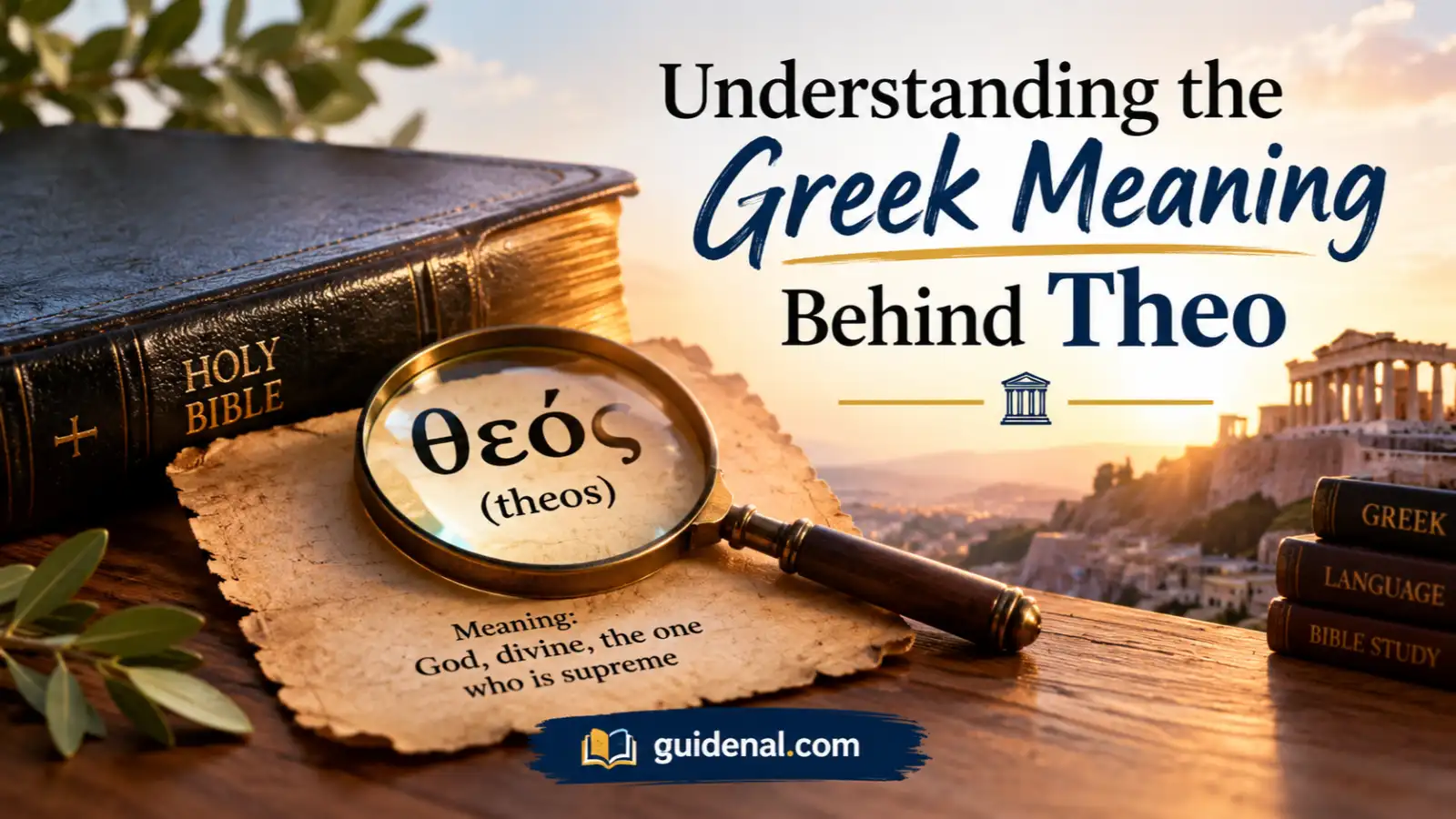
The strongest biblical connection to Theo is the Greek word theos.
In the New Testament, theos is commonly translated as God. William Mounce’s Greek New Testament Dictionary defines theos primarily as God, usually referring to the one true God.
The word appears in some of the most important passages in Christian theology.
For example, John begins his Gospel by saying:
“In the beginning was the Word, and the Word was with God, and the Word was God.” John 1:1, KJV
The Greek wording in this verse uses theos in its declaration about the Word. John then identifies the Word as the One who became flesh, pointing readers toward Jesus Christ.
This gives the Greek root behind Theo a deep biblical setting.
However, a name’s linguistic meaning should not be confused with a prophecy about the person who carries it. Naming a child Theo does not guarantee that the child will automatically possess a certain spiritual character. Scripture teaches that identity and character are shaped through God’s grace, faith, obedience, wisdom, and relationship with Him.
The value of a Christian name is often found in the truth it can remind us to remember.
Theo can remind a believer:
- God is the Creator.
- God is worthy of worship.
- Every good gift ultimately comes from God.
- Jesus Christ reveals God to us.
- Human life has purpose because it comes from God.
- Christians are called to live with gratitude and faith.
Is Theo a Biblical Name?
No, Theo is not a biblical personal name in the Bible.
This is one of the most important points to understand when researching the name.
The Bible contains many Greek names, especially in the New Testament. Names such as Peter, Andrew, Philip, Thomas, Timothy, Titus, and Theophilus appear in Scripture. But Theo itself is not presented as a biblical person’s name.
Theo is commonly used as a short form of Theodore. Theodore is a Greek name meaning “gift of God.”
There are also other names beginning with the Greek element theo-. For example, Theophilus contains the same Greek element connected with theos. The name Theophilus is associated with the Greek words for “God” and “friend” or “lover,” although the exact nuance of ancient names can be discussed in different ways.
So there is a biblical Greek connection, even though Theo itself is not a biblical name.
That makes it appropriate to describe Theo as a Christian-associated Greek name, rather than claiming it is a name directly found in Scripture.
Best Bible Verses Connected to the Meaning of Theo
Because Theo is associated with the Greek word theos and Theodore means “gift of God,” the most helpful Bible verses are passages about God’s identity, creation, gifts, grace, and our response to Him.
The following verses use the King James Version (KJV) consistently.
1. Genesis 1:1 — God Is the Creator
“In the beginning God created the heaven and the earth.”
Genesis begins with God.
Before humanity appears, before nations develop, and before human history unfolds, Scripture presents God as the Creator.
What This Verse Means
The Bible does not begin by trying to prove God’s existence through a philosophical argument. It simply presents God as the One who created everything.
This connects naturally with the theos meaning behind Theo. God is not merely one part of creation. He is the Creator.
Life Application
If Theo reminds someone of God, Genesis 1:1 gives that reminder a strong foundation: God is the source of creation and the One worthy of our trust.
2. Deuteronomy 6:4 — There Is One God
“Hear, O Israel: The Lord our God is one Lord:”
This statement, known as the Shema, was central to Israel’s faith. It called God’s people to recognize the Lord as the one true God.
What This Verse Means
The biblical meaning of God is not vague spirituality. Scripture speaks about the Lord as the one true God who enters into relationship with His people.
Jesus later connected this command with the greatest commandment: loving God wholeheartedly.
Life Application
A name associated with God should encourage more than admiration for a word. It can become a reminder to love God with heart, soul, mind, and strength.
3. Psalm 100:3 — We Belong to God
“Know ye that the LORD he is God: it is he that hath made us, and not we ourselves; we are his people, and the sheep of his pasture.”
Psalm 100 connects God’s identity as Creator with His relationship with His people.
What This Verse Means
We did not create ourselves. Our existence is not an accident without meaning. Scripture presents human beings as God’s creatures who can know and worship their Creator.
Life Application
Theo can serve as a simple reminder that life is received, not self-created. That truth encourages humility and gratitude.
4. Isaiah 43:10 — Knowing God
“Ye are my witnesses, saith the LORD, and my servant whom I have chosen: that ye may know and believe me, and understand that I am he…”
God’s desire was for His people to know and believe Him.
What This Verse Means
Biblical faith is not merely knowing facts about God. It involves trusting Him and recognizing who He is.
Life Application
If the name Theo reminds you of God, let it point beyond a dictionary definition. Let it encourage a life of knowing God personally through His Word.
5. Mark 12:29 — Jesus Affirms the One God
“The first of all the commandments is, Hear, O Israel; The Lord our God is one Lord:”
Jesus quoted the Shema when answering a question about the greatest commandment.
What This Verse Means
Jesus did not separate Christian discipleship from the Old Testament revelation of God. Instead, He affirmed it and taught that loving God is central to faithful living.
Life Application
A meaningful name should point toward meaningful living. Theo can remind a Christian that love for God should influence everyday decisions.
6. John 1:1 — The Word Was God
“In the beginning was the Word, and the Word was with God, and the Word was God.”
John 1:1 is one of the clearest New Testament passages connecting the identity of Jesus with the divine nature. The Greek word theos is used in this verse.
What This Verse Means
John presents Jesus as the eternal Word who was with God and was God. Later in the same chapter, John says the Word became flesh.
This is foundational to Christian belief about Jesus Christ.
Life Application
Theo’s connection with theos can remind Christians that the New Testament calls them to look to Christ. The Christian faith is not simply belief in an abstract deity. It centers on Jesus Christ.
7. John 1:14 — God Revealed in Christ
“And the Word was made flesh, and dwelt among us… full of grace and truth.”
John moves from the eternal Word to the incarnation.
What This Verse Means
Christianity teaches that Jesus Christ entered human history. God was not distant from human suffering and weakness. In Christ, God came among His people.
Life Application
This offers deep encouragement. When life feels painful or confusing, Christians can remember that Jesus understands humanity from within our world.
8. John 20:28 — Thomas Calls Jesus God
“And Thomas answered and said unto him, My Lord and my God.”
Thomas made this confession after encountering the risen Jesus.
What This Verse Means
The resurrection changed Thomas’s understanding of Jesus. His response was worshipful recognition.
This is another important New Testament passage in which Jesus is directly addressed as God.
Life Application
Theo can remind Christians not simply to talk about God but to respond to Him with faith and worship.
9. Acts 17:24 — God Made the World
“God that made the world and all things therein, seeing that he is Lord of heaven and earth…”
Paul spoke these words in Athens while addressing people who worshiped many gods.
What This Verse Means
Paul presented the true God as the Maker of heaven and earth. God is not confined to temples or human-made images.
Life Application
Your circumstances may change, but the Creator remains Lord. This can give Christians stability when life feels uncertain.
10. Acts 17:25 — God Gives Life
“Neither is worshipped with men’s hands, as though he needed any thing, seeing he giveth to all life, and breath, and all things;”
This verse provides a beautiful connection with the idea of a gift from God.
What This Verse Means
God is not dependent upon humanity. Instead, humanity depends upon God. Life, breath, and everything we have ultimately depend upon His provision.
Life Application
This encourages gratitude. Instead of taking life for granted, Christians can recognize God’s generosity in ordinary blessings.
11. Romans 8:28 — God Works for Good
“And we know that all things work together for good to them that love God, to them who are the called according to his purpose.”
Paul wrote this in a chapter that addresses suffering, hope, the Holy Spirit, and God’s saving purpose.
What This Verse Means
Romans 8:28 does not promise that everything that happens is good. Scripture clearly teaches that suffering and evil are real.
Instead, Paul assures believers that God can work through all circumstances for the good of those who love Him.
Life Application
When life does not make sense, remember that God’s purposes are bigger than the moment you can see.
12. 1 Corinthians 8:6 — One God and One Lord
“But to us there is but one God, the Father, of whom are all things, and we in him; and one Lord Jesus Christ, by whom are all things…”
Paul was teaching Christians how to think about idols and false gods.
What This Verse Means
The passage places Christian faith within the truth that there is one God. It also speaks of Jesus Christ in relation to creation and the believer’s relationship with God.
Life Application
Theo can point toward a life centered on God rather than idols, status, money, success, or human approval.
13. Ephesians 4:6 — One God and Father
“One God and Father of all, who is above all, and through all, and in you all.”
Paul emphasizes unity among God’s people.
What This Verse Means
Christian identity is not built around social status or human achievement. God is the Father of His people, and believers are called to walk in unity.
Life Application
Let the meaning associated with Theo encourage humility. Our worth does not come from being better than others.
14. Titus 2:13 — Our Great God and Savior
“Looking for that blessed hope, and the glorious appearing of the great God and our Saviour Jesus Christ;”
Paul connects Christian living with the hope of Christ’s appearing.
What This Verse Means
Christianity looks backward to Christ’s first coming and forward to His glorious appearing. Hope is not wishful thinking. It is anchored in God’s promises.
Titus 2:13 is also one of the passages commonly discussed in relation to the New Testament’s presentation of Jesus as God.
Life Application
A Christian life should be shaped by hope. Whatever today brings, Christ remains the believer’s ultimate hope.
15. Hebrews 1:8 — The Son Is Addressed as God
“But unto the Son he saith, Thy throne, O God, is for ever and ever: a sceptre of righteousness is the sceptre of thy kingdom.”
Hebrews presents Jesus as superior to angels and connects Him with Old Testament Scripture.
What This Verse Means
The writer emphasizes the unique status of the Son. The passage is an important part of the New Testament’s teaching about Christ’s divine identity. ESV resources also identify Hebrews 1:8 among passages where theos is applied to Jesus.
Life Application
Christ is not merely an inspiring teacher. Christians worship Him as Lord and trust Him as Savior.
16. 1 John 4:8 — God Is Love
“He that loveth not knoweth not God; for God is love.”
John connects knowing God with the practice of love.
What This Verse Means
“God is love” does not mean that love is simply whatever a person wants it to be. The surrounding passage defines Christian love through God’s action in sending His Son.
Life Application
A life associated with God should increasingly display love, patience, kindness, forgiveness, and truth.
17. Philippians 4:6–7 — God’s Peace
“Be careful for nothing; but in every thing by prayer and supplication with thanksgiving let your requests be made known unto God.”
“And the peace of God, which passeth all understanding, shall keep your hearts and minds through Christ Jesus.”
Paul does not tell believers to pretend that problems do not exist.
What This Verse Means
Instead, Christians are invited to bring their worries to God through prayer, supplication, and thanksgiving.
Life Application
When anxiety rises, turn the meaning behind Theo into a practical response: remember God, pray to God, and trust God.
Biblical Themes Connected to the Meaning of Theo
God as Creator
The clearest biblical theme connected with theos is God’s identity as Creator.
Genesis 1:1 begins with God creating heaven and earth. John 1 connects creation with the eternal Word. The New Testament therefore develops the Old Testament’s creation theme while pointing believers toward Christ.
This teaches humility. We are creatures before we are achievers.
God as the Giver of Life
Acts 17:25 says that God gives “life, and breath, and all things.”
This is especially meaningful when Theodore’s traditional meaning, “gift of God,” is considered.
The name does not prove that a particular child has been specially promised a certain destiny. But it can serve as a beautiful reminder that life itself is received from God.
Grace and God’s Gifts
Scripture repeatedly describes God’s grace as something received rather than earned.
Ephesians 2:8–9 teaches that salvation is by grace through faith and not the result of human boasting.
This is an important Christian distinction. A person’s worth does not come from having a meaningful name. Worth comes from being created by God and, for believers, being redeemed through Christ.
Faith and Trust
A name connected with God can become a quiet reminder to trust Him.
Proverbs 3:5–6 calls God’s people to trust the Lord rather than depending entirely upon their own understanding.
Faith does not mean having every answer. It means learning to trust the God who sees what we cannot.
Hope in Christ
The New Testament repeatedly connects faith with hope.
Titus 2:13 calls Christ the believer’s blessed hope. Christian hope rests on God’s character and promises, not on favorable circumstances.
This is one reason a God-centered name can be meaningful. It can remind someone where lasting hope is found.
Biblical Symbolism Connected to Theo
Theo does not have a specific biblical symbol because it is not itself a biblical name.
Still, several biblical images beautifully communicate ideas associated with God and His gifts.
Light
The Bible frequently uses light as an image of God’s revelation and guidance.
Psalm 119:105 says:
“Thy word is a lamp unto my feet, and a light unto my path.”
God’s Word helps believers walk faithfully when the road ahead is unclear.
Shepherd
Psalm 23 presents the Lord as a shepherd.
A shepherd guides, protects, feeds, and watches over sheep. Jesus later identifies Himself as the Good Shepherd in John 10.
This picture reminds Christians that God’s care is personal.
Bread
Jesus used bread to explain important truths about Himself. In John 6, He described Himself as the bread of life.
Bread was basic to daily life in the ancient world. It therefore became a powerful picture of God’s provision and Christ’s role in giving spiritual life.
Vine and Fruit
Jesus said in John 15 that He is the true vine and His disciples are the branches.
This teaches dependence.
A branch cannot produce fruit by separating itself from the vine. Likewise, Christian fruitfulness comes through remaining in Christ.
This connects naturally with the name Theo: a God-centered life should produce God-honoring fruit.
Common Misconceptions About Theo
Does Theo Mean “God’s Gift” Directly?
Not exactly.
Theodore means “gift of God,” while Theo is commonly a shortened form of Theodore. Theo itself is connected to the Greek theos, meaning “God.”
Therefore, “God” is the more direct meaning of the Greek root, while “gift of God” belongs specifically to Theodore.
Is Theo Mentioned in the Bible?
No. Theo is not a personal name recorded in the Bible.
However, the Greek root theos is an important biblical word, especially throughout the New Testament.
Is Theo a Christian Name?
Theo can certainly be used as a Christian name, especially because of its Greek connection to God and its common relationship to Theodore.
But a name is not what makes someone a Christian.
Christian identity is rooted in faith in Jesus Christ, God’s grace, repentance, and new life through the Holy Spirit.
Does the Name Theo Predict a Child’s Future?
No.
The Bible does not teach that the meaning of a person’s name determines their destiny.
A meaningful name can provide a good reminder, but Scripture calls every person to respond personally to God.
What Can Christians Learn From the Meaning of Theo?
1. Remember Who Created You
Genesis 1:1 points us back to God as Creator.
Your identity does not begin with your job, education, achievements, or other people’s opinions.
You belong to the God who made you.
2. Receive Life With Gratitude
Acts 17:25 reminds us that God gives life and breath.
Even ordinary things can become reasons for thanksgiving.
3. Keep Christ at the Center
John 1 and John 20 point Christians toward the divine identity of Jesus.
A God-centered life must ultimately be a Christ-centered life.
4. Do Not Confuse a Name With Faith
A beautiful name cannot replace faith.
Someone named Theo still needs God’s grace, God’s Word, prayer, repentance, and a living relationship with Christ.
5. Let Your Life Match Your Confession
If we say we belong to God, our lives should increasingly show love, humility, holiness, patience, and obedience.
Our character gives meaning to the way we live.
6. Trust God During Difficult Seasons
Romans 8:28 gives hope to believers who face hardship.
God does not promise that every circumstance will be easy. He promises that He remains at work according to His purpose.
7. Remember That God Gives Good Gifts
James 1:17 teaches that every good and perfect gift comes from above.
This does not mean every pleasant thing is automatically God’s specific will. It means believers can recognize God’s generosity and respond with gratitude.
Is Theo a Good Name for a Christian Baby?
Yes, Theo can be a meaningful choice for a Christian family.
It has a clear Greek connection to theos, meaning God, and it is commonly used as a short form of Theodore, meaning “gift of God.”
The most important consideration, however, is not whether the name guarantees spiritual blessing.
It does not.
A Christian parent can choose Theo because the name provides a simple reminder of something much greater than the name itself: God is the Creator, giver of life, source of grace, and the One worthy of worship.
That is a beautiful truth to place behind a child’s name.
FAQs:
What does Theo mean in the Bible?
Theo is not a personal name found in the Bible. It is commonly associated with the Greek theos, meaning “God.” Theo is also often used as a short form of Theodore, a Greek name traditionally meaning “gift of God.”
Is Theo a biblical name?
Theo itself is not a biblical personal name. However, its Greek root theos is a major New Testament word for God.
What is the spiritual meaning of Theo?
A useful Christian interpretation of Theo is “God” through its Greek root. If Theo is used as a shortened form of Theodore, the related meaning is “gift of God.”
Does Theo mean gift from God?
Theo itself most directly connects to the Greek word theos, meaning God. “Gift of God” is the traditional meaning of Theodore, the longer name from which Theo is commonly shortened.
What Bible verse relates to the name Theo?
John 1:1 is especially relevant because it uses the Greek word theos in describing the Word: “the Word was God.” Other helpful passages include Genesis 1:1, Deuteronomy 6:4, John 20:28, and Acts 17:25.
Is Theo a good Christian name?
Yes. Theo has a strong Greek connection to the word for God and is commonly associated with Theodore, meaning “gift of God.” The name can serve as a meaningful reminder of faith, gratitude, and dependence on God.
Is Theodore in the Bible?
The name Theodore itself is not recorded as the name of a biblical character. It is a Greek name that became widely used in Christian history. Its traditional meaning comes from theos (“God”) and doron (“gift”).
What does the Greek word theos mean?
Theos (θεός) is the Greek word commonly translated “God” in the New Testament. It usually refers to the one true God, although context can sometimes refer to a deity or false god.
Conclusion:
The meaning of a name can be interesting, but the truth behind the name matters far more.
Theo is not a personal name found in Scripture. Its biblical connection comes from the Greek word theos, meaning “God,” while its common longer form, Theodore, carries the meaning “gift of God.”
That gives the name a beautiful Christian association.
But the greatest lesson is not about the name Theo.
It is about God Himself.
He is the Creator who made us. He is the Father who cares for His children. And he is the God revealed in Scripture. Christians believe He has made Himself known supremely through Jesus Christ. He gives grace, offers forgiveness, strengthens His people, and calls them to walk by faith.
So if you are considering the name Theo for a child, it can be a simple reminder of a profound truth:
Life is a gift, and the Giver is worthy of our gratitude.
And when life becomes difficult, we can follow Paul’s encouragement:
“And the peace of God, which passeth all understanding, shall keep your hearts and minds through Christ Jesus.” Philippians 4:7, KJV
Let the name point beyond itself.
Let it point to God.

I am a content writer at Guidenal, where I create easy-to-understand, well-researched, and reader-focused guides inspired by biblical teachings. Working alongside Naqash Ayub, I strive to deliver trustworthy content that helps readers grow in faith and find practical answers from Scripture.