
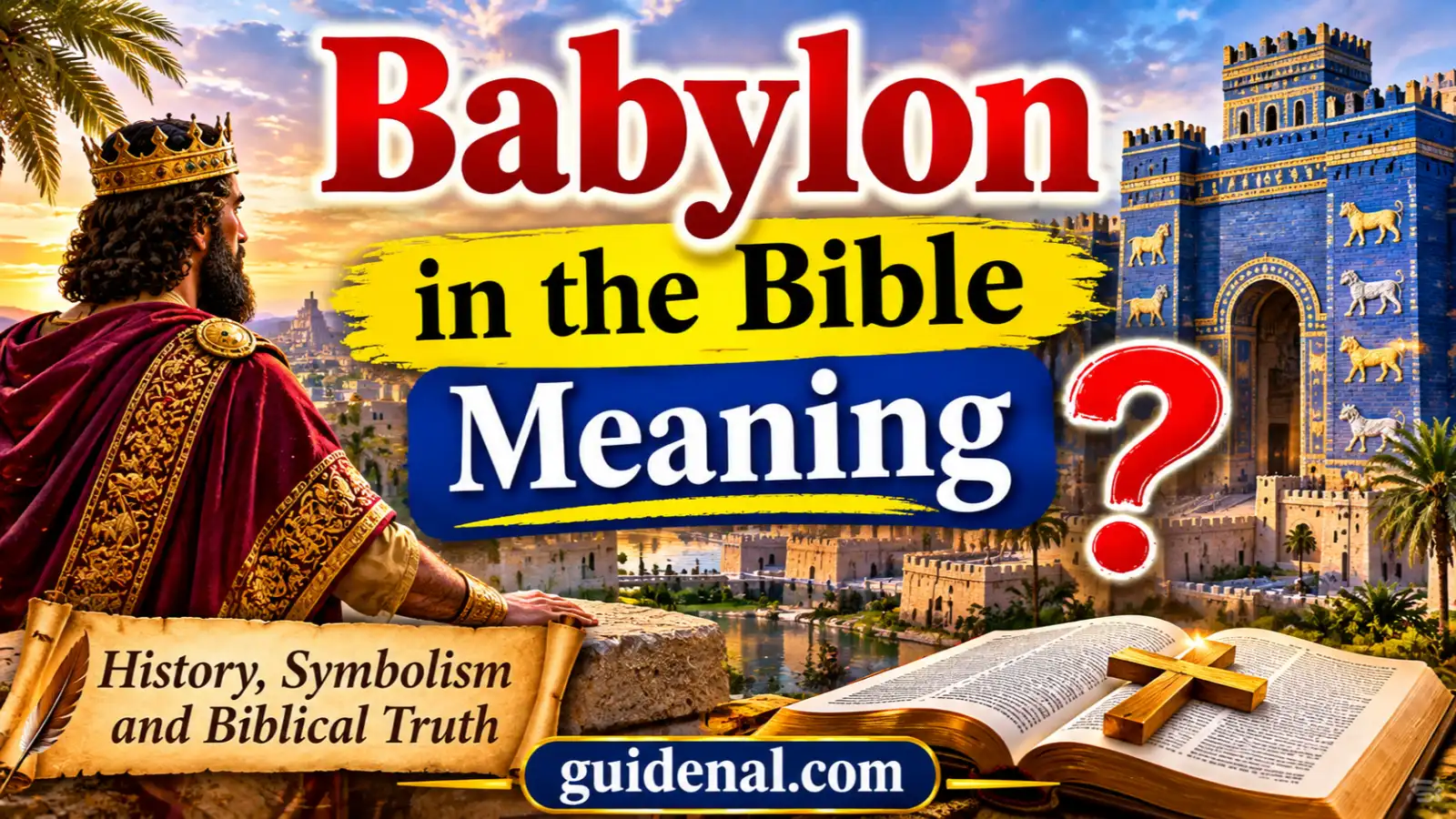
Babylon shows up more often in Scripture than almost any other city and it’s rarely a flattering mention. The babylon in the bible meaning stretches far past a historical empire on the Euphrates River; it becomes shorthand for pride, exile, and rebellion against God.
From the Tower of Babel to the fall of “Babylon the Great” in Revelation, this one name threads through the entire biblical story, marking moments when human ambition collides with divine judgment. Many readers assume Babylon is simply a place on a map, but its role runs much deeper, shaping how later writers described sin, captivity, and ultimate downfall.
Grasping this layered meaning makes confusing prophetic passages click into place and explains why Babylon keeps resurfacing centuries after its empire actually crumbled.
Understanding Babylon in the Bible
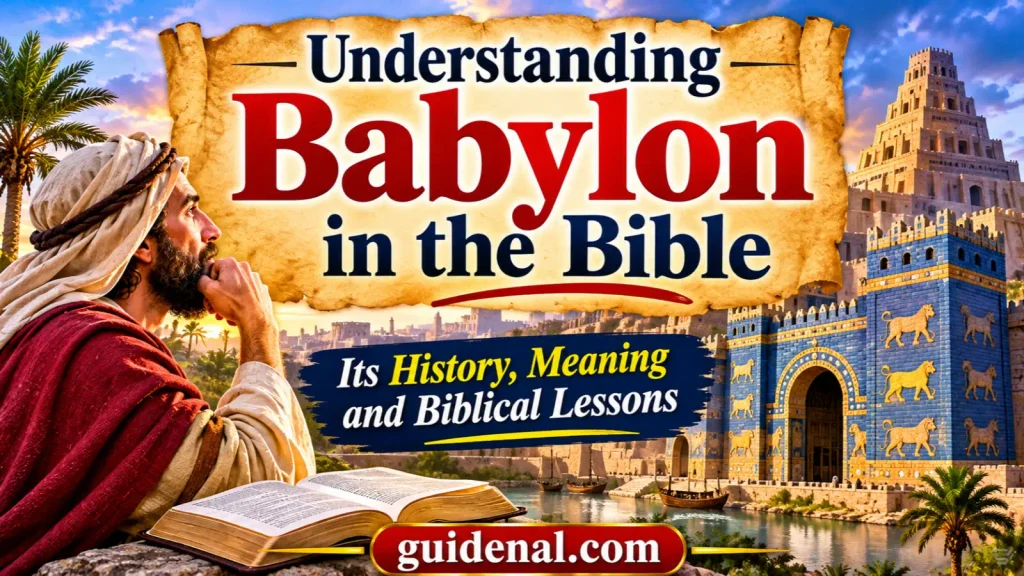
Babylon was an ancient city located in Mesopotamia, near the Euphrates River in what is now modern-day Iraq. It became one of the most powerful cities in the ancient world. The Bible mentions Babylon in both the Old and New Testaments.
The name first appears in connection with the land of Shinar in Genesis 10:10. Later, Genesis 11 describes how people gathered there to build a city and a tower that would reach the heavens.
Their goal was to make a name for themselves. Instead of honoring God, they trusted their own strength. God confused their language and scattered them across the earth. This event became known as the Tower of Babel.
Babylon later became the center of a powerful empire under rulers such as Nebuchadnezzar. In 586 BC, the Babylonian army destroyed Jerusalem and Solomon’s temple. Many people from Judah were taken into exile.
This was a painful period for God’s people. However, God did not abandon them. Through prophets such as Jeremiah, Isaiah, and Daniel, He continued to speak about judgment, hope, restoration, and His sovereign power.
Babylon also has an important place in the New Testament. In Revelation, it becomes a symbol of pride, corruption, idolatry, and opposition to God.
Therefore, Babylon has two important meanings in Scripture:
- Historical meaning: An actual ancient city and empire that conquered Judah and took many Israelites into exile.
- Spiritual meaning: A symbol of human pride, rebellion, false worship, corruption, and worldly power that stands against God’s ways.
These meanings help us understand why Babylon is such an important part of the Bible’s larger message.
Best Bible Verses About Babylon and Their Meanings
The following 20 Bible verses reveal Babylon’s history, spiritual significance, judgment, and connection to God’s promises.
All Bible quotations below are from the King James Version (KJV).
1. Genesis 11:4 – The Tower of Babel
Bible Verse:
And they said, Go to, let us build us a city and a tower, whose top may reach unto heaven; and let us make us a name, lest we be scattered abroad upon the face of the whole earth.
What This Verse Means:
This verse describes the people who gathered in the land of Shinar to build a great city and tower. Their desire was to make a name for themselves and avoid being scattered.
Their actions showed pride and a desire for independence from God’s purpose. Instead of following God’s command to fill the earth, they wanted to remain together under their own plans.
This event introduces one of the central spiritual lessons connected with Babylon: human pride can lead people away from God.
Life Application:
Do not allow personal success, recognition, or ambition to become more important than God. Let your goals honor Him rather than simply build your own reputation.
2. Genesis 11:9 – The Meaning of Babel
Bible Verse:
Therefore is the name of it called Babel; because the LORD did there confound the language of all the earth: and from thence did the LORD scatter them abroad upon the face of all the earth.
What This Verse Means:
The name Babel is connected in this passage with the confusion of languages. God confused the people’s speech because of their united rebellion.
This event explains why the people could no longer understand one another and were scattered across the earth.
Babel also provides an important biblical background for the later city of Babylon. The connection between these accounts helps readers recognize the recurring theme of human pride and God’s authority.
Life Application:
Remember that God is greater than human plans. When your plans conflict with His Word, choose obedience rather than stubborn independence.
3. Genesis 10:10 – The Beginning of Nimrod’s Kingdom
Bible Verse:
And the beginning of his kingdom was Babel, and Erech, and Accad, and Calneh, in the land of Shinar.
What This Verse Means:
This verse connects Babel with the kingdom associated with Nimrod. It identifies Babel as one of the earliest centers of his kingdom.
The passage gives us an important historical starting point for understanding Babylon. It shows that Babel was not simply a tower but also became associated with an organized kingdom.
Life Application:
Power and influence are not automatically signs of God’s approval. Christians should consider whether their leadership and achievements serve others and honor God.
4. 2 Kings 24:10 – Babylon Attacks Jerusalem
Bible Verse:
At that time the servants of Nebuchadnezzar king of Babylon came up against Jerusalem, and the city was besieged.
What This Verse Means:
This verse describes the Babylonian attack during the reign of King Jehoiachin of Judah.
Babylon had become a major military power under Nebuchadnezzar. Its armies surrounded Jerusalem, beginning a devastating period for the people of Judah.
This event was part of the judgment that the prophets had warned about because of Judah’s continued disobedience and idolatry.
Life Application:
This passage reminds us not to ignore God’s warnings. His Word calls us to examine our choices and return to Him when we have gone in the wrong direction.
5. 2 Kings 25:9 – The Destruction of God’s Temple
Bible Verse:
And he burnt the house of the LORD, and the king’s house, and all the houses of Jerusalem, and every great man’s house burnt he with fire.
What This Verse Means:
Nebuchadnezzar’s army destroyed Jerusalem and burned the temple built during Solomon’s reign.
For the Jewish people, this was an enormous loss. The temple was the center of their worship and an important sign of their relationship with God.
Its destruction showed the seriousness of Judah’s rebellion. Yet it did not mean that God had lost His power or abandoned His covenant promises.
Life Application:
Never treat your relationship with God casually. Make worship, repentance, and obedience important parts of your daily life.
6. Psalm 137:1 – Remembering Jerusalem in Babylon
Bible Verse:
By the rivers of Babylon, there we sat down, yea, we wept, when we remembered Zion.
What This Verse Means:
Psalm 137 expresses the grief of the Jewish people during their Babylonian exile.
They remembered Jerusalem and the worship they had once enjoyed. Their tears reflected the pain of losing their homeland and being separated from familiar places.
This verse shows that God’s people experienced real sorrow. Faith did not mean pretending that their suffering was easy.
Life Application:
You can bring your sadness to God. When life feels painful or unfamiliar, remember that He welcomes honest prayers and understands your struggles.
7. Jeremiah 25:11 – Seventy Years of Babylonian Rule
Bible Verse:
And this whole land shall be a desolation, and an astonishment; and these nations shall serve the king of Babylon seventy years.
What This Verse Means:
God spoke through Jeremiah about the coming period of Babylonian domination.
The seventy years represented a specific period of judgment and exile connected with Judah and the surrounding nations. The passage also reminds readers that Babylon’s power would not continue forever.
God was using historical events to carry out His purposes, even when His people could not understand everything happening around them.
Life Application:
Difficult seasons do not mean God has forgotten you. Continue trusting His promises, even when the answer or timing is not clear.
8. Jeremiah 29:10 – God’s Promise of Restoration
Bible Verse:
For thus saith the LORD, That after seventy years be accomplished at Babylon I will visit you, and perform my good word toward you, in causing you to return to this place.
What This Verse Means:
God gave this promise through Jeremiah to the Jewish exiles.
Although they were living far from Jerusalem, their exile had a limit. God promised to bring His people back after the appointed period.
This verse is important because it shows that judgment was not the end of their story. God’s faithfulness continued even during their suffering.
Life Application:
Do not measure God’s love by your present circumstances. Keep trusting Him and remain faithful while waiting for His direction.
9. Isaiah 13:19 – Babylon’s Coming Judgment
Bible Verse:
And Babylon, the glory of kingdoms, the beauty of the Chaldees’ excellency, shall be as when God overthrew Sodom and Gomorrah.
What This Verse Means:
Isaiah prophesied about the judgment that would come upon Babylon.
At the time, Babylon represented extraordinary wealth, political strength, and military influence. Yet God declared that its greatness would not protect it from judgment.
The comparison with Sodom and Gomorrah emphasizes the seriousness of Babylon’s coming destruction.
Life Application:
Do not place your security in wealth, status, or worldly success. Everything earthly is temporary, but God’s authority remains forever.
10. Isaiah 14:13 – The Pride of Babylon’s Ruler
Bible Verse:
For thou hast said in thine heart, I will ascend into heaven, I will exalt my throne above the stars of God: I will sit also upon the mount of the congregation, in the sides of the north:
What This Verse Means:
This passage appears within a taunt against the king of Babylon. It describes his proud desire to rise above others and exalt his own authority.
The larger passage reveals the danger of arrogance and self-exaltation.
Some Christian interpretations also connect this language with the broader biblical theme of Satan’s pride. However, the immediate context is a prophecy concerning the king of Babylon.
Life Application:
Be careful when success makes you feel superior to others. True greatness comes through humility, obedience, and dependence on God.
11. Jeremiah 50:2 – Babylon’s Fall Announced
Bible Verse:
Declare ye among the nations, and publish, and set up a standard; publish, and conceal not: say, Babylon is taken, Bel is confounded, Merodach is broken in pieces; her idols are confounded, her images are broken in pieces.
What This Verse Means:
Jeremiah announced that Babylon would fall and its false gods would be powerless to save it.
Bel and Merodach were associated with Babylonian religion. Their mention shows the conflict between the worship of false gods and the authority of the living God.
The prophecy reminds us that idols cannot protect people from divine judgment.
Life Application:
Examine what receives the greatest attention in your life. Do not allow money, possessions, popularity, or other worldly things to take God’s place.
12. Jeremiah 51:6 – A Call to Leave Babylon
Bible Verse:
Flee out of the midst of Babylon, and deliver every man his soul: be not cut off in her iniquity; for this is the time of the LORD’S vengeance; he will render unto her a recompence.
What This Verse Means:
God warned His people to escape Babylon before its judgment.
The instruction was especially important because they were not to share in the destruction that would come upon the empire.
This verse demonstrates that God’s judgment against evil does not remove His concern for the safety and faithfulness of His people.
Life Application:
Walk away from influences that encourage sin. Choose relationships, habits, and environments that help you remain faithful to God’s Word.
13. Daniel 1:2 – Jerusalem’s Treasures Taken to Babylon
Bible Verse:
And the Lord gave Jehoiakim king of Judah into his hand, with part of the vessels of the house of God: which he carried into the land of Shinar to the house of his god; and he brought the vessels into the treasure house of his god.
What This Verse Means:
Daniel begins by describing how Nebuchadnezzar took sacred objects from the temple in Jerusalem and placed them in the temple of his own god.
The phrase “the Lord gave” is especially important. It shows that the events were not outside God’s control.
Although Babylon appeared victorious, God remained sovereign over history.
Life Application:
When circumstances seem beyond your control, remember that God remains faithful. Your situation may change, but His authority does not.
14. Daniel 2:21 – God Controls Kings and Kingdoms
Bible Verse:
And he changeth the times and the seasons: he removeth kings, and setteth up kings: he giveth wisdom unto the wise, and knowledge to them that know understanding:
What This Verse Means:
Daniel praised God after receiving the understanding needed to explain Nebuchadnezzar’s dream.
The verse teaches that God has authority over rulers, nations, and historical events.
Babylon may have seemed unstoppable, but its king was still under God’s authority.
Life Application:
Do not place your ultimate hope in political leaders or earthly systems. Pray for wisdom and trust the One who rules over every generation.
15. Daniel 5:27 – Babylon’s Kingdom Weighed and Found Wanting
Bible Verse:
TEKEL; Thou art weighed in the balances, and art found wanting.
What This Verse Means:
Daniel spoke these words to Belshazzar after the mysterious writing appeared on the palace wall.
The message declared that the king had been weighed by God and found lacking.
Belshazzar had failed to humble himself, even though he knew what had happened to Nebuchadnezzar. His pride and disrespect toward God brought judgment.
That very night, Babylon fell to the Medes and Persians.
Life Application:
Take God’s Word seriously. Do not assume that knowledge alone is enough. True wisdom requires humility and obedience.
16. Daniel 5:30 – The Fall of Babylon
Bible Verse:
In that night was Belshazzar the king of the Chaldeans slain.
What This Verse Means:
This verse records the death of Belshazzar during the fall of Babylon.
The mighty empire that had conquered Jerusalem was defeated. Its wealth, military strength, and impressive buildings could not prevent its downfall.
The event fulfilled the message of judgment delivered through Daniel.
Life Application:
Remember that worldly success can disappear quickly. Build your life on faith, truth, and a relationship with God.
17. Matthew 1:17 – Babylon in the Family History of Jesus
Bible Verse:
So all the generations from Abraham to David are fourteen generations; and from David until the carrying away into Babylon are fourteen generations; and from the carrying away into Babylon unto Christ are fourteen generations.
What This Verse Means:
Matthew connects Babylonian exile with the family history of Jesus Christ.
He divides the genealogy into three major periods: Abraham to David, David to the exile, and the exile to Christ.
This arrangement shows that the exile was an important turning point in Israel’s history.
It also reminds readers that God’s promise of redemption continued through generations, eventually leading to Jesus.
Life Application:
Your past does not have to determine your future. God’s redemptive plan is greater than human failure, and Jesus offers hope through His grace.
18. 1 Peter 5:13 – Babylon in the New Testament
Bible Verse:
The church that is at Babylon, elected together with you, saluteth you; and so doth Marcus my son.
What This Verse Means:
Peter sends greetings from a church described as being in Babylon.
There are different interpretations of this reference. Some understand Babylon as a literal location, while many scholars and Christian interpreters believe Peter used Babylon as a symbolic name for Rome.
The historical and political context makes the symbolic interpretation possible, but the exact location is debated.
The important message is that Christians were connected through faith, even when they lived in different places.
Life Application:
Remember that the Christian family extends beyond your local church. Encourage other believers and remain connected through prayer and faith.
19. Revelation 17:5 – Mystery Babylon
Bible Verse:
And upon her forehead was a name written, MYSTERY, BABYLON THE GREAT, THE MOTHER OF HARLOTS AND ABOMINATIONS OF THE EARTH.
What This Verse Means:
This verse introduces the symbolic Babylon described in Revelation.
The woman represents a corrupt power associated with spiritual unfaithfulness, idolatry, and opposition to God.
The language is part of John’s prophetic vision. Many interpreters connect this image with Rome and its imperial influence, while others understand it more broadly as a symbol of corrupt worldly systems.
The central message is that God opposes spiritual corruption and unfaithfulness.
Life Application:
Stay faithful to Jesus Christ. Do not allow popular beliefs, worldly pressure, or sinful practices to pull your heart away from God.
20. Revelation 18:4 – Come Out of Her, My People
Bible Verse:
And I heard another voice from heaven, saying, Come out of her, my people, that ye be not partakers of her sins, and that ye receive not of her plagues.
What This Verse Means:
God calls His people to separate themselves from the sins represented by Babylon.
The warning is not simply about leaving a physical city. In Revelation’s symbolic picture, it is a call to reject corruption, greed, idolatry, and rebellion against God.
Believers are encouraged to remain faithful rather than become part of a sinful system.
Life Application:
You can live in the world without allowing the world’s sinful values to control your heart. Follow Jesus and let Scripture guide your decisions.
Biblical Themes Connected to Babylon
Babylon is connected to several important themes throughout Scripture. Understanding these themes helps us see the deeper message behind its history.
1. Pride and Human Rebellion
One of the strongest themes connected with Babylon is pride.
The builders of Babel wanted to make a name for themselves (Genesis 11:4). They trusted their abilities rather than submitting to God’s purpose.
The same attitude appears in the pride of Babylon’s rulers.
Proverbs 16:18 warns that pride comes before destruction. Babylon’s story gives a historical example of this principle.
Spiritual lesson: Humility allows us to recognize that everything we have ultimately comes from God.
2. God’s Sovereignty Over Nations
Babylon was a powerful empire, but it was never greater than God.
Daniel 2:21 teaches that God removes kings and establishes kings. This truth is important because human governments often appear powerful and permanent.
Yet Scripture shows that every kingdom has limits.
Spiritual lesson: Trust God’s authority rather than placing all your confidence in earthly power.
3. Judgment and Justice
Babylon’s treatment of other nations, its pride, and its idolatry became part of the biblical message of judgment.
Isaiah 13 and Jeremiah 50–51 contain prophecies concerning Babylon’s downfall.
These passages reveal that God sees injustice and does not overlook evil.
Spiritual lesson: God calls His people to live honestly, practice justice, and avoid taking advantage of others.
4. Faithfulness During Difficult Seasons
Daniel and his friends lived in Babylon after being taken from Jerusalem.
They faced pressure to accept the values and religious practices of their new surroundings. However, they continued to honor God.
Daniel 1:8 shows Daniel’s decision not to defile himself with the king’s food.
Spiritual lesson: You can remain faithful to God even when your surroundings encourage different beliefs and behavior.
5. Redemption and Hope
Babylon’s story does not end with the suffering of God’s people.
Jeremiah 29:10 records God’s promise to bring the exiles back.
The New Testament genealogy in Matthew 1:17 also connects the exile with the generations leading to Jesus Christ.
This reminds us that God’s redemptive plan continued even through a painful chapter of Israel’s history.
Spiritual lesson: God can bring hope after seasons of loss. His promises remain trustworthy.
What Does Babylon Symbolize in the Bible?
Babylon has several important symbolic meanings. These meanings develop throughout Scripture, from Genesis to Revelation.
La ciudad de Babilonia (siglo VI a.C.) – escena en 3D – Educación digital y aprendizaje Mozaik
God vs. Unity in the Tower of Babel Story – Spectrum Magazine
ბაბილონის დაკიდული ბაღები | takefiveart
6
1. Pride and Self-Exaltation
The Tower of Babel represents humanity’s attempt to achieve greatness without depending on God.
The builders wanted to make a name for themselves.
Their actions reveal the danger of placing personal ambition above God’s authority.
Cross-reference: Genesis 11:1–9.
2. Idolatry and False Worship
Ancient Babylon had a religious culture filled with the worship of different gods.
Jeremiah 50:2 mentions Bel and Merodach, exposing the weakness of Babylon’s idols.
Its fall demonstrated that false gods could not save their worshippers.
Cross-reference: Isaiah 46:1–2.
3. Worldly Power and Corruption
Babylon became famous for its wealth, influence, military strength, and political authority.
In Revelation, Babylon represents a corrupt system that uses wealth, influence, and power in opposition to God’s truth.
Cross-reference: Revelation 18:1–19.
4. Spiritual Unfaithfulness
Revelation describes Babylon through images of immorality and spiritual corruption.
The language of a harlot represents unfaithfulness to God and the attraction of sinful practices.
This imagery is also connected to the Old Testament prophets, who often described idolatry as spiritual adultery.
Cross-reference: Jeremiah 3:6–10; Revelation 17:1–5.
5. God’s Final Victory Over Evil
Babylon’s fall in Revelation shows that evil will not rule forever.
The corrupt power represented by Babylon faces God’s judgment.
Revelation 19 then describes praise in heaven and the victory of God’s righteousness.
Cross-reference: Revelation 18:21–24; Revelation 19:1–6.
Is Babylon the Same as the Tower of Babel?
Babylon and Babel are closely connected in the Bible.
Genesis 11 describes the building of the Tower of Babel in the land of Shinar. Genesis 10:10 also identifies Babel as part of the beginning of Nimrod’s kingdom.
Later, the name Babylon refers to the great city and empire that became a major power in Mesopotamia.
Therefore, Babel and Babylon are not two unrelated places. Babel is the name used in the early Genesis account, while Babylon is the name commonly used for the later city and empire.
Their connection also creates an important spiritual theme: the pride and rebellion seen at Babel appear again in the later story of Babylon.
Why Did God Allow Babylon to Destroy Jerusalem?
This is an important question because Babylon’s destruction of Jerusalem was one of the most painful events in Israel’s history.
According to the Old Testament, Judah repeatedly turned away from God through idolatry, injustice, and disobedience.
God sent prophets to warn the people, but many refused to listen.
Jeremiah repeatedly warned Jerusalem about the coming Babylonian invasion. The destruction was presented as divine judgment for continued rebellion.
However, there is another important truth.
God did not abandon His people.
He continued to speak through prophets, preserved a faithful remnant, and promised restoration.
The exile became a period in which God’s people had to reconsider their relationship with Him.
The lesson: God’s discipline is serious, but His mercy and faithfulness remain part of His character.
Practical Lessons Christians Can Learn From Babylon
Babylon’s story is not only about ancient history. It also gives Christians important lessons for everyday life.
1. Avoid Pride in Your Achievements
The people who built the Tower of Babel wanted to make a name for themselves.
Their example reminds us that ambition without humility can become dangerous.
Celebrate your achievements, but give God the honor.
2. Remain Faithful in Difficult Environments
Daniel lived in a culture that did not share his commitment to God.
Yet he continued to pray, obey Scripture, and honor the Lord.
You may also face pressure at work, school, or in your relationships. Do not compromise your faith simply to fit in.
3. Do Not Worship Worldly Success
Babylon was famous for its wealth and influence.
However, its greatness did not last.
Jesus teaches in Matthew 6:19–21 that earthly treasures are temporary. True treasure is found in what belongs to God’s kingdom.
Use your resources wisely, but do not let money become the center of your life.
4. Listen to God’s Warnings
Jeremiah repeatedly warned Judah before Jerusalem fell.
The people had opportunities to repent, but many ignored God’s message.
This teaches us to take Scripture seriously.
When God’s Word corrects your behavior, respond with humility rather than making excuses.
5. Trust God During Seasons of Waiting
The Jewish exiles had to wait for the fulfillment of God’s promise.
Their experience reminds us that waiting can be difficult, but it does not mean God has stopped working.
Continue praying, growing in faith, and following His direction.
6. Separate Yourself From Sin
Revelation 18:4 calls God’s people to come out of Babylon.
The spiritual lesson is to reject sinful influences and remain faithful to Christ.
This does not mean avoiding every person who believes differently. Instead, it means refusing to participate in practices that oppose God’s Word.
7. Remember That God Is Greater Than Every Kingdom
Babylon appeared powerful, but it eventually fell.
The same principle applies to every earthly kingdom and human institution.
God’s Kingdom is everlasting, and His promises are trustworthy.
Let this truth give you peace when the world feels uncertain.
Common Misconceptions About Babylon in the Bible
Several misunderstandings can make Babylon’s biblical meaning confusing.
1. Babylon only means the Tower of Babel.
Not exactly. Babel is connected to the early Genesis account, while Babylon later became the name of a major city and empire.
2. Babylon always refers to a literal city.
No. In some passages, Babylon refers to an actual historical location. In Revelation, it also functions as a powerful symbol of spiritual and worldly corruption.
3. Babylon’s destruction meant God had abandoned Israel.
No. God continued to care for His people during exile and promised their restoration.
4. Every modern country or organization identified as Babylon is definitely Babylon.
Scripture does not give Christians permission to label any modern nation, church, or organization as Babylon without careful biblical reasoning. Interpretations of Revelation differ, and these claims should be treated with humility.
5. Babylon’s story is only about punishment.
Babylon’s history also reveals God’s mercy, sovereignty, faithfulness, and promise of redemption.
FAQs:
1. What does Babylon mean in the Bible?
Babylon refers to an ancient city and empire that became an enemy of Judah. Spiritually, it can represent pride, rebellion, idolatry, corruption, and worldly power opposed to God. Its meaning depends on the biblical passage.
2. What does Babylon symbolize spiritually?
Babylon symbolizes human pride, false worship, greed, spiritual unfaithfulness, and opposition to God’s authority. In Revelation, it represents a corrupt worldly power that stands against God’s Kingdom.
3. Why is Babylon important in the Bible?
Babylon is important because it appears in major events throughout biblical history. It is connected with the Tower of Babel, the destruction of Jerusalem, the Jewish exile, Daniel’s experiences, and the prophetic visions in Revelation.
4. Who destroyed Babylon in the Bible?
Babylon was conquered by the Medes and Persians under Cyrus the Great in 539 BC. The biblical account of Daniel 5 describes the fall during the reign of Belshazzar.
5. What happened to the Israelites in Babylon?
Many people from Judah were taken to Babylon after the Babylonian invasions. They lived in exile, experienced separation from Jerusalem, and continued to worship God. Daniel, Shadrach, Meshach, and Abednego are important examples of faithful Israelites during this period.
6. What does Mystery Babylon mean in Revelation?
Mystery Babylon is a symbolic figure in Revelation 17–18. It represents a corrupt power associated with idolatry, spiritual unfaithfulness, wealth, and opposition to God. Many interpreters connect it with ancient Rome, while others emphasize its wider spiritual meaning.
7. Is Babylon mentioned in the New Testament?
Yes. Babylon appears in Matthew 1:17, 1 Peter 5:13, and Revelation 14:8, 16:19, 17–18. These passages connect Babylon with Israel’s history, the early Christian community, and the final judgment of evil.
8. What is the main spiritual lesson of Babylon?
The main lesson is that human pride, worldly power, and rebellion against God cannot last forever. Babylon reminds believers to remain humble, reject idolatry, trust God’s authority, and stay faithful to Jesus Christ.
Conclusion:
The meaning of Babylon in the Bible goes far beyond an ancient city. Its history reveals the dangers of pride, rebellion, idolatry, and trusting in worldly power.
From the Tower of Babel in Genesis to the symbolic Babylon in Revelation, Scripture shows that no human kingdom can stand above God’s authority.
Yet Babylon’s story also carries a message of hope. Even when Jerusalem was destroyed and God’s people were taken into exile, the Lord remained faithful. He protected His people, fulfilled His promises, and continued His plan of redemption through Jesus Christ.
As Christians, we can learn to remain humble, reject sinful influences, and trust God during difficult seasons.
The world may change, and earthly powers may rise and fall, but God’s promises remain secure.
Remember the words of Psalm 46:1:
God is our refuge and strength, a very present help in trouble.
Let Babylon’s story remind you that your hope should never rest in temporary things. Put your faith in God, follow Jesus Christ, and trust the One whose Kingdom will never end.

I am a content writer at Guidenal, where I create easy-to-understand, well-researched, and reader-focused guides inspired by biblical teachings. Working alongside Naqash Ayub, I strive to deliver trustworthy content that helps readers grow in faith and find practical answers from Scripture.