
Have you ever looked at yourself and wondered who you really are? Perhaps your past mistakes make you feel unworthy. Maybe other people’s opinions have shaped the way you see yourself. At times, even success, failure, relationships, and personal struggles can make you question your value.
These feelings raise an important question: What does God say about your identity?
The Bible teaches that your identity is not defined by your appearance, achievements, social position, or past. Your true worth begins with the God who created you. He made human beings in His image, loves them, and offers a new life through Jesus Christ.
Understanding identity meaning in the Bible can change how you see yourself and how you live each day. Scripture reveals that believers are children of God, loved by Him, forgiven through Christ, and called to live with purpose.
Understanding Identity Meaning in the Bible
Identity in the Bible refers to who a person is in relation to God, His creation, and His purpose. Although Scripture does not use the modern phrase personal identity as a central theological term, it teaches this subject throughout both the Old and New Testaments.
The story begins in Genesis. God created human beings in His own image. This means every person has value because human life comes from Him. Our worth is not something we must earn through popularity, wealth, or accomplishments.
In the Old Testament, identity was also closely connected to belonging to God’s covenant people. God called Abraham, formed the nation of Israel, and gave His people a special calling. They were meant to reflect His character through their worship, obedience, and way of life.
The New Testament brings this message into a deeper focus through Jesus Christ. Those who put their faith in Him are offered forgiveness, reconciliation with God, and new life. They become children of God and members of His spiritual family.
The Holy Spirit helps believers grow in this new life. Their identity is no longer shaped only by their former sins or failures. Instead, they are called to live according to the truth of the gospel.
This does not mean Christians become perfect overnight. It means their relationship with God has changed, and their lives are being transformed by His grace.
The central biblical message is simple: Your identity begins with God, is restored through Jesus Christ, and is shaped by the work of the Holy Spirit.
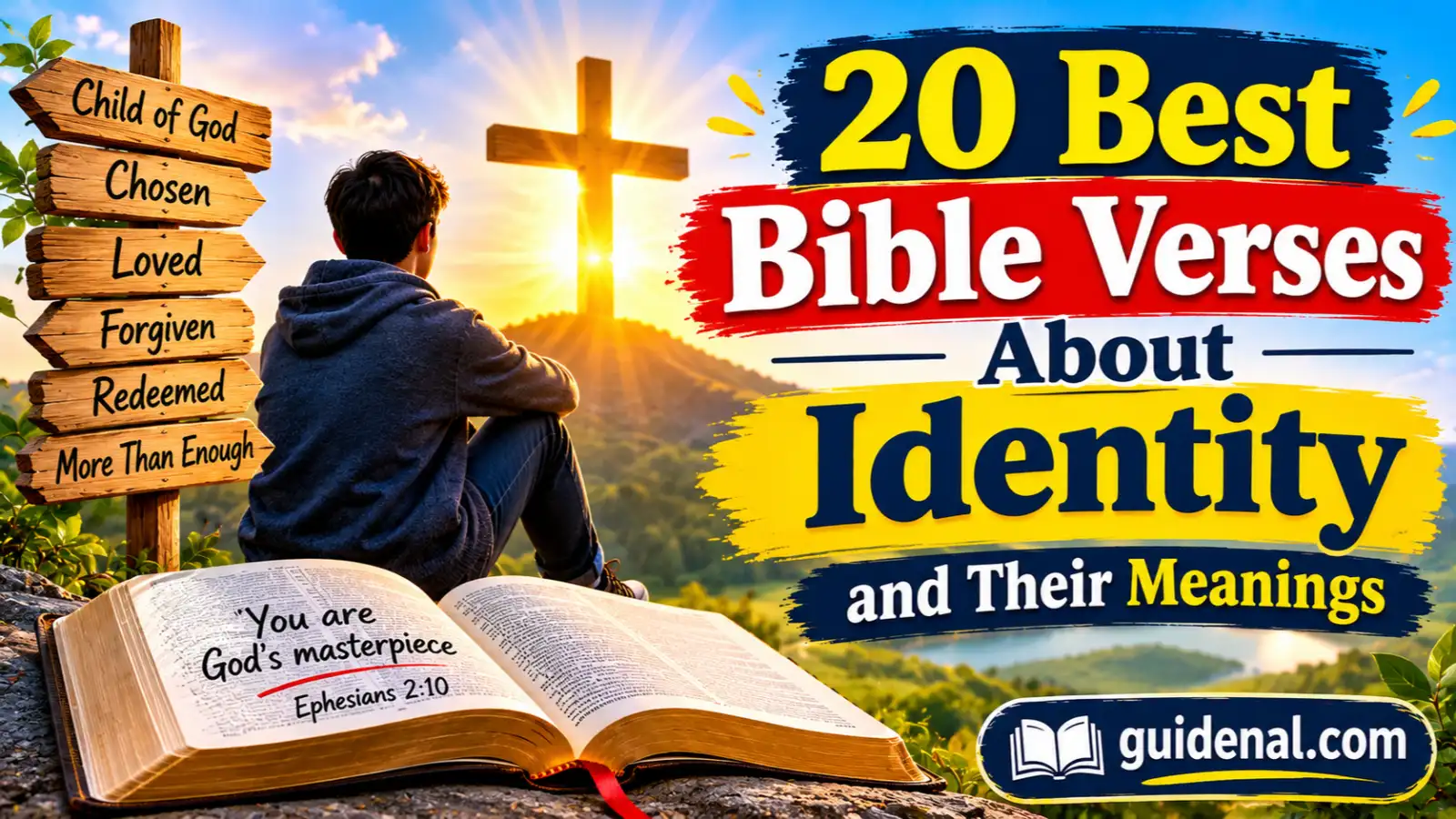
20 Best Bible Verses About Identity and Their Meanings
The following verses use the King James Version (KJV). Each passage reveals a different part of how God sees humanity and how believers can understand their identity.
1. Genesis 1:27 – Created in the Image of God
Bible Verse (KJV):
“So God created man in his own image, in the image of God created he him; male and female created he them.”
What This Verse Means:
Genesis 1:27 establishes the foundation of human identity. God created humanity in His image. This truth gives every human being dignity and worth.
Being made in God’s image does not mean that people look physically like God. Rather, human beings are created to reflect aspects of His character, including moral responsibility, relationships, creativity, and the ability to know Him.
This verse also reminds us that human value does not depend on social status, education, wealth, or physical appearance.
Life Application:
- Treat yourself and others with dignity because every person has God-given worth.
- Stop measuring your value through physical appearance or achievements.
- Remember that your life has meaning because God created you.
2. Psalm 139:14 – You Are Wonderfully Made
Bible Verse (KJV):
“I will praise thee; for I am fearfully and wonderfully made: marvellous are thy works; and that my soul knoweth right well.”
What This Verse Means:
Psalm 139 celebrates God’s knowledge of human life. David recognizes that God knows him completely, including his thoughts, actions, and personal struggles.
The words “fearfully and wonderfully made” express wonder at God’s creative work. Human life is not meaningless or accidental in the biblical understanding of creation.
David’s words also show that God knows each person more deeply than other people can.
Life Application:
- Thank God for the life He has given you.
- Do not let comparison make you dislike the person God created.
- Remember that God knows your struggles even when you cannot explain them to others.
3. John 1:12 – You Are a Child of God
Bible Verse (KJV):
“But as many as received him, to them gave he power to become the sons of God, even to them that believe on his name:”
What This Verse Means:
John introduces Jesus as the Word who came into the world. Although many rejected Him, those who received Him and believed in His name were given the right to become children of God.
This is an important distinction. Being created by God is true of all humanity, but becoming God’s child in the relational sense described here is connected to receiving Christ through faith.
This new relationship is not earned through religious achievements. It is a gift of God’s grace.
Life Application:
- Build your relationship with God through faith in Jesus.
- Do not allow rejection from people to convince you that you are unloved.
- Find confidence in belonging to God’s family.
4. 2 Corinthians 5:17 – You Are a New Creation
Bible Verse (KJV):
“Therefore if any man be in Christ, he is a new creature: old things are passed away; behold, all things are become new.”
What This Verse Means:
Paul explains the transforming power of being united with Jesus Christ. A person who belongs to Christ receives a new identity.
The phrase “new creature” points to a new life and a changed relationship with God. It does not mean that believers instantly lose every weakness, temptation, or painful memory.
Instead, their former way of life no longer has to define them. They are invited to grow in the new life that Christ provides.
Life Application:
- Do not let your past mistakes become your permanent identity.
- Ask God for strength to develop new habits.
- Remember that spiritual growth is a process of becoming more like Christ.
5. Ephesians 2:10 – You Are God’s Workmanship
Bible Verse (KJV):
“For we are his workmanship, created in Christ Jesus unto good works, which God hath before ordained that we should walk in them.”
What This Verse Means:
Paul teaches that salvation is a gift of grace, not something people can earn through their own efforts. In the verses before this passage, he explains that believers are saved through faith.
Verse 10 then describes the purpose of this new life. God has created believers in Christ for good works.
Good works do not purchase salvation. They are the fruit of a life changed by God’s grace.
Life Application:
- Look for opportunities to serve others.
- Use your abilities to help people and honor God.
- Understand that your purpose is greater than personal success.
6. Romans 8:16 – You Belong to God’s Family
Bible Verse (KJV):
“The Spirit itself beareth witness with our spirit, that we are the children of God:”
What This Verse Means:
Romans 8 describes the work of the Holy Spirit in the lives of believers. Paul explains that Christians are no longer meant to live as slaves to fear.
The Holy Spirit assures believers of their relationship with God. This assurance is part of the new life they receive through Christ.
The verse teaches that Christian identity is not simply a positive thought or personal feeling. It is connected to God’s saving work and the witness of His Spirit.
Life Application:
- Ask the Holy Spirit to guide your daily decisions.
- Do not allow fear to control your relationship with God.
- Grow in confidence through prayer and Scripture.
7. 1 Peter 2:9 – You Are Chosen and Called by God
Bible Verse (KJV):
“But ye are a chosen generation, a royal priesthood, an holy nation, a peculiar people;”
What This Verse Means:
Peter uses powerful language to describe the identity of believers. His words reflect Old Testament descriptions of Israel as God’s covenant people.
He explains that believers are called to declare the praises of the One who brought them out of darkness into His marvelous light.
Being chosen is not a reason for pride. It is a calling to worship God and reflect His goodness.
Life Application:
- Live in a way that reflects God’s character.
- Share the hope of Jesus with others.
- Use your opportunities to serve rather than seeking special treatment.
8. Galatians 2:20 – Christ Lives in You
Bible Verse (KJV):
“I am crucified with Christ: nevertheless I live; yet not I, but Christ liveth in me:”
What This Verse Means:
Paul describes the deep change that takes place when someone places their faith in Jesus.
Being crucified with Christ means that the old life under the power of sin has been put to death in relation to God. The believer now lives by faith in the Son of God.
This does not mean that a Christian loses their individual personality. It means that Jesus becomes the center of their life.
Life Application:
- Allow the teachings of Jesus to guide your choices.
- Put aside habits that lead you away from God.
- Depend on Christ rather than relying only on your own strength.
9. Ephesians 1:4 – Chosen in Christ
Bible Verse (KJV):
“According as he hath chosen us in him before the foundation of the world, that we should be holy and without blame before him in love:”
What This Verse Means:
Paul praises God for the spiritual blessings believers receive through Jesus Christ.
This verse teaches that God’s saving purpose is rooted in His grace and eternal plan. It also explains the intended result: believers are called to holiness and love.
The passage should not be reduced to a claim that Christians are better than other people. Its focus is God’s gracious purpose in Christ.
Life Application:
- Let God’s love encourage you to pursue holiness.
- Do not use your faith as a reason to look down on others.
- Remember that your calling includes loving God and loving people.
10. Romans 8:1 – You Are Not Condemned in Christ
Bible Verse (KJV):
“There is therefore now no condemnation to them which are in Christ Jesus, who walk not after the flesh, but after the Spirit.”
What This Verse Means:
Paul explains the freedom believers receive through Jesus Christ. Those who belong to Him are no longer under condemnation.
This verse does not suggest that sin is unimportant. Rather, it points to the saving work of Jesus, who delivers believers from the guilt and power of sin.
The Christian life involves learning to walk according to the Spirit instead of returning to the old patterns of life.
Life Application:
- Confess your sins honestly to God.
- Accept the forgiveness offered through Jesus.
- Do not confuse healthy conviction with hopeless condemnation.
11. Colossians 3:3 – Your Life Is Hidden With Christ
Bible Verse (KJV):
“For ye are dead, and your life is hid with Christ in God.”
What This Verse Means:
Paul reminds believers that their old life has changed through their relationship with Christ.
The expression “hid with Christ in God” describes the security and spiritual reality of belonging to Jesus. Their deepest identity is now connected to Him.
This is especially meaningful when life feels uncertain. People may misunderstand you, but your relationship with God is not determined by their opinions.
Life Application:
- Place your confidence in Christ rather than public approval.
- Remember that your spiritual life has eternal significance.
- Seek God’s approval above temporary recognition.
12. Ephesians 2:19 – You Are Part of God’s Household
Bible Verse (KJV):
“Now therefore ye are no more strangers and foreigners, but fellowcitizens with the saints, and of the household of God;”
What This Verse Means:
In this passage, Paul describes how Jesus brings people together through His work on the cross.
He specifically addresses the separation that existed between Jews and Gentiles. Through Christ, both groups can belong to God’s people.
This verse shows that Christian identity is not only personal. It is also connected to a spiritual family.
Life Application:
- Participate in a healthy Christian community.
- Welcome other believers with kindness.
- Remember that faith is not meant to be lived in isolation.
13. Philippians 3:20 – Your Citizenship Is in Heaven
Bible Verse (KJV):
“For our conversation is in heaven; from whence also we look for the Saviour, the Lord Jesus Christ:”
What This Verse Means:
The word “conversation” in this older translation refers to citizenship or commonwealth.
Paul reminds believers that their ultimate allegiance belongs to heaven. Their hope is centered on Jesus Christ, who will return as Savior.
This does not mean Christians should ignore their responsibilities on earth. Instead, their heavenly citizenship should influence how they live in the present.
Life Application:
- Make choices that honor Christ.
- Treat people with honesty and compassion.
- Remember that earthly success is not the final measure of your life.
14. Isaiah 43:1 – God Calls You by Name
Bible Verse (KJV):
“Fear not: for I have redeemed thee, I have called thee by thy name; thou art mine.”
What This Verse Means:
God spoke these words through Isaiah to His people, Israel. The surrounding passage addresses their fear and assures them of God’s commitment to redeem and restore them.
The words “thou art mine” express covenant belonging.
Although this promise was originally spoken to Israel, it reveals an important truth about God’s character: He is faithful to His people and does not abandon His saving purposes.
Life Application:
- Remember God’s faithfulness during difficult seasons.
- Bring your fears to Him in prayer.
- Do not assume that hardship means God has forgotten you.
15. 1 John 3:1 – God Has Given You His Love
Bible Verse (KJV):
“Behold, what manner of love the Father hath bestowed upon us, that we should be called the sons of God:”
What This Verse Means:
John expresses amazement at the love of God. He reminds believers that they have been welcomed into God’s family.
This relationship is not based on human perfection. It comes from the Father’s love.
John also explains in the surrounding verses that God’s children should seek to live in righteousness because their identity should shape their behavior.
Life Application:
- Begin each day remembering God’s love.
- Show the same kindness to others that you have received.
- Let your actions reflect your relationship with God.
16. Matthew 5:14 – You Are the Light of the World
Bible Verse (KJV):
“Ye are the light of the world. A city that is set on an hill cannot be hid.”
What This Verse Means:
Jesus spoke these words during the Sermon on the Mount. He was teaching His disciples how people who belong to God’s kingdom should live.
Light represents visible goodness and faithful living in this context. Jesus wanted His followers to show God’s character through their actions.
The following verse connects this light with good works that bring glory to the Father.
Life Application:
- Be honest even when dishonesty seems easier.
- Show kindness to people who need encouragement.
- Let your behavior point others toward God.
17. John 15:5 – Your Identity Is Connected to Christ
Bible Verse (KJV):
“I am the vine, ye are the branches: He that abideth in me, and I in him, the same bringeth forth much fruit: for without me ye can do nothing.”
What This Verse Means:
Jesus uses the picture of a vine and its branches to explain the importance of remaining connected to Him.
Just as a branch cannot produce fruit by itself, believers cannot develop lasting spiritual fruit apart from Christ.
This passage teaches that Christian identity involves an ongoing relationship with Jesus, not simply knowing religious information.
Life Application:
- Spend regular time reading God’s Word.
- Make prayer an important part of your daily routine.
- Depend on Jesus when facing difficult decisions.
18. Jeremiah 1:5 – God Knows You
Bible Verse (KJV):
“Before I formed thee in the belly I knew thee; and before thou camest forth out of the womb I sanctified thee, and I ordained thee a prophet unto the nations.”
What This Verse Means:
God spoke these words directly to Jeremiah when calling him to become a prophet.
The verse reveals God’s knowledge and purpose for Jeremiah before his birth. It also shows that Jeremiah’s calling came from God rather than from personal ambition.
This is a specific promise about Jeremiah’s prophetic calling, not a statement that every person has the same assignment.
However, it reminds readers that God is not unaware of human life or its circumstances.
Life Application:
- Ask God for wisdom about your responsibilities.
- Do not compare your calling with someone else’s.
- Be faithful in the opportunities God places before you.
19. Romans 12:2 – Your Mind Can Be Renewed
Bible Verse (KJV):
“And be not conformed to this world: but be ye transformed by the renewing of your mind, that ye may prove what is that good, and acceptable, and perfect, will of God.”
What This Verse Means:
Paul teaches Christians not to let the values of the world control their thinking.
Instead, believers should experience transformation through a renewed mind. This happens as they learn God’s truth and allow it to shape their decisions.
This verse is especially important when discussing identity because people often develop their self-image through outside influences.
Life Application:
- Examine the messages that influence your thinking.
- Replace harmful beliefs with biblical truth.
- Ask whether your decisions reflect God’s wisdom.
20. 2 Timothy 1:7 – You Are Called to Live With Courage
Bible Verse (KJV):
“For God hath not given us the spirit of fear; but of power, and of love, and of a sound mind.”
What This Verse Means:
Paul wrote to Timothy to encourage him to remain faithful in his Christian calling.
Timothy faced challenges in ministry, and Paul reminded him that God provides strength, love, and self-control.
The verse does not promise that Christians will never experience fear. Instead, it encourages them not to let fear control their faithfulness.
Life Application:
- Face difficult responsibilities with prayer and courage.
- Treat others with love rather than fear.
- Ask God to help you develop wisdom and self-control.
Biblical Themes Connected to Identity
Identity is connected to several important biblical teachings. These themes help us understand why our relationship with God matters more than the labels people place on us.
1. Creation and Human Worth
Supporting Scripture: Genesis 1:26–27
The Bible begins its teaching about human identity with creation. God made humanity in His image, giving every person dignity and responsibility.
This means your worth is not something you must prove.
Your abilities, appearance, and achievements may change throughout life, but your God-given dignity remains important.
2. Faith and Belonging to God
Supporting Scripture: Galatians 3:26
Faith in Jesus Christ brings believers into God’s family.
Christian identity is not based on family background, nationality, wealth, or social position. It is rooted in God’s grace.
This truth encourages believers to trust Christ rather than trying to earn God’s acceptance through their own efforts.
3. Redemption and Forgiveness
Supporting Scripture: Ephesians 1:7
Redemption is an important part of biblical identity.
Through Jesus Christ, believers receive forgiveness according to the riches of God’s grace.
Your past may contain painful memories and serious mistakes, but those things do not have to define your future. God’s forgiveness provides a new beginning.
4. Grace and New Life
Supporting Scripture: Ephesians 2:8–9
Grace means God’s undeserved favor.
The Bible teaches that salvation is a gift received through faith, not a reward for human achievement.
This protects Christians from two harmful ideas: believing they are too good to need God or believing they are too sinful to receive His mercy.
5. Holiness and Obedience
Supporting Scripture: 1 Peter 1:15–16
A new identity in Christ should influence the way a person lives.
God calls His people to reflect His holiness through their actions, relationships, and decisions.
Obedience does not earn salvation. It is a response to the grace believers have received.
6. Purpose and Good Works
Supporting Scripture: Ephesians 2:10
God calls believers to live with purpose.
Their lives should reflect compassion, generosity, honesty, and service.
This does not mean every Christian must have the same career or ministry. God can be honored through many different responsibilities.
7. Love and Christian Community
Supporting Scripture: John 13:34–35
Jesus taught His disciples to love one another.
This love becomes a visible expression of Christian identity.
Believers are not called to live only for themselves. They are called to encourage, support, forgive, and serve others.
8. Hope and Eternal Life
Supporting Scripture: Titus 3:7
Christian identity also includes hope for the future.
Believers are justified by God’s grace and have the hope of eternal life.
This hope gives strength during suffering because present circumstances do not determine the final outcome of God’s promises.
Biblical Symbolism Connected to Identity
The Bible uses several images to explain the relationship between God and His people. These pictures make spiritual truths easier to understand.
Midjourney: Man carries lamb, another sheep follows, in sunlit field.
John 4:35 Artwork | Bible Art – Page 13
Open Holy Bible And Lamp
8
1. Sheep and the Good Shepherd
Scripture: John 10:11
Jesus describes Himself as the Good Shepherd.
Sheep depend on their shepherd for guidance, protection, and care. In the same way, believers are invited to depend on Jesus.
This picture teaches that Christian identity is connected to belonging to Christ and following His voice.
2. The Vine and Its Branches
Scripture: John 15:1–5
The vine represents Jesus, while the branches represent His followers.
Branches receive what they need from the vine to produce fruit. This symbolizes the importance of remaining connected to Christ.
The spiritual lesson is that a fruitful Christian life grows through dependence on Jesus.
3. Light in the Darkness
Scripture: Matthew 5:14–16
Light is used throughout Scripture to describe truth, goodness, and God’s guidance.
Jesus calls His followers the light of the world. Their actions should help others see the goodness of God.
This symbolism teaches that identity should be visible through a life of love and faithful service.
4. A New Creation
Scripture: 2 Corinthians 5:17
The picture of new creation represents the transformation that comes through Christ.
It points beyond simply improving a few habits. It describes a new relationship with God and a new direction for life.
The lesson is that your former life does not have to control your future.
5. A Royal Priesthood
Scripture: 1 Peter 2:9
Peter uses the language of priesthood to describe the calling of God’s people.
In the Old Testament, priests had special responsibilities in worship and service. Peter applies this language to believers as a people who belong to God.
This symbolism emphasizes worship, service, and the responsibility to declare God’s goodness.
Practical Lessons for Christians Today
Understanding your identity in Christ should make a difference in everyday life. Biblical truth is not meant to remain only in your thoughts. It should influence your choices, relationships, and attitudes.
Here are seven practical lessons to remember.
1. Stop Defining Yourself by Your Past
Your past experiences may have influenced you, but they do not have to control your future.
Paul’s teaching in 2 Corinthians 5:17 reminds believers that life in Christ brings a new beginning.
Learn from your mistakes, seek forgiveness, and move forward with God’s help.
2. Stop Comparing Yourself With Others
Comparison can make you feel either superior or inferior.
God has not called every person to have the same abilities, opportunities, or responsibilities.
Instead of comparing your journey with someone else’s, focus on being faithful in your own life.
3. Spend Time in God’s Word
Your understanding of identity becomes stronger when you regularly read Scripture.
The world offers many different opinions about personal value. God’s Word provides a lasting foundation.
Read passages about God’s love, grace, forgiveness, and promises. Think about how they apply to your daily life.
4. Build a Relationship With Jesus
Christian identity is not simply about using religious language or attending church.
It is about knowing and following Jesus Christ.
Make time for prayer, worship, Bible reading, and obedience. These practices help you grow in your relationship with God.
5. Use Your Gifts to Serve Others
God gives people different abilities and opportunities.
You may encourage others, teach, help those in need, support your family, or serve your church.
Whatever your responsibilities may be, use them with love and faithfulness.
6. Do Not Let Rejection Define Your Worth
People may misunderstand you, criticize you, or fail to appreciate your efforts.
Their opinions do not determine your value before God.
Remember the truth of 1 John 3:1: God’s love is the foundation of the believer’s relationship with Him.
7. Allow the Holy Spirit to Transform You
Spiritual growth takes time.
The Holy Spirit helps believers develop qualities such as love, joy, peace, patience, kindness, goodness, faithfulness, gentleness, and self-control (Galatians 5:22–23).
Instead of expecting instant perfection, remain faithful and allow God to continue His work in your life.
Common Misconceptions About Identity in the Bible
Understanding biblical identity also means avoiding ideas that Scripture does not teach.
Misconception 1: My identity is based on my achievements.
The Bible teaches that human worth comes from God, not personal success. Good works matter, but they do not earn salvation.
Misconception 2: Being a Christian means I will never struggle.
Believers still face temptation, disappointment, suffering, and difficult seasons. Their identity in Christ gives them hope and strength through these experiences.
Misconception 3: God loves me only when I am perfect.
Scripture teaches that salvation is a gift of grace. Christians are called to grow in holiness, but God’s grace is not a reward for flawless behavior.
Misconception 4: My identity is only personal.
The New Testament teaches that believers are members of Christ’s body and part of God’s household. Christian identity includes belonging to a community of faith.
Misconception 5: I can define my identity without considering God.
The biblical message begins with God as Creator and continues through His saving work in Jesus Christ. Understanding this relationship is essential to understanding Christian identity.
A Short Prayer for Understanding Your Identity in Christ
Heavenly Father,
Thank You for creating me and giving my life meaning. Help me see myself through the truth of Your Word instead of the opinions of others.
Forgive me for the times I have allowed my past mistakes, fear, or comparison to shape the way I see myself.
Thank You for sending Jesus Christ to bring forgiveness, redemption, and new life. Help me grow in faith and become more like Him each day.
Holy Spirit, guide my thoughts, words, and actions. Teach me to live with love, humility, courage, and wisdom.
Remind me that my worth comes from You and that my life should bring glory to Your name.
In Jesus’ name, Amen.
FAQs:
1. What Does Identity Mean in the Bible?
Identity in the Bible refers to who a person is in relation to God. Human beings are created in His image, and those who trust in Jesus Christ receive a new identity as God’s children. Scripture teaches that believers are loved, forgiven, redeemed, and called to live according to God’s purpose.
2. What Does the Bible Say About Who I Am?
The Bible teaches that you are created in God’s image (Genesis 1:27). If you believe in Jesus Christ, you are also offered a place in God’s family (John 1:12). Your worth does not depend on achievements, appearance, or other people’s opinions.
3. What Does It Mean to Find Your Identity in Christ?
Finding your identity in Christ means understanding yourself through your relationship with Jesus rather than through worldly standards. It means accepting His forgiveness, trusting His promises, following His teachings, and allowing the Holy Spirit to transform your life.
4. What Bible Verse Says I Am a Child of God?
John 1:12 is one of the clearest passages. It teaches that those who receive Jesus Christ and believe in His name are given the right to become children of God. Romans 8:16 also explains that the Holy Spirit bears witness that believers are God’s children.
5. What Does It Mean to Be a New Creation in the Bible?
Being a new creation means receiving a new life through Jesus Christ. According to 2 Corinthians 5:17, those who are in Christ are no longer defined by their former life. They have a new relationship with God and are called to grow in righteousness.
6. How Can I Strengthen My Identity in Christ?
You can grow in your understanding of your identity by reading Scripture, praying regularly, worshiping God, building relationships with mature Christians, and following Jesus’ teachings. Remembering God’s promises can also help you resist negative thoughts and unhealthy comparisons.
7. Does God Have a Purpose for My Life?
Yes. The Bible teaches that God created humanity with purpose and calls believers to live in faith and good works. Ephesians 2:10 explains that believers are created in Christ Jesus for good works. Your purpose includes loving God, serving others, and reflecting His character.
8. What Is the Difference Between Self-Identity and Identity in Christ?
Self-identity often describes how people understand themselves through their personality, experiences, relationships, and personal values. Identity in Christ focuses on who believers are because of their relationship with Jesus. It places God’s grace, truth, and calling above changing opinions and personal achievements.
Conclusion:
Understanding identity meaning in the Bible helps us see ourselves through God’s truth rather than through the changing standards of the world.
Scripture teaches that every human being is created in God’s image and has God-given dignity. It also reveals that those who trust in Jesus Christ can receive forgiveness, become children of God, and experience a new life through His grace.
Your past does not have to define your future. Other people’s opinions do not determine your worth. Your achievements do not decide whether you are valuable.
As a believer, you are called to grow in faith, follow Jesus, love others, and allow the Holy Spirit to shape your character.
Remember that understanding your identity is not about becoming proud of yourself. It is about recognizing God’s goodness and living according to His truth.
When you feel uncertain about who you are, return to Scripture and remember the promises of God.
Let these words encourage your heart:
Philippians 4:6–7 teaches believers to bring their concerns to God through prayer and thanksgiving. It promises that the peace of God will guard their hearts and minds through Christ Jesus.
Your identity is not something you need to prove to the world. It is something to understand through God’s Word and live out through faith in Jesus Christ.

I am a content writer at Guidenal, where I create easy-to-understand, well-researched, and reader-focused guides inspired by biblical teachings. Working alongside Naqash Ayub, I strive to deliver trustworthy content that helps readers grow in faith and find practical answers from Scripture.