
Have you ever wondered why some relationships bring you closer to God while others slowly pull your heart away from Him? Choosing the right people to walk through life with is an important part of Christian living. This is especially true when it comes to marriage, dating, close friendships, and spiritual partnerships.
The Bible uses a powerful picture to explain this principle: being equally yoked. In 2 Corinthians 6:14, the apostle Paul warns believers against being unequally yoked with unbelievers. Although these words are often discussed in conversations about Christian marriage, their meaning reaches beyond marriage alone.
God cares about the people who influence our decisions, shape our values, and share our direction in life. He wants His children to build relationships that support faith, encourage obedience, and reflect His truth.
But what does being equally yoked actually mean? Does it mean Christians should never have close relationships with unbelievers? Can a Christian marry someone who does not share their faith? And what does this teaching mean for dating today?
Let’s explore the biblical meaning of being equally yoked, understand the original context of Paul’s teaching, and discover how Christians can apply this wisdom with love, grace, and discernment.
Understanding Equally Yoked in the Bible
The expression equally yoked comes from 2 Corinthians 6:14. Paul writes about the danger of forming partnerships that place believers and unbelievers under conflicting spiritual influences.
To understand his message, it helps to picture a traditional farming scene.
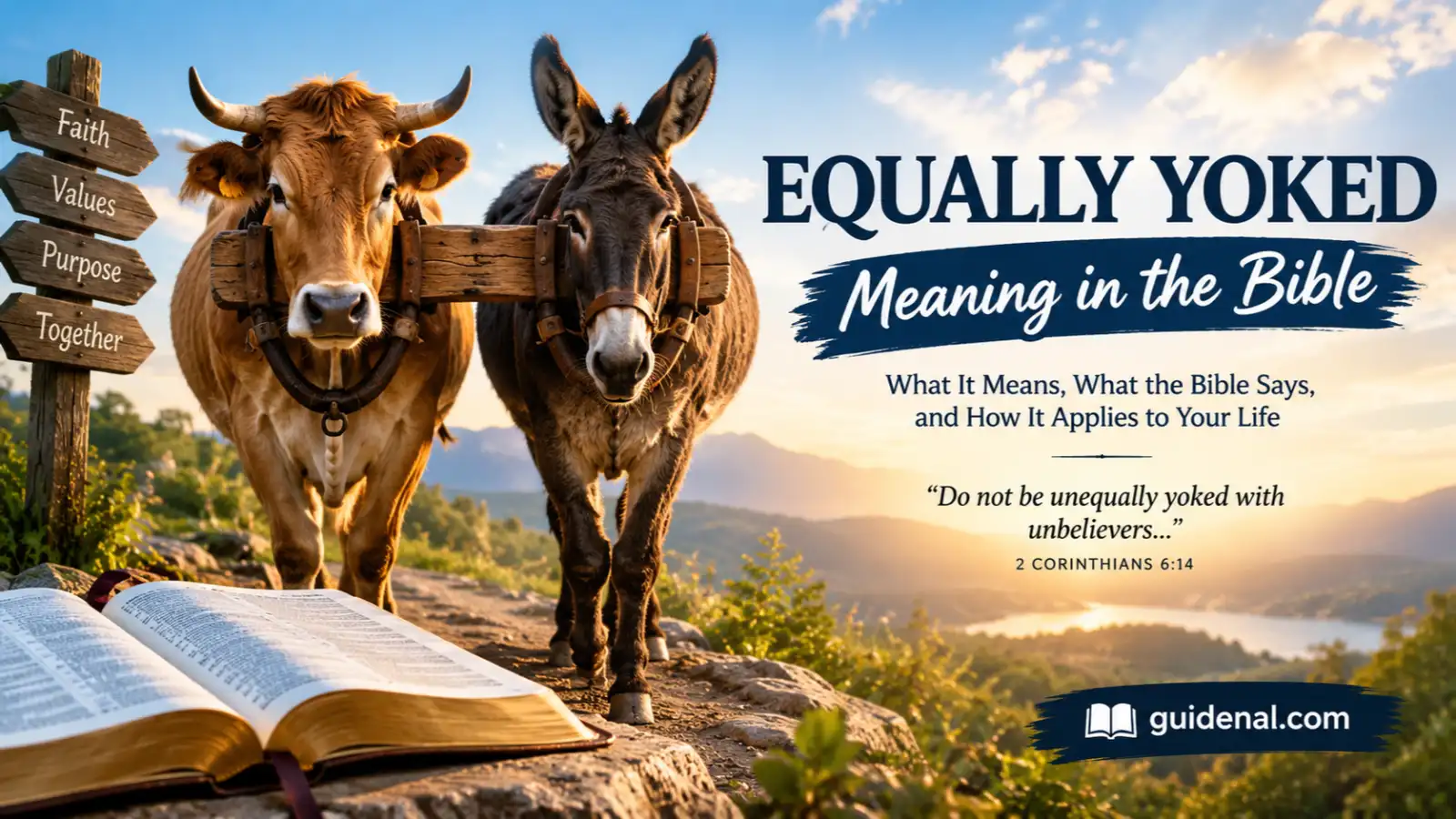
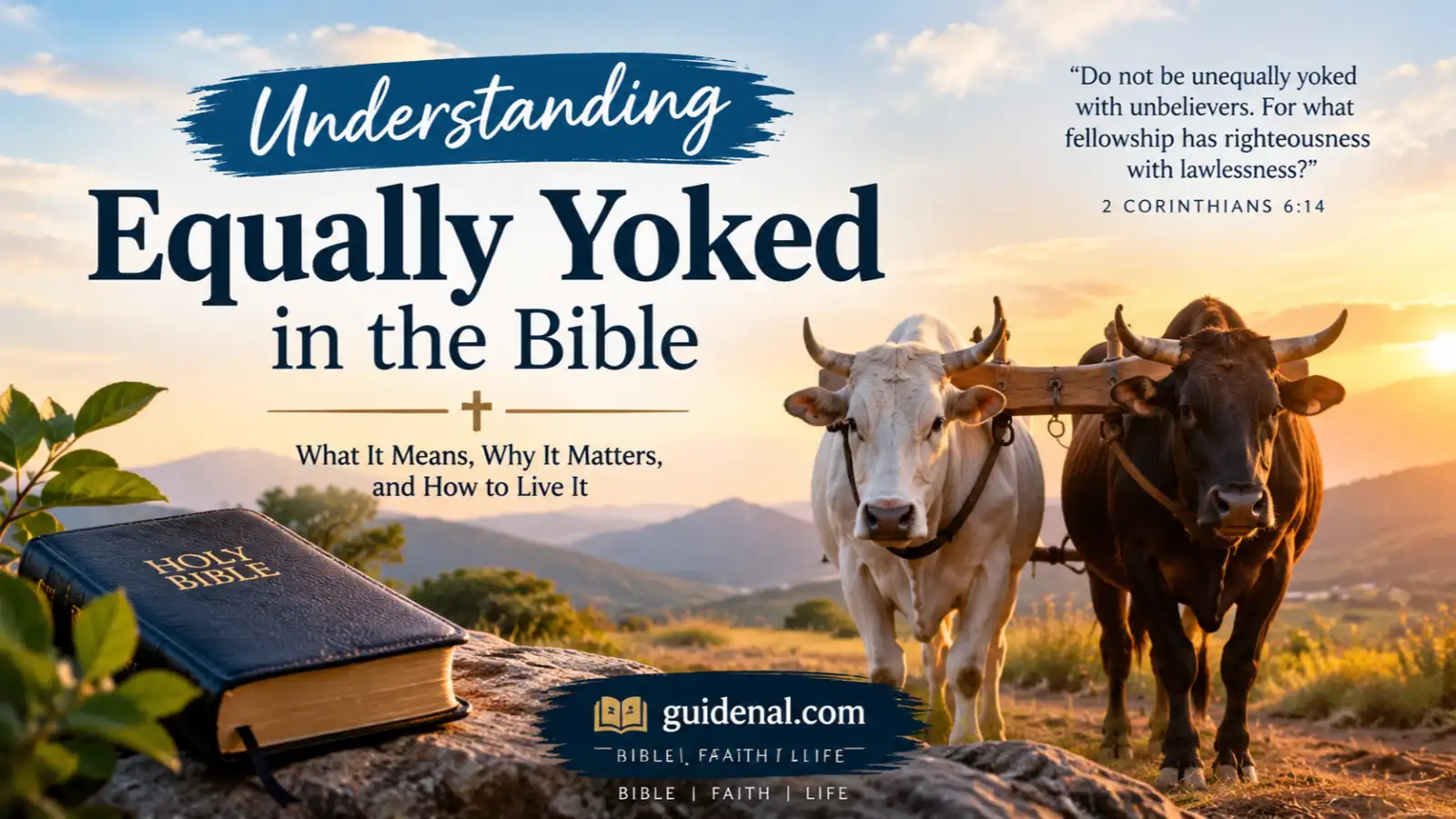
In biblical times, farmers used a wooden device called a yoke to connect two animals. The yoke rested across their necks and allowed them to pull a plow or another farming tool together.
For the work to go smoothly, the animals needed to move in the same direction. If one animal pulled in a different direction, the work became difficult. Their strength could not be used effectively because they were not working toward the same purpose.
Paul uses this familiar image to teach an important spiritual lesson. Believers should be careful about entering binding partnerships that create a conflict between their commitment to Christ and the values of those with whom they are joined.
The Old Testament also provides background for this principle. Deuteronomy 22:10 forbids plowing with an ox and a donkey together. The command concerned Israel’s agricultural and covenant life, but it also helps readers understand the practical picture behind Paul’s illustration.
In the New Testament, Paul connects this idea to righteousness, lawlessness, light, and darkness. His concern is not that Christians must avoid every unbeliever. Rather, he warns against relationships and partnerships that compromise faithfulness to God.
Marriage is an important application because partners share daily decisions, responsibilities, values, and spiritual direction. However, the passage addresses a broader principle of spiritual partnership, not marriage alone.
The central lesson is simple: Christians should build their closest and most binding relationships around a shared commitment to God.
Best Bible Verses About Being Equally Yoked

The Bible contains several passages that help us understand spiritual unity, relationships, marriage, and faith. Some verses directly address being unequally yoked, while others teach the importance of choosing relationships that honor God.
The following verses are from the King James Version (KJV) to keep the Scripture quotations consistent.
1. 2 Corinthians 6:14
Bible Verse:
Be ye not unequally yoked together with unbelievers: for what fellowship hath righteousness with unrighteousness? and what communion hath light with darkness?
What This Verse Means:
This is the main Bible verse about being equally yoked. Paul uses the picture of two animals pulling together to explain the importance of spiritual agreement.
Righteousness and unrighteousness have different foundations. Light and darkness represent opposing spiritual conditions. Paul asks believers to consider whether their partnerships support their relationship with Christ or create pressure to compromise their faith.
The verse is broader than marriage. It can apply to business partnerships, close relationships, and other serious commitments.
Life Application:
Before entering a serious relationship, ask whether it helps you follow Jesus or makes obedience more difficult. Shared faith should be an important foundation for relationships that shape your life.
2. Amos 3:3
Bible Verse:
Can two walk together, except they be agreed?
What This Verse Means:
Amos asks a simple question about agreement and direction. The surrounding passage contains a series of questions showing that events have causes and that God does not act without purpose.
In its original context, Amos is explaining his prophetic calling and Israel’s responsibility before God. The verse is not directly about dating or marriage.
However, it provides a helpful principle for relationships. People who walk together need some level of agreement about where they are going.
Life Application:
Think about the direction of your closest relationships. You do not need to agree on every small issue, but your deepest values and commitment to God should not constantly pull in opposite directions.
3. Deuteronomy 22:10
Bible Verse:
Thou shalt not plow with an ox and an ass together.
What This Verse Means:
God gave Israel this instruction as part of the laws governing everyday life. An ox and a donkey differ in size, strength, and movement. Using them together could make plowing difficult.
The verse gives us historical insight into the agricultural world of ancient Israel. It also provides the physical image that helps readers understand the language of unequal yoking.
However, the original command concerns farming. Its wider spiritual application should not replace its historical meaning.
Life Application:
Learn to recognize the importance of compatibility in serious commitments. Differences are not automatically wrong, but conflicting values can make shared responsibilities difficult.
4. 1 Corinthians 7:12-13
Bible Verse:
But to the rest speak I, not the Lord: If any brother hath a wife that believeth not, and she be pleased to dwell with him, let him not put her away.
And the woman which hath an husband that believeth not, and if he be pleased to dwell with her, let her not leave him.
What This Verse Means:
Paul addresses Christians who became believers while already married to unbelieving spouses.
He teaches that a Christian should not end a marriage simply because their husband or wife does not share their faith. The unbelieving partner’s willingness to continue the marriage matters.
This passage is important because it prevents a misunderstanding of 2 Corinthians 6:14. Paul does not tell Christians in existing mixed-faith marriages to abandon their spouses.
Life Application:
If you are already married to someone who does not share your faith, treat your spouse with love and respect. Pray for them, live out your Christian values, and seek peace within your marriage.
5. 1 Corinthians 7:14
Bible Verse:
For the unbelieving husband is sanctified by the wife, and the unbelieving wife is sanctified by the husband: else were your children unclean; but now are they holy.
What This Verse Means:
Paul explains that an unbelieving spouse does not automatically make a Christian’s marriage or family spiritually unacceptable.
The word sanctified in this context does not mean that the unbelieving spouse has automatically received salvation. Rather, Paul is explaining the special standing of the marriage and family because of the believer’s presence.
The verse reassures Christians that they should not view their existing family relationships as spiritually contaminated.
Life Application:
Do not assume that your unbelieving family members are beyond God’s grace. Let your faith influence your home through patience, kindness, prayer, and consistent Christian character.
6. 1 Corinthians 7:15
Bible Verse:
But if the unbelieving depart, let him depart. A brother or a sister is not under bondage in such cases: but God hath called us to peace.
What This Verse Means:
Paul recognizes that a believer cannot force an unbelieving spouse to remain in a marriage.
If the unbelieving partner chooses to leave, the Christian should not respond by trying to control that person’s decision.
Christians differ on some details about what this passage permits regarding divorce and remarriage. Therefore, difficult marital situations deserve careful pastoral and biblical guidance.
Life Application:
Understand that you cannot control another person’s faith or choices. Seek God’s peace, act with integrity, and remember that you are not responsible for forcing someone to follow Christ.
7. 1 Corinthians 7:16
Bible Verse:
For what knowest thou, O wife, whether thou shalt save thy husband? or how knowest thou, O man, whether thou shalt save thy wife?
What This Verse Means:
Paul encourages believers to consider that their faithful presence may influence an unbelieving spouse.
The verse does not promise that every unbelieving husband or wife will become a Christian. Salvation belongs to God, and every person must respond to the gospel.
However, a believer can become a positive witness through love, patience, and faithful living.
Life Application:
Pray for your spouse without pressuring or manipulating them. Let your actions reflect the love of Jesus Christ.
8. Proverbs 13:20
Bible Verse:
He that walketh with wise men shall be wise: but a companion of fools shall be destroyed.
What This Verse Means:
Proverbs teaches that the people around us can influence our character and decisions.
Wise companions encourage good judgment. Foolish companions can lead us toward harmful choices.
This principle applies to friendships, relationships, and the people we allow to influence our daily lives.
Life Application:
Choose friends who encourage honesty, wisdom, and spiritual growth. Spend time with people who help you become more faithful rather than encouraging destructive behavior.
9. Proverbs 27:17
Bible Verse:
Iron sharpeneth iron; so a man sharpeneth the countenance of his friend.
What This Verse Means:
Iron sharpens iron through contact and friction. In the same way, healthy friendships can strengthen our character.
A good Christian friend does not simply agree with everything we say. They can lovingly correct us, encourage us, and help us recognize areas where we need to grow.
Life Application:
Build friendships where honest conversations are welcome. Surround yourself with people who encourage you to become more Christlike.
10. Matthew 6:24
Bible Verse:
No man can serve two masters: for either he will hate the one, and love the other; or else he will hold to the one, and despise the other. Ye cannot serve God and mammon.
What This Verse Means:
Jesus teaches that ultimate loyalty cannot be divided between God and the pursuit of wealth.
Although this verse does not directly discuss marriage, it reveals an important spiritual truth. A person’s deepest commitment shapes their decisions and priorities.
When two people have completely different ideas about what deserves their highest loyalty, serious conflict can develop.
Life Application:
Consider whether your relationships support your commitment to God. Do not allow money, popularity, worldly success, or another person’s approval to become more important than your faith.
11. Matthew 11:28-30
Bible Verse:
Come unto me, all ye that labour and are heavy laden, and I will give you rest.
Take my yoke upon you, and learn of me; for I am meek and lowly in heart: and ye shall find rest unto your souls.
For my yoke is easy, and my burden is light.
What This Verse Means:
Jesus invites people who are tired and burdened to come to Him.
His reference to a yoke describes discipleship and submission to His teaching. It is different from Paul’s warning about being unequally yoked.
Jesus offers a relationship with Him that brings rest, guidance, and freedom from the crushing weight of sin.
Life Application:
Make Jesus the center of your life. Before expecting another person to give you spiritual direction, learn to follow Christ and trust His wisdom.
12. Genesis 2:24
Bible Verse:
Therefore shall a man leave his father and his mother, and shall cleave unto his wife: and they shall be one flesh.
What This Verse Means:
This verse describes God’s original design for marriage. A partners establish a new family relationship and become united in a deep and lasting bond.
Jesus also refers to this passage in Matthew 19:5 when teaching about marriage.
Marriage involves more than romantic feelings. It includes commitment, faithfulness, responsibility, and shared life.
Life Application:
When considering marriage, look beyond attraction. Consider whether you and your future spouse can build a home around shared values, mutual respect, and a commitment to God.
13. Ecclesiastes 4:9-10
Bible Verse:
Two are better than one; because they have a good reward for their labour.
For if they fall, the one will lift up his fellow: but woe to him that is alone when he falleth; for he hath not another to help him up.
What This Verse Means:
Ecclesiastes explains the value of companionship and mutual support.
Life brings difficult seasons, and having someone who offers help can make a meaningful difference. The passage celebrates the strength that comes through working and walking together.
It does not suggest that every relationship is beneficial. Rather, it shows the value of faithful companionship.
Life Application:
Seek relationships where both people support one another. A healthy partnership should provide encouragement during hardship, not make every struggle heavier.
14. Proverbs 12:26
Bible Verse:
The righteous is more excellent than his neighbour: but the way of the wicked seduceth them.
What This Verse Means:
This proverb contrasts the influence of righteous living with the danger of being led astray.
Our relationships can affect the choices we make. A person who repeatedly follows harmful advice may gradually move away from wisdom.
The verse encourages believers to think carefully about whose guidance they trust.
Life Application:
Pay attention to the advice you receive from people close to you. Welcome wise counsel and be cautious when someone consistently encourages choices that conflict with Scripture.
15. Psalm 1:1-2
Bible Verse:
Blessed is the man that walketh not in the counsel of the ungodly, nor standeth in the way of sinners, nor sitteth in the seat of the scornful.
But his delight is in the law of the LORD; and in his law doth he meditate day and night.
What This Verse Means:
Psalm 1 introduces the contrast between the righteous person and the wicked person.
The blessed person refuses to make ungodly advice the foundation of life. Instead, they delight in God’s Word and allow it to shape their thinking.
This passage does not command believers to avoid all contact with non-Christians. It warns against adopting the values and behavior of those who reject God’s ways.
Life Application:
Let Scripture guide your decisions. When choosing close companions, look for people who respect your faith and encourage you to live according to God’s Word.
16. Philippians 2:2
Bible Verse:
Fulfil ye my joy, that ye be likeminded, having the same love, being of one accord, of one mind.
What This Verse Means:
Paul encourages the church at Philippi to live in unity through humility and love.
Christian unity does not mean everyone must have the same personality or opinions. It means believers should share a commitment to Christ and seek the good of others.
This principle is especially valuable in marriage and close Christian relationships.
Life Application:
Practice humility in your relationships. Learn to listen, forgive, communicate honestly, and place love above the desire to win every disagreement.
17. Ephesians 5:21
Bible Verse:
Submitting yourselves one to another in the fear of God.
What This Verse Means:
Paul connects Christian relationships with reverence for God.
The surrounding passage discusses marriage and the way partners should treat one another. Its foundation is a life shaped by Christ rather than selfishness.
Healthy relationships require humility and a willingness to serve.
Life Application:
Do not measure a relationship only by what the other person gives you. Ask how you can show patience, respect, kindness, and Christlike love.
18. Colossians 3:14
Bible Verse:
And above all these things put on charity, which is the bond of perfectness.
What This Verse Means:
Paul teaches that love brings Christian virtues together.
The surrounding verses mention kindness, humility, meekness, patience, and forgiveness. Love helps these qualities work together in everyday relationships.
Shared faith is important, but Christians must also demonstrate the character that grows from following Jesus.
Life Application:
Look for relationships where love is shown through actions. Practice forgiveness, speak with kindness, and treat others with the dignity they deserve.
19. 1 Peter 3:7
Bible Verse:
Likewise, ye husbands, dwell with them according to knowledge, giving honour unto the wife, as unto the weaker vessel, and as being heirs together of the grace of life; that your prayers be not hindered.
What This Verse Means:
Peter instructs husbands to treat their wives with understanding and honor.
The phrase about being heirs together of the grace of life emphasizes the spiritual dignity of partners before God.
The passage reminds Christian husbands that marriage is not a place for selfishness, disrespect, or abuse of power.
Life Application:
A godly marriage should reflect respect and care. Husbands should listen to their wives, honor them, and recognize their equal value before God.
20. Joshua 24:15
Bible Verse:
And if it seem evil unto you to serve the LORD, choose you this day whom ye will serve; whether the gods which your fathers served that were on the other side of the flood, or the gods of the Amorites, in whose land ye dwell: but as for me and my house, we will serve the LORD.
What This Verse Means:
Joshua challenges Israel to make a clear decision about whom they will serve.
After remembering God’s faithfulness, he calls the people to reject false gods and remain committed to the Lord.
His declaration shows the importance of making faith a central part of family life.
Life Application:
If you hope to build a Christian home, begin by making your own commitment to God clear. Encourage a household where prayer, Scripture, worship, and obedience are valued.
Biblical Themes Connected to Being Equally Yoked
Being equally yoked is connected to several important biblical teachings. Understanding these themes helps us see that Paul’s instruction is part of a much larger message about faithfulness to God.
1. Spiritual Unity
Supporting Scripture: Ephesians 4:3
Paul encourages believers to maintain the unity of the Spirit through peace.
Christian unity is not simply about having similar interests. It comes from sharing faith in Jesus Christ and allowing the Holy Spirit to shape our lives.
In marriage, spiritual unity can help a couple make decisions with a common foundation. They can pray together, study Scripture, and encourage one another through difficult seasons.
However, unity does not mean that couples will never disagree. It means they have a shared foundation that helps them work through disagreements with love.
2. Faithfulness to God
Supporting Scripture: Deuteronomy 6:5
God commanded His people to love Him with all their heart, soul, and strength.
This command reminds Christians that God deserves first place in their lives.
When a person enters a serious partnership, they should consider whether that relationship respects their devotion to God. A relationship should never require someone to abandon biblical convictions to keep another person happy.
3. Wisdom in Relationships
Supporting Scripture: Proverbs 4:7
The Bible repeatedly connects wisdom with good decisions.
Choosing a spouse or close companion requires more than emotion. It requires prayer, patience, observation, and honest conversations.
A wise Christian considers a person’s character, honesty, maturity, and relationship with God.
Attraction may begin a relationship, but wisdom helps determine whether it can become a healthy lifelong commitment.
4. Love and Respect
Supporting Scripture: 1 Corinthians 13:4-7
Paul describes love as patient, kind, and free from pride and selfishness.
These qualities are essential in a godly relationship.
Being equally yoked does not mean finding a person who agrees with every opinion. It means seeking a relationship where both people can practice Christlike love and respect.
5. Obedience and Discipleship
Supporting Scripture: John 14:15
Jesus connects love for Him with obedience to His commandments.
A Christian relationship should encourage both people to follow Jesus. This includes making honest choices, forgiving one another, serving others, and seeking God’s direction.
Discipleship is not limited to attending church. It involves allowing Christ to shape everyday decisions.
6. Grace and Forgiveness
Supporting Scripture: Ephesians 4:32
Paul encourages Christians to forgive one another as God has forgiven them through Christ.
Even two committed believers will make mistakes. They may misunderstand one another, become impatient, or disagree.
Shared faith does not remove every relationship problem. However, it provides a spiritual foundation for repentance, forgiveness, and restoration.
7. Peace and Encouragement
Supporting Scripture: Romans 12:18
Paul encourages believers to live peaceably with everyone as far as it depends on them.
This teaching is important because being equally yoked should never become an excuse for treating unbelievers with disrespect.
Christians are called to show kindness to everyone. They can maintain loving friendships with people who do not share their beliefs while remaining careful about commitments that could compromise their faith.
Biblical Symbolism of the Yoke
The yoke is more than an agricultural tool in the Bible. It also becomes a picture of authority, responsibility, hardship, service, and spiritual commitment.
Understanding its symbolism helps explain why Paul chose this image.
1. A Yoke Represents Partnership
A farming yoke connects two animals so they can perform work together.
The animals share the same task and must move in a coordinated way.
Spiritual Lesson: Relationships involve shared responsibilities. Before entering a serious partnership, consider whether both people can work toward a common purpose.
2. A Yoke Represents Direction
When two animals are joined together, they must move in the same direction.
If one pulls away, the other struggles to continue the work.
Spiritual Lesson: A shared direction matters in Christian relationships. Two people do not need identical personalities, but their deepest values should not constantly conflict.
3. A Yoke Represents Responsibility
A yoke connects animals to the work they are expected to perform.
It represents a shared burden and a commitment to complete a task.
Spiritual Lesson: Marriage and serious partnerships involve responsibilities. Both people should be willing to contribute rather than expecting one person to carry everything.
4. A Yoke Represents Submission
Jesus uses the image of a yoke in Matthew 11:29 to describe learning from Him.
His yoke represents accepting His authority and following His teaching.
Spiritual Lesson: Christians should place themselves under Christ’s leadership. His wisdom should guide their decisions, relationships, and priorities.
5. A Yoke Represents Freedom Through Christ
Jesus says His yoke is easy and His burden is light.
This does not mean that following Jesus is free from hardship. Rather, He offers grace, guidance, and rest to those who trust Him.
Spiritual Lesson: Do not build relationships around pressure, manipulation, or fear. Seek a relationship where both people can grow in faith and experience the peace that comes from following Christ.
Does Being Equally Yoked Mean Christians Cannot Have Unbelieving Friends?
No. This is one of the most common misunderstandings of 2 Corinthians 6:14.
Jesus spent time with tax collectors, sinners, and people who were rejected by society. He showed compassion to people who did not yet understand God’s truth.
In Matthew 9:10-13, Jesus shared a meal with tax collectors and sinners. When religious leaders questioned His actions, He explained that the sick need a physician.
His example teaches us that Christians should not isolate themselves from people who need to hear the gospel.
There is an important difference between loving someone and entering a binding partnership with them.
Consider these examples:
- Friendship: You can have genuine friendships with people who follow different beliefs. Treat them with kindness and respect.
- Evangelism: Christians should share the message of Jesus with others through words and actions.
- Dating: Dating involves emotional investment and may lead to marriage. Shared spiritual values deserve serious consideration.
- Marriage: Marriage creates a deep and lasting partnership. A shared commitment to Christ can provide a strong spiritual foundation.
- Business partnerships: A business relationship can create pressure when partners have conflicting moral standards or priorities.
The goal is not to avoid unbelievers. The goal is to remain faithful to God while showing His love to everyone.
What Does Being Equally Yoked Mean in Christian Marriage?
Marriage is one of the clearest modern applications of the equally yoked principle.
A partners share a home, responsibilities, finances, decisions, and many important experiences. Their spiritual beliefs can influence nearly every part of their life together.
When both partners follow Jesus, they have a shared foundation for building their marriage.
This does not guarantee a perfect relationship. Christians still experience disagreements, financial difficulties, misunderstandings, and emotional struggles.
However, shared faith can help couples approach these challenges through biblical wisdom.
Signs of a Spiritually Healthy Marriage
A relationship built on shared Christian faith should demonstrate qualities such as:
- Both partners sincerely believe in Jesus Christ.
- They respect one another’s relationship with God.
- They value prayer and Scripture.
- They encourage one another to grow spiritually.
- They practice honesty and forgiveness.
- They make important decisions through prayer and wisdom.
- They respect biblical teachings about marriage.
- They support one another during difficult seasons.
- They serve their family and community with love.
- They place their commitment to Christ above selfish desires.
Remember, being equally yoked is not about finding a perfect Christian. It is about finding someone who genuinely wants to follow Christ and grow in faith.
Can a Christian Date or Marry an Unbeliever?
This question deserves a careful biblical answer.
The Bible encourages believers to seek relationships that honor God. Second Corinthians 6:14 provides an important warning about spiritually conflicting partnerships.
First Corinthians 7:39 also says that a Christian widow is free to marry again, but only in the Lord. This instruction is often understood as guidance to marry another believer.
However, the Bible also addresses people who became Christians after already being married. In 1 Corinthians 7:12-16, Paul tells them not to divorce an unbelieving spouse who is willing to remain in the marriage.
These passages address different situations.
- A Christian considering a new marriage should take shared faith seriously.
- A Christian already married to an unbeliever should not assume that their marriage must end.
- A person should not enter a marriage expecting to change their partner’s beliefs later.
- A believer should seek prayer, wise counsel, and a clear understanding of Scripture before making a lifelong commitment.
It is also important to recognize that being equally yoked is not simply about attending the same church.
Two people may attend church every Sunday but have very different attitudes toward honesty, commitment, forgiveness, and obedience to God.
Look for genuine faith that produces godly character.
7 Warning Signs That a Relationship May Be Spiritually Unequal
Not every disagreement means a relationship is unequally yoked. Christians can have different personalities, interests, and opinions.
However, certain patterns deserve attention.
1. Your Partner Does Not Respect Your Faith
If someone repeatedly mocks your beliefs, discourages prayer, or makes you feel ashamed of following Jesus, this is a serious concern.
A healthy relationship should respect your commitment to God.
2. You Feel Pressured to Compromise Your Values
A relationship becomes spiritually unhealthy when you repeatedly ignore biblical convictions to keep someone happy.
Love should not require disobedience to God.
3. You Cannot Discuss Spiritual Matters Honestly
Faith affects major life decisions. If your partner refuses to discuss God, marriage, children, or spiritual values, important questions may remain unresolved.
4. Your Relationship Pulls You Away From God
Notice whether you are praying less, avoiding church, neglecting Scripture, or hiding your Christian beliefs.
These changes do not automatically prove that a relationship is wrong, but they deserve honest reflection.
5. You Have Completely Different Views About Marriage
A disagreement about the purpose of marriage, faithfulness, family responsibilities, or raising children can create serious difficulties.
Discuss these subjects before making a lifelong commitment.
6. You Are the Only One Making Spiritual Efforts
A relationship requires mutual commitment. If one person consistently encourages spiritual growth while the other actively resists it, the imbalance can become painful.
7. You Are Depending on Marriage to Change Someone
Never assume that marrying an unbeliever will automatically lead them to Christ.
You can pray for someone and encourage them, but you cannot control their spiritual decisions.
Important: These warning signs are reasons for reflection, not a checklist for judging or condemning people. Every situation deserves wisdom, prayer, and compassion.
Practical Lessons for Christians Today
The teaching about being equally yoked is not meant to create fear. It is meant to help believers make wise choices and remain faithful to God.
Here are practical ways to apply this principle.
1. Put God First in Every Relationship
Matthew 22:37 teaches that we should love God with all our heart, soul, and mind.
Make your relationship with God the foundation of your decisions. Do not allow romantic feelings or another person’s approval to take His place.
2. Pray Before Making Serious Commitments
Prayer gives you time to seek God’s wisdom rather than making decisions through emotion alone.
James 1:5 reminds believers that God gives wisdom generously to those who ask Him.
Pray about the person’s character, your shared values, and the direction of the relationship.
3. Look Beyond Physical Attraction
Attraction is a natural part of romantic relationships, but it should not be the only reason for choosing a spouse.
Look at how the person treats others, handles responsibility, responds to correction, and demonstrates love.
Character matters.
4. Discuss Faith Before Marriage
Do not wait until after engagement or marriage to discuss important spiritual questions.
Talk about church attendance, prayer, raising children, Christian values, and how you will handle disagreements.
Honest conversations can prevent painful misunderstandings later.
5. Seek Advice From Mature Christians
Proverbs 11:14 teaches that there is safety in an abundance of counselors.
Talk with a trusted pastor, mature Christian couple, or wise believer who understands Scripture.
Outside guidance can help you recognize things that emotions may make difficult to see.
6. Show Love to People Who Believe Differently
Being equally yoked does not give Christians permission to become proud or judgmental.
Jesus calls His followers to love their neighbors. Treat people with dignity even when you disagree about faith.
7. Remember That God Can Guide Your Future
If you are single and waiting for marriage, do not allow loneliness to push you into an unhealthy commitment.
Psalm 37:5 encourages believers to commit their way to the Lord and trust Him.
Use this season to grow in faith, develop healthy character, and become emotionally and spiritually mature.
FAQs:
1. What Does Equally Yoked Mean in the Bible?
Being equally yoked means sharing a common spiritual direction and commitment in an important partnership. In 2 Corinthians 6:14, Paul warns Christians against partnerships that create conflict between faithfulness to God and opposing spiritual values.
2. What Is the Main Bible Verse About Being Equally Yoked?
The main verse is 2 Corinthians 6:14. It teaches believers not to be unequally yoked with unbelievers. Paul uses the contrast between righteousness and unrighteousness, and light and darkness, to explain the importance of spiritual faithfulness.
3. Does Equally Yoked Only Apply to Marriage?
No. The passage in 2 Corinthians 6:14 addresses a broader principle of spiritual partnership. It can inform decisions about marriage, business partnerships, and other serious commitments. Marriage is an important application, but it is not the only one.
4. Can Two Christians Still Be Unequally Yoked?
Yes. Simply identifying as Christian does not mean two people share the same spiritual maturity, values, or commitment to biblical teaching.
Two believers may have serious differences about faithfulness, family, honesty, and obedience to God. Shared faith is an important foundation, but healthy relationships also require love, respect, maturity, and mutual responsibility.
5. Can a Christian Marry Someone Who Is Not a Christian?
The Bible encourages believers to seek marriage within their faith. First Corinthians 7:39 uses the expression “only in the Lord” when discussing remarriage after widowhood.
Second Corinthians 6:14 also provides an important warning about spiritually unequal partnerships. Christians considering marriage should take these teachings seriously and seek wise pastoral counsel.
6. Should a Christian Divorce an Unbelieving Spouse?
No, not simply because that spouse does not believe in Christ.
In 1 Corinthians 7:12-13, Paul instructs believers not to divorce an unbelieving spouse who is willing to remain married.
If the unbelieving spouse chooses to leave, Paul addresses that situation separately in verse 15. Complex circumstances involving divorce, abandonment, or abuse require careful pastoral and professional guidance.
7. Does Being Equally Yoked Mean Having the Same Church Denomination?
Not necessarily. The Bible does not say that a partners must belong to the same denomination.
What matters is a genuine shared commitment to Jesus Christ and a willingness to build their relationship around biblical truth. Differences in church traditions should be discussed honestly and respectfully.
8. How Do I Know If I Am Equally Yoked With Someone?
Consider whether you share a sincere commitment to Christ, respect each other’s beliefs, encourage spiritual growth, and agree on important biblical values.
Look at actions rather than words alone. A healthy Christian relationship should demonstrate honesty, humility, forgiveness, patience, and love.
Conclusion:
Being equally yoked is about more than finding someone who shares your interests or understands your personality. It is about building relationships that respect your faith and support your commitment to Jesus Christ.
God does not ask you to treat unbelievers with hatred or avoid everyone who believes differently. He calls you to love others while remaining faithful to His Word.
If you are single, take your time when choosing a life partner. Do not allow loneliness, pressure, or temporary feelings to guide a lifelong decision.
If you are already married to someone who does not share your faith, remember Paul’s encouragement in 1 Corinthians 7:12-16. Your situation is not automatically a reason for divorce. Continue showing love, praying, and seeking God’s wisdom.
And if you are struggling with a relationship, remember that God cares about your heart, your decisions, and your future.
A relationship should never become more important than your relationship with Christ.
Let your faith guide your choices, let love shape your actions, and let Scripture provide wisdom for the road ahead.
Philippians 4:6-7 (KJV)
Be careful for nothing; but in every thing by prayer and supplication with thanksgiving let your requests be made known unto God.
And the peace of God, which passeth all understanding, shall keep your hearts and minds through Christ Jesus.
Trust God with your relationships. Seek His wisdom, remain faithful to His Word, and remember that His guidance is worth following.

I am a content writer at Guidenal, where I create easy-to-understand, well-researched, and reader-focused guides inspired by biblical teachings. Working alongside Naqash Ayub, I strive to deliver trustworthy content that helps readers grow in faith and find practical answers from Scripture.