

The primary search intent for “Rebecca meaning in Bible” is to understand the biblical meaning of the name Rebecca, its Hebrew origin, the story of Rebecca in Genesis, and the spiritual lessons Christians can learn from her life.
Readers may also want to know whether the name has a special spiritual meaning, what Rebecca’s role was in God’s promise to Abraham’s family, and what her story teaches about faith, marriage, family, and God’s guidance.
One important distinction: the Bible tells us about Rebecca’s life and family, but it does not assign a single, direct spiritual definition to her name.
The meaning of the name comes from Hebrew-language study, while the spiritual lessons come from the biblical account.
What Does Rebecca Mean in the Bible?
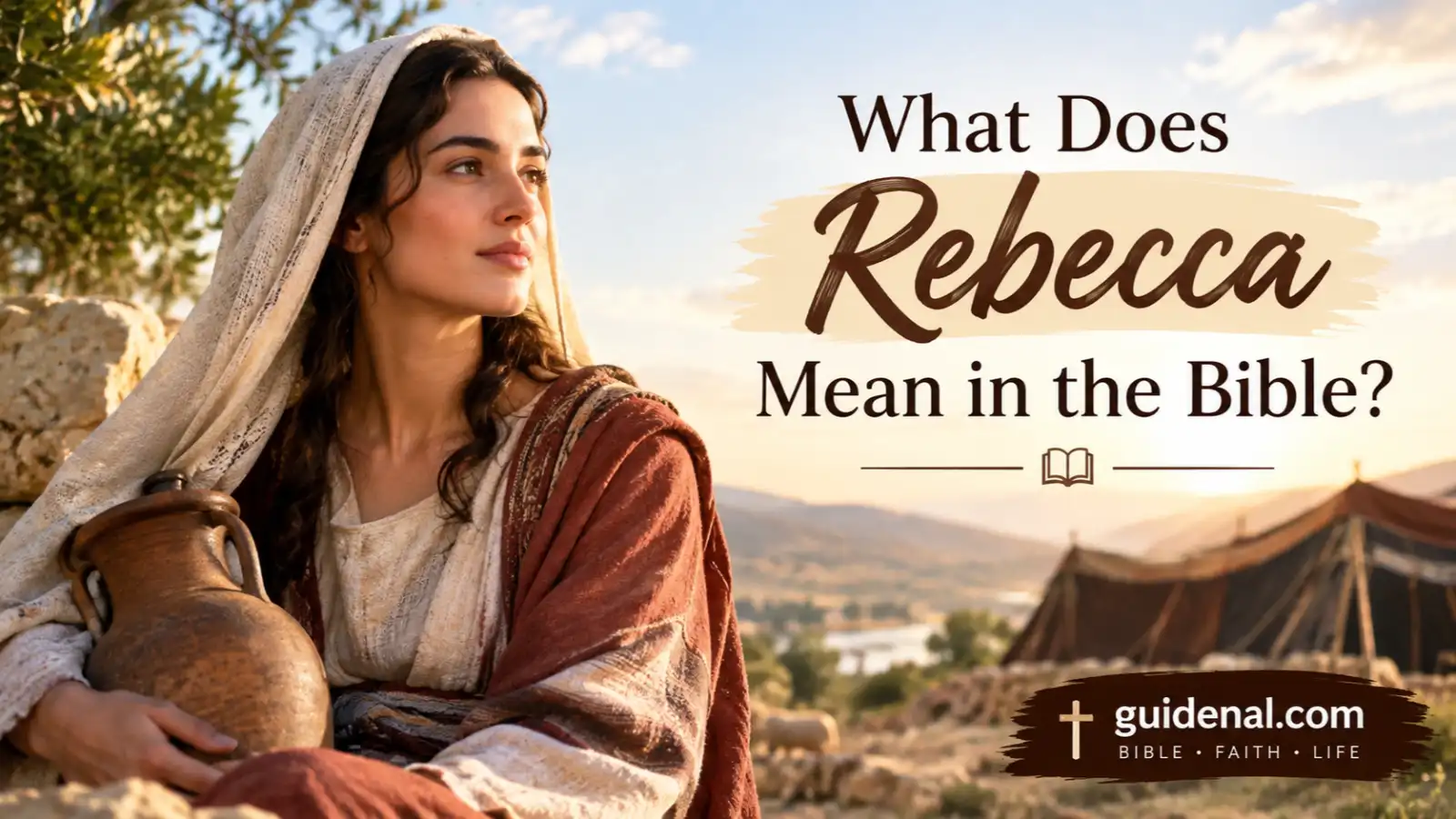
The name Rebecca, also spelled Rebekah, comes from the Hebrew name Rivqah (רִבְקָה). Its exact meaning is uncertain. Some name scholars connect it with a root related to tying or binding, while other explanations are less certain. It is best to present these as possible meanings, not as a settled biblical definition.
In the Bible, Rebekah is best known as the wife of Isaac and the mother of twin sons, Esau and Jacob. Her story appears mainly in Genesis 24–27. She becomes part of the family through whom God continues the covenant promises first given to Abraham.
Her life includes kindness, courage, faith, family conflict, and difficult choices. She welcomes Abraham’s servant at a well, leaves her home to marry Isaac, seeks God when her pregnancy troubles her, and later helps Jacob receive Isaac’s blessing through deception. Scripture does not hide either her strengths or her failures.
For Christians, Rebecca’s story offers a reminder that God’s purposes can continue through imperfect people. Her name does not guarantee a particular personality or destiny, but her biblical story gives readers much to consider about trust, wisdom, family relationships, and the consequences of our choices.
Understanding Rebecca in the Bible
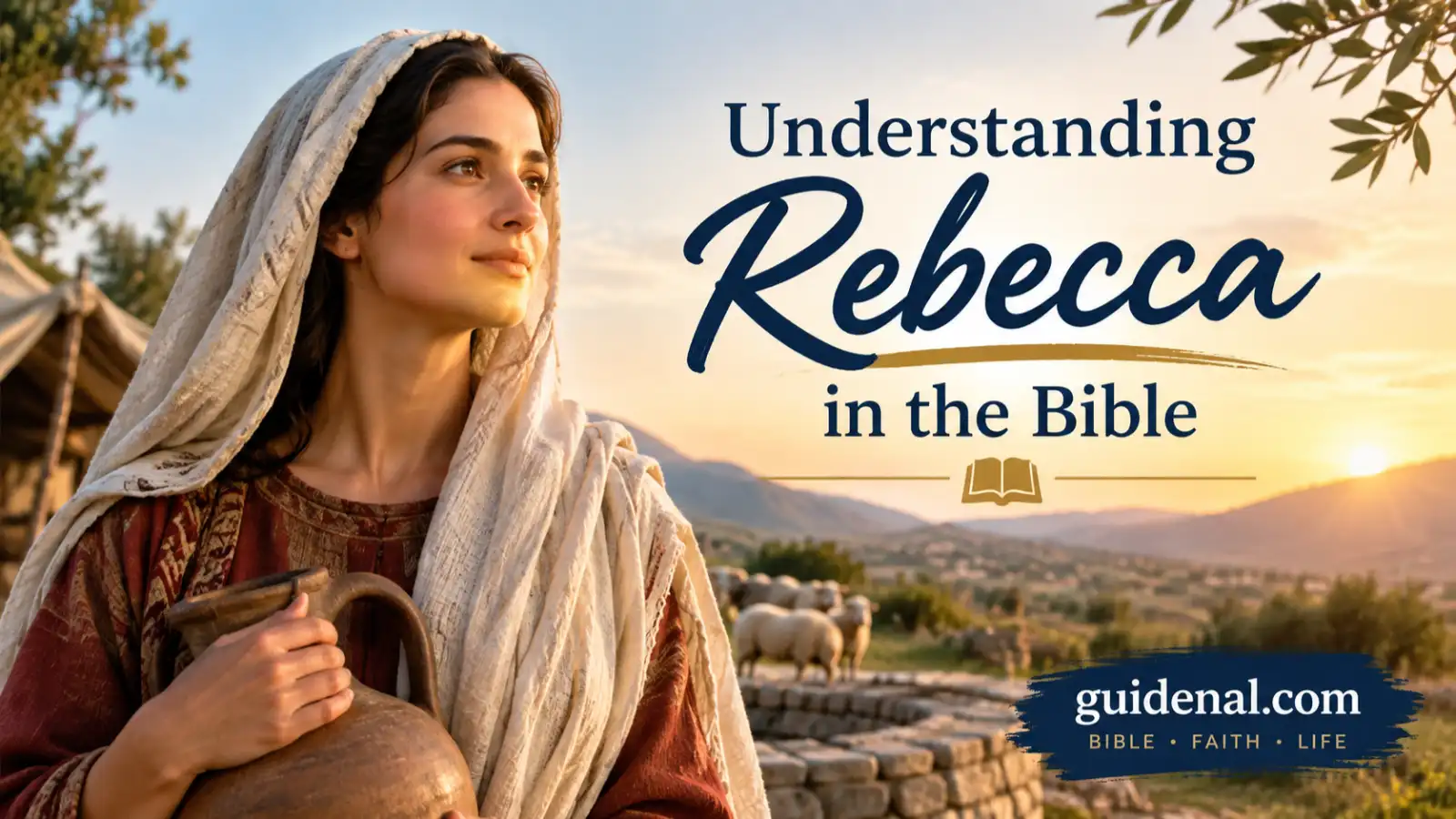
Rebekah enters the biblical story in Genesis 24. Abraham is old, and he wants a wife for his son Isaac from his wider family rather than from the Canaanite communities among whom he lives. He sends his trusted servant on a journey to find her.
At a well, the servant prays for guidance. He asks that the woman who offers him water and also waters his camels will be the one chosen for Isaac. Before he finishes speaking, Rebekah arrives and does exactly that. Her actions show generosity and energy, and the servant recognizes what he sees as God’s guidance. Read the full account in Genesis 24:1–27.
Rebekah agrees to leave her family and travel to marry Isaac. Their marriage brings comfort to Isaac after the death of his mother, Sarah. Yet her story is not a simple tale in which every decision is wise.
Genesis 25 explains that Rebekah struggles with a difficult pregnancy. She asks the Lord about it and receives a message that two nations are in her womb and that the older son will serve the younger. The twins are Esau and Jacob. Later, Rebekah helps Jacob deceive Isaac to receive the blessing intended for Esau.
These events connect Rebekah to the larger story of God’s covenant with Abraham and his descendants. The New Testament refers to her in Romans 9 when discussing God’s purpose and election. That passage is part of a wider theological argument, so it should not be reduced to the idea that every personal decision is directly commanded by God.
The Bible presents Rebekah as a real person whose life includes faith, initiative, family tension, and moral failure. Her story encourages readers to seek God’s wisdom without assuming that a good outcome makes every action right.
Best Bible Verses About Rebecca in the Bible
The King James Version (KJV) is used for the Scripture quotations in this section.
1. Genesis 24:15: Rebekah Arrives at the Well
Bible verse (KJV):
And it came to pass, before he had done speaking, that, behold, Rebekah came out.
What this verse means
Abraham’s servant had prayed for guidance about finding a wife for Isaac. Rebekah arrived while he was still speaking. The timing leads him to recognize God’s providence in the journey.
This verse does not teach that every coincidence is a sign from God. In this specific story, the servant’s prayer, Rebekah’s actions, and the events that follow help explain his response.
Life application
Pray when you face important decisions. Stay attentive to what happens, but also use wisdom, Scripture, and sound judgment rather than relying on signs alone.
2. Genesis 24:18: Rebekah Shows Kindness
Bible verse (KJV):
And she said, Drink, my lord: and she hasted, and let down her pitcher upon her hand, and gave him drink.
What this verse means
Rebekah responds quickly and respectfully to a stranger. Her kindness is practical. She does not merely offer pleasant words; she takes action to meet a need.
In the culture of the ancient Near East, offering water to a traveler was an important act of hospitality. Rebekah’s response prepares the reader to understand why the servant pays close attention to her character.
Life application
Look for simple ways to serve others. A kind word, a drink of water, or help with a task can reflect God’s love in ordinary life.
3. Genesis 24:19: Rebekah Goes Beyond What Is Asked
Bible verse (KJV):
And when she had done giving him drink, she said, I will draw water for thy camels also, until they have done drinking.
What this verse means
Rebekah offers more than the servant requested. Watering a group of camels would take time and effort, so her offer shows willingness to work.
The passage does not say that she knew she was being considered as Isaac’s wife. Her generosity appears in an everyday setting before she knows how the encounter will change her life.
Life application
Serve faithfully even when no reward is promised. Christian love is often seen in small acts that require patience, effort, and care.
4. Genesis 24:27: God’s Guidance and Faithfulness
Bible verse (KJV):
Blessed be the LORD God of my master Abraham, who hath not left destitute my master of his mercy and his truth.
What this verse means
After learning who Rebekah is, the servant praises God. He sees the journey as an expression of the Lord’s steadfast love and faithfulness to Abraham.
The verse shifts attention away from human planning alone and toward God’s covenant care. The servant has traveled and asked questions, but he gives God the praise.
Life application
When a situation works out well, take time to thank God. Gratitude helps Christians remember that they depend on his goodness, even when they have worked hard and planned carefully.
5. Genesis 24:58: Rebekah Makes a Decision
Bible verse (KJV):
And they called Rebekah, and said unto her, Wilt thou go with this man? And she said, I will go.
What this verse means
Rebekah’s family asks whether she is willing to leave with Abraham’s servant. Her answer is brief but decisive. She agrees to travel to a new land and marry a man she has not met.
The story highlights her willingness to step into an unfamiliar future. It does not mean Christians should make major decisions without careful thought. The chapter includes a longer process of prayer, discussion, and confirmation before this moment.
Life application
Some decisions require courage. Seek wise counsel, pray, consider your responsibilities, and then be willing to act when you have a sound basis for your choice.
6. Genesis 24:67: Isaac and Rebekah Become Partners
Bible verse (KJV):
And Isaac brought her into his mother Sarah’s tent, and took Rebekah, and she became his wife; and he loved her.
What this verse means
The chapter ends with marriage and comfort after grief. Isaac has lost his mother, Sarah, and the account says that Rebekah becomes a source of comfort to him.
The verse shows affection within the biblical story. It does not claim that marriage removes every sorrow or that every marriage follows the same path.
Life application
Healthy relationships need care, commitment, and compassion. Whether you are married or single, you can help others through grief by listening, offering support, and showing steady love.
7. Genesis 25:21: Isaac Prays for Rebekah
Bible verse (KJV):
And Isaac intreated the LORD for his wife, because she was barren: and the LORD was intreated of him, and Rebekah his wife conceived.
What this verse means
Rebekah is unable to conceive for a time. Isaac prays, and the passage says that Rebekah becomes pregnant. This is an important turning point in the family story because the promised family line appears to face a serious obstacle.
The verse describes what happened in this particular biblical account. It should not be used to claim that every couple who prays will conceive or that infertility is a sign of weak faith.
Life application
Bring painful and deeply personal concerns to God. Support people who face infertility or other struggles with compassion, not blame. Prayer can be part of faithful care without becoming a promise of a specific outcome.
8. Genesis 25:22: Rebekah Seeks the Lord
Bible verse (KJV):
And the children struggled together within her; and she said, If it be so, why am I thus? And she went to enquire of the LORD.
What this verse means
Rebekah experiences distress during her pregnancy. Rather than keeping her questions to herself, she seeks the Lord. The verse shows that bringing confusion and fear to God is part of her story.
Faith does not mean pretending that everything is easy. Rebekah’s question is honest, and the narrative makes room for her to ask for understanding.
Life application
When life feels confusing, you can pray honestly. You do not have to hide every question from God. Seek Scripture, prayer, and wise Christian counsel as you work through uncertainty.
9. Genesis 25:23: God Explains the Future of Her Sons
Bible verse (KJV):
Two nations are in thy womb, and two manner of people shall be separated from thy bowels.
What this verse means
God tells Rebekah that the twins will become two peoples and that the older will serve the younger. The statement prepares readers for the later conflict between Esau and Jacob and their descendants.
This is a particular revelation in the biblical narrative, not a general rule that parents should favor one child over another. Both sons remain responsible for their actions.
Life application
God’s plans are larger than what we can see at one moment. At the same time, do not use ideas about destiny to excuse dishonesty, favoritism, or harm within a family.
10. Genesis 25:28: Family Favoritism Creates Tension
Bible verse (KJV):
And Isaac loved Esau, because he did eat of his venison: but Rebekah loved Jacob.
What this verse means
The verse describes a divided family. Isaac favors Esau, while Rebekah favors Jacob. This detail helps explain the tensions that become more serious in Genesis 27.
The Bible reports this favoritism without presenting it as a model for parents. The later conflict shows how unequal affection and competing interests can damage trust.
Life application
Show fairness and care to family members. Avoid making one child feel more valued than another. When disagreements arise, address them honestly rather than allowing resentment to grow.
11. Genesis 27:6–7: Rebekah Hears Isaac’s Plan
Bible verse (KJV):
And Rebekah spake unto Jacob her son, saying, Behold, I heard thy father speak unto Esau thy brother.
What this verse means
Rebekah overhears Isaac preparing to bless Esau. She then tells Jacob what she has heard and begins planning how he might receive the blessing instead.
The context matters: Rebekah knows the earlier message about the older son serving the younger. Yet her response involves deception rather than an honest appeal to Isaac. The narrative allows readers to see the difference between trusting God’s promise and trying to control the outcome.
Life application
Do not assume that a good goal makes dishonest methods acceptable. When you believe something important is at stake, seek a truthful and wise path instead of manipulating others.
12. Genesis 27:13: Rebekah Takes Responsibility for the Plan
Bible verse (KJV):
And his mother said unto him, Upon me be thy curse, my son: only obey my voice, and go fetch me them.
What this verse means
Rebekah urges Jacob to follow her plan and says she will bear the curse if it goes wrong. Her confidence does not remove the moral problem: she is directing her son to deceive his father.
This is an important reminder that biblical characters are not always examples to copy. Scripture includes flawed choices so readers can understand the consequences of sin and the need for wisdom.
Life application
Pause before pressuring loved ones to follow your plans. Consider whether your actions are honest, loving, and consistent with Scripture. Take responsibility without drawing others into wrongdoing.
13. Genesis 27:35: Deception Has Consequences
Bible verse (KJV):
And he said, Thy brother came with subtilty, and hath taken away thy blessing.
What this verse means
Isaac recognizes that Jacob has deceived him. Rebekah’s plan has achieved its immediate aim, but it has also brought grief and conflict. Esau is deeply upset, and Jacob faces danger from his brother.
The passage does not present deception as harmless simply because the blessing has been given. The family suffers because trust has been broken.
Life application
Be truthful even when honesty feels costly. Deception may seem to solve an immediate problem, but it can create lasting pain and damage relationships.
14. Romans 9:10: Rebekah Is Remembered in the New Testament
Bible verse (KJV):
But when Rebecca also had conceived by one, even by our father Isaac;
What this verse means
Paul refers to Rebekah while discussing Jacob and Esau in his explanation of God’s purpose and election. He places their story within a larger reflection on God’s promises and the history of Israel.
The passage is part of a complex argument in Romans 9–11. Christians differ in how they explain some aspects of election, but the reference clearly shows that Rebekah’s family story remains important in the New Testament.
Life application
Read individual verses in their wider context. When a passage raises difficult questions about God’s sovereignty and human responsibility, study the whole argument and approach other Christians with humility.
15. Hebrews 11:6: Trust in God Matters
Bible verse (KJV):
But without faith it is impossible to please him: for he that cometh to God must believe that he is.
What this verse means
Hebrews 11 does not name Rebekah in this verse, but it gives a principle that helps readers reflect on the wider biblical story. Faith involves trusting that God exists and that seeking him matters.
Rebekah’s story contains moments of action and apparent trust, as well as a moment when she tries to secure an outcome through deception. Her life reminds us that faith needs to shape not only what we hope for but also how we act.
Life application
Trust God while choosing honest actions. Faith is not a reason to control other people or force an outcome. It calls Christians to seek God and follow his ways, even when the future is uncertain.
Biblical Themes Connected to Rebecca
Rebekah’s story connects with several important themes throughout the Bible. These themes help us understand her place in Scripture and apply its lessons to Christian living today.
1. God’s Faithfulness to His Promises
God had promised Abraham that his descendants would become a great nation. Rebekah became part of the family through which that promise continued.
Genesis 24 shows Abraham’s servant recognizing God’s faithfulness during his journey. Genesis 25 then describes the birth of Rebekah’s twin sons.
God’s promise did not depend on every person in the family making perfect choices. Yet this does not mean that their choices were unimportant. Their decisions still brought real consequences.
Spiritual lesson: God remains faithful, even when people struggle. Christians can trust his character while taking responsibility for their own actions.
2. Faith and God’s Guidance
Rebekah’s decision to leave her home was a major step. She agreed to travel to an unfamiliar place and marry Isaac, whom she had never met.
The servant had prayed for guidance, observed Rebekah’s kindness, and spoken with her family. The account presents several parts of the decision rather than one unexplained feeling.
This offers a balanced view of guidance. Prayer matters, but so do wisdom, character, counsel, and careful thought.
Spiritual lesson: Ask the Holy Spirit for wisdom, study God’s Word, and seek mature Christian counsel. Do not assume every unusual event or strong feeling is a direct message from God.
3. Kindness and Hospitality
Rebekah’s willingness to give water to the servant and his camels is one of the clearest positive details in her story.
Hospitality was important in the ancient world. Travelers needed water, food, and shelter, and welcoming strangers could require significant effort. Rebekah’s actions show practical generosity.
This theme connects with Hebrews 13:2, which encourages believers not to forget hospitality to strangers.
Spiritual lesson: You do not need a public role to serve God. Quiet acts of kindness can show love for your neighbor and reflect the character of Jesus Christ.
4. Family Love and Its Challenges
Genesis 25:28 reveals that Isaac favored Esau while Rebekah favored Jacob. This division helps explain the painful events that follow.
Family relationships can be complicated. Parents may worry about their children’s futures, disagree over decisions, or struggle with fairness. The Bible does not hide these problems.
Rebekah’s concern for Jacob may have been connected to the earlier message about the twins. However, her decision to help him deceive Isaac brought further conflict rather than peace.
Spiritual lesson: Love your family without using favoritism, pressure, or dishonesty. Seek peace, but do not confuse peace with avoiding difficult conversations.
5. God’s Sovereignty and Human Responsibility
The account of Jacob and Esau raises questions about God’s purpose. Before the twins were born, Rebekah received a message about their future.
Later, she helped Jacob obtain Isaac’s blessing through deception. The story shows that God’s larger purposes and human moral choices are both important.
Christians interpret some details of this story differently, especially when connecting it with Romans 9. Still, it is unwise to conclude that every action taken by a biblical character was approved by God.
Spiritual lesson: Trust that God can work through imperfect people, but do not use his sovereignty as an excuse for wrongdoing. Seek to obey him in both your goals and your methods.
6. Prayer During Uncertainty
When Rebekah experienced distress during her pregnancy, she went to inquire of the Lord (Genesis 25:22). She did not have all the answers, and she sought understanding.
Her example can encourage Christians who face uncertainty about family, work, relationships, or the future.
Prayer is not a way to control God or guarantee the answer we want. It is a way to bring our concerns before him and seek wisdom.
Spiritual lesson: Be honest with God about your fears and questions. Continue in prayer while taking wise, responsible steps.
Biblical Symbolism in Rebecca’s Story
Rebekah’s account contains meaningful images and events. However, it is important to distinguish what the text actually says from symbolic meanings readers may draw from it.
The Well: A Place of Meeting and Hospitalit
bible.art
The well in Genesis 24 is a practical place where people draw water and travelers may meet others. It becomes the setting for the servant’s prayer and Rebekah’s act of kindness.
The Bible does not say that the well itself represents a special spiritual power. Its importance comes from what happens there: prayer, hospitality, conversation, and a major family decision.
Spiritual reflection: God can work through ordinary places and daily tasks. A routine moment may become important, even when we do not recognize it at first.
Water: A Basic Need Met Through Generosity
Water is essential for life, especially in the dry regions described in the Old Testament. Rebekah’s offer to water the camels required effort, not just a few polite words.
Water has other meanings in different biblical passages. For example, Jesus speaks of living water in John 4:10–14. But readers should not automatically assign that meaning to every mention of water.
Spiritual reflection: Notice the needs around you. Christian love becomes visible when you respond to people with practical care.
The Journey: Courage and a New Beginning
Rebekah leaves her family and travels to Isaac’s household. This is a major transition in her life, and she agrees to go despite the uncertainty of the future.
The narrative does not call her journey a universal pattern that every believer must follow. It is a particular event in the story of Abraham’s family.
Spiritual reflection: New seasons can require courage. Seek God’s wisdom, consider your responsibilities, and take the next faithful step without pretending that you know everything ahead.
The Blessing: Promise and Responsibility
In Genesis 27, Isaac’s blessing becomes the center of conflict between Jacob and Esau. In the family’s world, a father’s blessing was connected with inheritance, family standing, and the future of his descendants.
The story is not simply about receiving good things. It also exposes the harm caused by favoritism and deception.
Spiritual reflection: Blessing should never become an excuse to compete dishonestly. Seek God’s gifts with humility, integrity, and concern for others.
Practical Lessons for Christians Today
Rebekah’s story is ancient, but its lessons remain relevant. Here are several ways to apply them without assuming that every event in her life must be repeated today.
Pray Before Making Important Decisions
Abraham’s servant prayed for guidance before meeting Rebekah. His example reminds Christians to bring major decisions to God.
- Pray for wisdom rather than demanding a specific sign.
- Read relevant passages of Scripture.
- Ask mature, trustworthy believers for advice.
- Consider the likely effects of your decision on other people.
James 1:5 encourages those who lack wisdom to ask God for it.
Practice Kindness in Ordinary Moments
Rebekah’s response at the well was practical. She met a need and was willing to work.
You can apply this lesson by helping a neighbor, listening to someone who feels alone, welcoming a visitor, or supporting a person going through a hard time.
You do not need to know how your actions will affect the future. Simply choose to act with kindness and integrity.
Avoid Favoritism in Family Relationships
The conflict between Isaac, Rebekah, Jacob, and Esau shows how divided loyalties can hurt a family.
If you are a parent, try to show each child love and fairness. If you are a sibling or relative, avoid turning disagreements into competitions for approval.
When conflict develops, seek honest communication and appropriate help rather than manipulation.
Do Not Use Good Intentions to Excuse Wrong Actions
Rebekah may have believed she was helping bring about the future described in Genesis 25:23. Yet she chose deception in Genesis 27.
A good intention does not make every method right. Christians should seek to follow Jesus Christ in both their goals and their behavior.
When you make a mistake, acknowledge it, seek forgiveness where appropriate, and work toward repairing the harm.
Trust God Without Trying to Control Every Outcome
Rebekah’s story shows the tension between God’s promises and human efforts to secure the future. Her actions remind readers that anxiety about an outcome can lead to unwise decisions.
Trust does not mean doing nothing. It means taking responsible steps while recognizing that you cannot control every person or event.
Learn From the Whole Story, Not Just One Moment
It is easy to focus only on Rebekah’s kindness at the well or only on her deception later. Reading Genesis 24–27 together gives a fuller picture.
The same approach helps with other biblical figures. Scripture includes faithful actions, human weakness, consequences, and God’s continuing work. Reading the full account keeps us from turning a complicated life into a simplistic lesson.
A Short Prayer Inspired by Rebecca’s Story
Heavenly Father,
Thank you for the wisdom and lessons found in your Word. Help me seek you when I face uncertainty. Teach me to show kindness, act with courage, and treat my family and others with fairness.
Give me wisdom to recognize the difference between trusting you and trying to control every outcome. When I make mistakes, help me admit them and choose a better path. Let the Holy Spirit guide my thoughts and actions so that my life reflects the love and truth of Jesus Christ.
Help me trust your faithfulness while remaining responsible for my choices. In Jesus’ name, Amen
FAQs:
1. What Does Rebecca Mean in the Bible?
Rebecca, also spelled Rebekah, is a Hebrew name whose exact meaning is uncertain. Some scholars connect it with a root related to tying or binding, but this is not a definite biblical definition. In Scripture, Rebekah is the wife of Isaac and mother of Jacob and Esau.
2. Is Rebecca a Biblical Name?
Yes. Rebekah appears in the Old Testament, especially in Genesis 24–27. The name is also mentioned in Romans 9:10 in the New Testament. Rebecca is a common English spelling, while Rebekah is used in many English Bible translations.
3. What Is the Spiritual Meaning of the Name Rebecca?
The Bible does not give Rebecca a specific spiritual definition. Christians may reflect on the biblical Rebekah’s hospitality, courage, family relationships, and choices. These are lessons from her story, not guaranteed traits of everyone who carries the name.
4. Was Rebecca a Good Woman in the Bible?
Rebekah showed generosity when she offered water to Abraham’s servant and his camels. She also demonstrated courage when she agreed to leave her home. However, Genesis 27 records her role in a deception that caused family conflict. The Bible presents a complex person rather than a flawless example.
5. What Was Rebecca Known for in the Bible?
Rebekah is known for becoming Isaac’s wife, giving birth to Esau and Jacob, and helping Jacob receive Isaac’s blessing. Her story is central to the continuation of Abraham’s family line and the biblical account of God’s covenant promises.
6. What Does Rebecca Teach Us About Faith?
Her story teaches readers to recognize the importance of prayer, hospitality, courage, and seeking God’s guidance. It also warns against trying to force a desired outcome through deception. Faith should shape both what we hope for and how we act.
7. What Does the Bible Say About Rebecca and Jacob?
Rebekah loved Jacob, and Genesis 27 describes how she helped him deceive Isaac to receive the blessing intended for Esau. Earlier, in Genesis 25:23, she had received a message about the future of her two sons. The text records these events but does not present deception as a model for Christian behavior.
8. Is Rebecca Mentioned in the New Testament?
Yes. Romans 9:10 refers to Rebecca when Paul discusses Isaac’s children, Jacob and Esau, as part of his explanation of God’s purpose and election. To understand the reference, read it within the wider discussion in Romans 9–11.
Conclusion:
The biblical meaning of Rebecca is best understood through both the possible Hebrew origin of her name and the story Scripture tells about her. The name’s exact meaning remains uncertain, but Rebekah’s place in the Bible is clear. She was Isaac’s wife, the mother of Esau and Jacob, and part of the family through which God’s covenant story continued.
Her life offers encouragement and warning. Her kindness at the well shows the value of practical generosity. Her willingness to leave home reflects courage. Her later deception reminds us that even people who know something about God’s promises can make harmful choices.
You do not need to interpret your name as a prediction of your future. Instead, let the Bible shape your faith, character, and decisions. God’s Word offers wisdom for daily life, and his faithfulness gives believers reason to hope.
As Proverbs 3:5–6 teaches, trust in the Lord and seek his direction rather than relying only on your own understanding.

I am a content writer at Guidenal, where I create easy-to-understand, well-researched, and reader-focused guides inspired by biblical teachings. Working alongside Naqash Ayub, I strive to deliver trustworthy content that helps readers grow in faith and find practical answers from Scripture.