
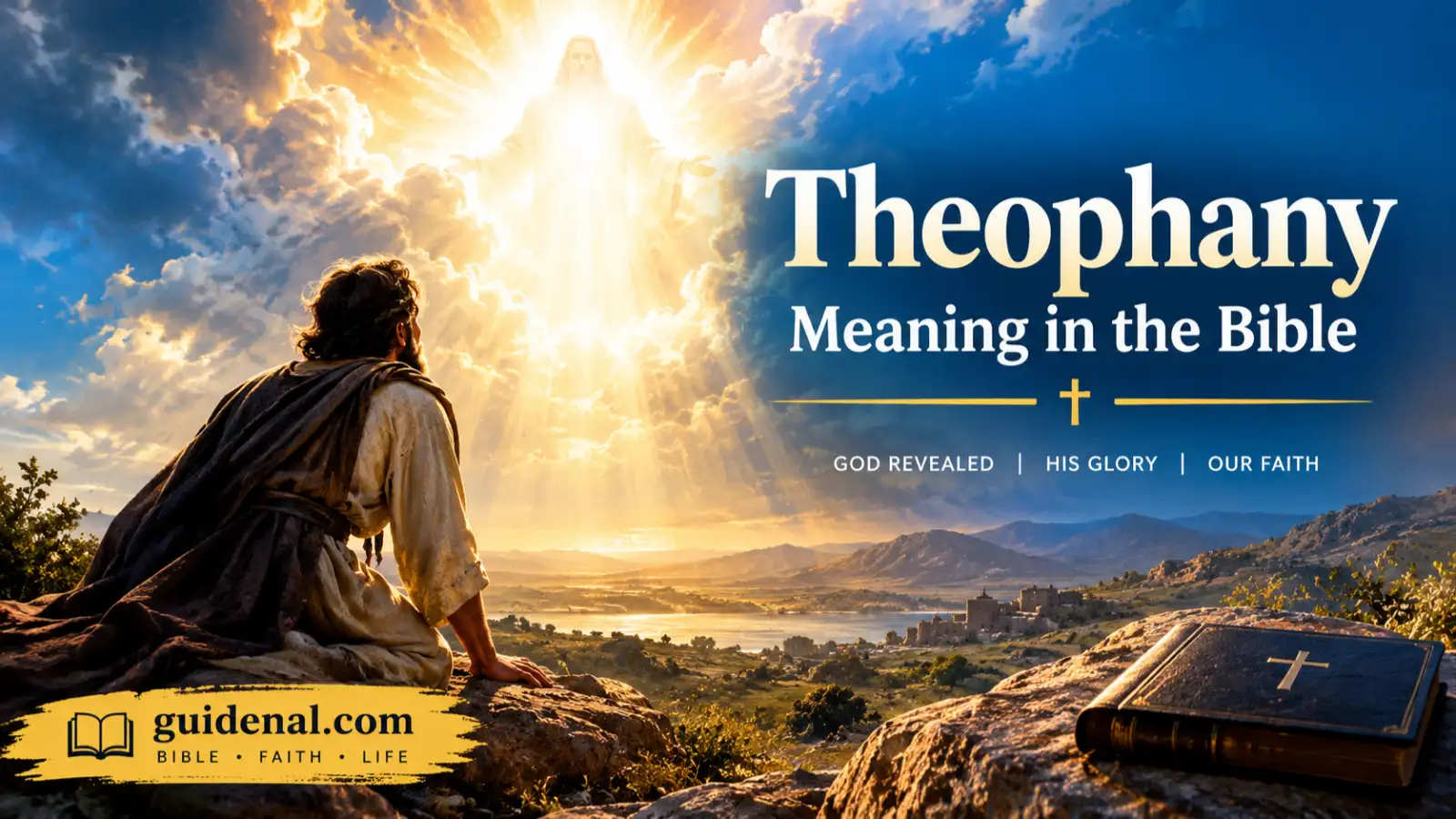
The central search intent for theophany meaning in the Bible is to understand how God revealed His presence to people in Scripture.
Readers also want clear Bible examples, the difference between a theophany and a vision, the meaning of the burning bush and other divine appearances, and how these events strengthen Christian faith today.
This article explores those questions through the Old and New Testaments. It also explains an important distinction: a theophany is a visible or otherwise perceptible manifestation of God, but not every dream, angelic appearance, or vision in the Bible is necessarily a theophany.
What Does Theophany Mean in the Bible?

A theophany is a temporary manifestation of God’s presence that people can perceive. In the Bible, God’s presence may be revealed through fire, cloud, thunder, a voice, or an appearance described in human form. The term comes from Greek words meaning “God” and “to appear.” The word theophany itself does not appear in the biblical text; it is a theological term used to describe certain events recorded in Scripture.
One well-known example is the burning bush in Exodus 3. Moses saw a bush burning without being consumed. Through this encounter, God called Moses to lead the Israelites out of slavery in Egypt.
Theophanies are not simply strange or dramatic events. They reveal something about God’s character and purpose. They may show His holiness, guide His people, confirm His covenant, or prepare someone for an important task.
The Bible also teaches that God is greater than anything human beings can fully see or understand. A theophany does not mean that people have captured the fullness of God in a visible form. Instead, God graciously makes His presence known in a way that serves His purpose.
Understanding Theophany in Its Biblical Context
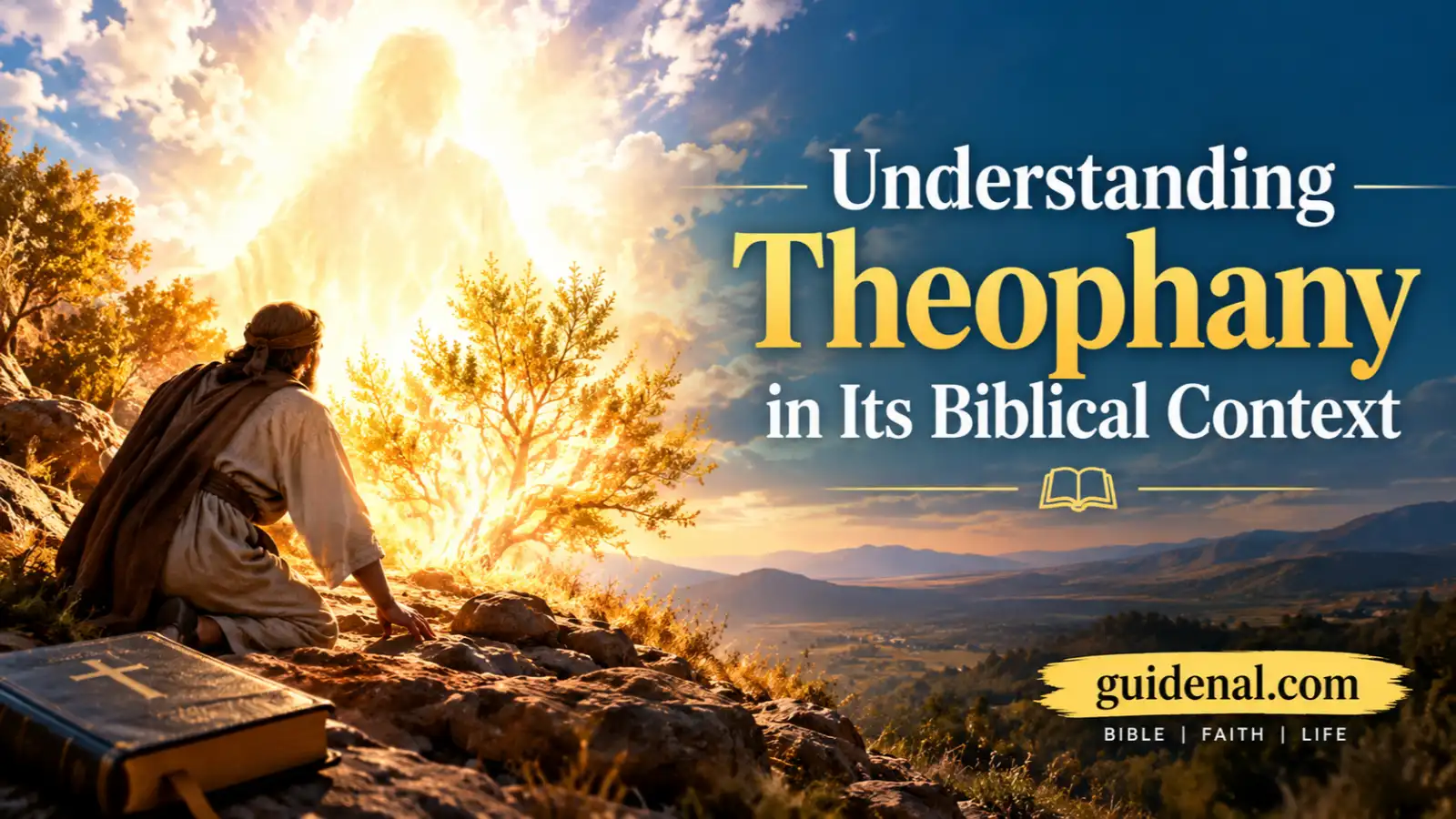
Theophanies appear most clearly in the Old Testament, especially in the stories of the patriarchs, Moses, and Israel’s journey through the wilderness. At key moments, God reveals His presence as He makes promises, calls His servants, delivers His people, and gives His law.
In Genesis, God appears to Abraham and confirms His promise. In Exodus, He appears to Moses in the burning bush and later reveals His majesty at Mount Sinai. During Israel’s wilderness journey, the pillar of cloud and fire provides visible guidance. These accounts show that the God of the Bible is not distant from His creation. He speaks, acts, guides, and remains faithful to His covenant.
The historical setting matters. Ancient people often connected thunder, fire, clouds, and mountains with divine power. The Bible uses some of these features in its descriptions of God’s presence, but it does not teach that nature itself is God. Creation serves its Creator; it is not the Creator.
The New Testament adds another important dimension. Jesus Christ reveals God in a unique and personal way. John describes the Word becoming flesh, while Hebrews says that God has spoken through His Son. Christians therefore distinguish temporary manifestations of God from the incarnation of Jesus, who came to live among humanity.
Some Christians also understand certain Old Testament appearances of the “Angel of the LORD” as appearances of Christ before His incarnation. Others are more cautious about identifying these figures. The biblical accounts should be read carefully without claiming certainty where Scripture does not give it.
Best Bible Verses About Theophany
The Bible does not provide a list titled “theophanies.” Instead, readers identify these events by examining passages where God reveals His presence in an unusual, direct, and meaningful way. The following verses show important examples and related truths.
Verse quotations below use the World English Bible (WEB).
1. Genesis 12:7: God Appears to Abram
Bible verse: “Yahweh appeared to Abram, and said, ‘I will give this land to your offspring.’”
What this verse means: God appeared to Abram and reaffirmed His promise concerning the land. This encounter took place as Abram traveled through Canaan. The appearance was connected to God’s covenant promise, not merely to an extraordinary experience.
Life application: God’s promises should shape our faith and choices. We may not receive a visible appearance like Abram did, but we can trust what God has revealed in Scripture and follow Him faithfully.
2. Genesis 18:1: The LORD Appears to Abraham
Bible verse: “Yahweh appeared to him by the oaks of Mamre, as he sat in the tent door in the heat of the day.”
What this verse means: Genesis describes the LORD appearing to Abraham. The story then introduces three men who visit him. Christians have interpreted this passage in different ways, including as a theophany accompanied by angelic visitors. The text’s details deserve careful attention rather than a rushed conclusion.
Life application: Abraham responds with hospitality. His example reminds Christians to treat visitors with kindness and care, even when they do not know the full story of the people they meet.
3. Genesis 26:2: God Appears to Isaac
Bible verse: “Yahweh appeared to him, and said, ‘Don’t go down into Egypt. Live in the land I tell you about.’”
What this verse means: God spoke to Isaac during a time of famine and directed him where to live. The encounter renewed the covenant promises given to Abraham. God’s appearance brought specific guidance during an uncertain period.
Life application: Faith includes seeking God’s wisdom before making major choices. Christians can pray, study Scripture, and seek wise counsel rather than treating every strong feeling as a direct message from God.
4. Genesis 32:30: Jacob Encounters God
Bible verse: “Jacob called the name of the place Peniel: for he said, ‘I have seen God face to face, and my life is preserved.’”
What this verse means: Jacob wrestles through the night with a mysterious figure in Genesis 32. The encounter leaves him injured but blessed, and he names the place Peniel. The story presents a profound meeting with God, although interpreters differ on how to describe the figure’s identity and the precise nature of the event.
Life application: A real encounter with God should lead us toward humility and dependence, not pride. Jacob leaves the encounter changed, reminding us that God can work in our weakness as well as our strength.
5. Exodus 3:2: God Appears in the Burning Bush
Bible verse: “The angel of Yahweh appeared to him in a flame of fire out of the middle of a bush. He looked, and behold, the bush burned with fire, and the bush was not consumed.”
What this verse means: Moses sees the angel of the LORD in the flame, and the passage soon says that God calls to him from the bush. This close connection between the angel and God is one reason the passage is often discussed when Christians study theophany. The bush is not consumed, and God calls Moses to a mission of deliverance.
Life application: God can call people to difficult work. Moses was not asked to trust his own ability alone; he was called to obey the God who promised to be with him.
6. Exodus 3:5: Holy Ground
Bible verse: “He said, ‘Don’t come close. Take your sandals off of your feet, for the place you are standing on is holy ground.’”
What this verse means: The ground is called holy because God is present and speaking there. The passage does not teach that the location has magical power. Its holiness is tied to the Lord’s presence and command.
Life application: Worship calls for reverence. Christians can approach God with confidence through His grace while remembering that He is holy and worthy of respect.
7. Exodus 13:21: The Pillar of Cloud
Bible verse: “Yahweh went before them by day in a pillar of cloud, to lead them on the way, and by night in a pillar of fire, to give them light.”
What this verse means: God guided Israel after bringing the people out of Egypt. The cloud and fire gave the people a visible sign of His leadership. The pillar was not simply a symbol of comfort; it belonged to the story of God’s real guidance and protection of Israel.
Life application: God’s guidance may not come in a dramatic sign. Christians can look to His Word, prayer, wise counsel, and the leading of the Holy Spirit while remaining patient when the next step is not clear.
8. Exodus 19:18: God Descends on Mount Sinai
Bible verse: “Mount Sinai, the whole of it, smoked, because Yahweh descended on it in fire; and its smoke ascended like the smoke of a furnace, and the whole mountain quaked greatly.”
What this verse means: God’s presence at Sinai is accompanied by fire, smoke, and a shaking mountain. This takes place as Israel prepares to receive God’s covenant law. The dramatic setting stresses God’s holiness and the seriousness of His covenant.
Life application: God’s grace does not make obedience unimportant. His people are called to listen to His instruction and live in a way that reflects His character.
9. Exodus 24:10: The God of Israel Revealed
Bible verse: “They saw the God of Israel. Under his feet was like a paved work of sapphire stone, like the skies for clearness.”
What this verse means: Moses, Aaron, Nadab, Abihu, and Israel’s elders experience a remarkable revelation of God’s presence. The description uses vivid imagery, but the text does not claim that human beings can fully comprehend God’s nature. The event confirms the solemn covenant relationship between God and Israel.
Life application: Worship and fellowship with God are gifts, not achievements to boast about. A proper response to God’s revelation is gratitude, reverence, and faithful living.
10. Exodus 33:20: God’s Holiness and Human Limits
Bible verse: “He said, ‘You cannot see my face, for man may not see me and live.’”
What this verse means: Moses asks to see God’s glory, and God explains the limit of what Moses can endure. The passage helps readers understand why biblical appearances of God should not be treated as a complete view of His infinite being.
Life application: It is healthy to accept that some things about God remain beyond our full understanding. Faith does not require us to have every answer. It calls us to trust God’s character as He has revealed it.
11. Numbers 12:8: God Speaks to Moses
Bible verse: “With him I will speak mouth to mouth, even plainly, and not in riddles; and he shall see Yahweh’s form.”
What this verse means: God is explaining Moses’ unique role in response to a challenge from Miriam and Aaron. The passage emphasizes the unusual clarity of God’s communication with Moses. It should not be used to claim that every believer will receive the same kind of revelation.
Life application: God entrusts people with different roles and responsibilities. Rather than comparing our spiritual lives with someone else’s, we should faithfully carry out what God has clearly given us to do.
12. Deuteronomy 5:24: God’s Glory at Sinai
Bible verse: “Behold, Yahweh our God has shown us his glory and his greatness, and we have heard his voice out of the middle of the fire.”
What this verse means: Moses recalls Israel’s experience at Sinai. The people heard God’s voice amid the fire and recognized the greatness of His revelation. The encounter was tied to receiving the covenant and learning how God’s people were to live.
Life application: Listening to God’s Word should lead to obedience. Spiritual experiences are not an end in themselves; they should deepen our trust in God and our willingness to follow Him.
13. Judges 6:22: Gideon Recognizes the LORD’s Messenger
Bible verse: “Gideon saw that he was the angel of Yahweh; and Gideon said, ‘Alas, Lord Yahweh! For I have seen the angel of Yahweh face to face!’”
What this verse means: Gideon realizes the significance of his encounter after the angel of the LORD has given him a sign. He fears for his life, reflecting the seriousness associated with encountering God’s holy presence. The story then moves toward God’s reassurance and Gideon’s calling to help Israel.
Life application: Feeling afraid does not automatically mean that faith is absent. Gideon’s story shows God patiently addressing human fear while calling His servant to act with courage.
14. 1 Kings 19:11: The LORD Passes By
Bible verse: “He said, ‘Go out and stand on the mountain before Yahweh.’ Behold, Yahweh passed by, and a great and strong wind tore the mountains, and broke in pieces the rocks before Yahweh; but Yahweh was not in the wind.”
What this verse means: Elijah encounters powerful natural events, but the passage distinguishes the wind, earthquake, and fire from the gentle sound that follows. The story teaches that God’s communication cannot be reduced to spectacular displays of power.
Life application: Do not assume that the loudest or most dramatic experience is always the clearest sign of God’s direction. Make room for quiet reflection, Scripture, prayer, and wise discernment.
15. Isaiah 6:1: Isaiah Sees the Lord
Bible verse: “In the year that king Uzziah died, I saw the Lord sitting on a throne, high and lifted up; and his train filled the temple.”
What this verse means: Isaiah’s vision presents God as the exalted King. The prophet sees heavenly worship and becomes deeply aware of his own sinfulness. God then cleanses and commissions him. Many discussions of theophany include this vision, though some distinguish visionary revelation from an appearance experienced in the ordinary physical world.
Life application: A clearer view of God should lead to humility and a willingness to serve. Isaiah’s calling begins with recognizing God’s holiness and receiving cleansing, not with claiming personal greatness.
16. Matthew 3:16–17: The Baptism of Jesus
Bible verse: “Jesus, when he was baptized, went up directly from the water: and behold, the heavens were opened to him. He saw the Spirit of God descending as a dove, and coming on him. Behold, a voice out of the heavens said, ‘This is my beloved Son, with whom I am well pleased.’”
What this verse means: At Jesus’ baptism, the Spirit descends like a dove and the Father’s voice identifies Jesus as His beloved Son. Christian teachers sometimes describe this as a theophanic event because God’s presence is made perceptible in a striking way. The passage also reveals the distinct persons of the Father, Son, and Holy Spirit.
Life application: Jesus’ ministry begins with the Father’s declaration of His identity and pleasure. Christians can find assurance in the good news that salvation rests on Christ, not on trying to earn God’s love through personal perfection.
17. Matthew 17:2: The Transfiguration
Bible verse: “He was transfigured before them. His face shone like the sun, and his garments became as white as the light.”
What this verse means: Jesus is transfigured before Peter, James, and John. Moses and Elijah appear, and the disciples receive a glimpse of Jesus’ glory. The event points toward His identity and the suffering and resurrection He had been teaching His disciples to expect.
Life application: The glory of Christ should shape how Christians hear and follow Him. The Transfiguration is not an invitation to chase extraordinary experiences; it directs attention to Jesus and His words.
18. John 1:14: God Revealed Through Jesus Christ
Bible verse: “The Word became flesh, and lived among us. We saw his glory, such glory as of the one and only Son of the Father, full of grace and truth.”
What this verse means: John describes the incarnation: the eternal Word truly became human in Jesus Christ. Unlike a temporary theophany, the incarnation is not simply a brief appearance through fire, cloud, or a visible sign. Jesus lived among humanity in real human life and reveals the Father in a unique way.
Life application: When Christians want to understand God’s heart, they look to Jesus His compassion, truth, holiness, sacrifice, and resurrection. The Gospel gives believers a sure foundation for faith.
19. Acts 2:3–4: The Spirit Comes at Pentecost
Bible verse: “Tongues like fire appeared and were distributed to them, and one sat on each of them. They were all filled with the Holy Spirit, and began to speak with other languages, as the Spirit gave them the ability to speak.”
What this verse means: At Pentecost, visible signs accompany the coming of the Holy Spirit upon Jesus’ followers. The fire-like tongues are described as “like fire,” so the text should not be simplified into a claim that literal flames rested on each person. The event empowers the disciples to witness to people from many nations.
Life application: The Holy Spirit equips Christians for faithful witness and service. Spiritual gifts should help communicate the good news of Jesus and build up the community, not become a reason for pride or division.
20. Revelation 1:12–16: John’s Vision of the Glorified Christ
Bible verse: “I turned to see the voice that spoke with me. Having turned, I saw seven golden lampstands.”
What this verse means: John sees a vision of the risen Christ among the lampstands. The following verses describe Christ with striking images of authority, purity, and power. This is a prophetic vision, and it is often discussed alongside theophanies because it reveals divine glory through a vivid encounter.
Life application: The risen Jesus is not absent from His people. Revelation calls Christians to remain faithful, even when their circumstances are difficult, because Christ reigns and knows His churches.
Biblical Themes Connected to Theophany
Theophanies help readers understand several important themes that run throughout the Bible. Each appearance has its own setting and purpose, but together they show how God reveals Himself and works in the lives of His people.
1. God’s Holiness
God’s holiness is a central theme in the burning bush, Mount Sinai, and Isaiah’s vision. Moses is told to remove his sandals because he stands on holy ground. At Sinai, the people prepare themselves to meet the Lord. Isaiah responds to his vision with an awareness of his own sin.
These stories show that God is not merely a powerful being who can be approached casually. He is holy, pure, and worthy of reverence.
Related Scripture: Isaiah 6:3; Exodus 19:10–12; 1 Peter 1:15–16.
For Christians today, reverence and love belong together. God welcomes His people, yet His grace does not make His holiness less important.
2. God’s Guidance and Purpose
Some theophanies occur when God gives someone a task or direction. He calls Moses to lead Israel out of Egypt, guides the Israelites through the wilderness, and commissions Isaiah to speak His message.
These accounts show that God’s revelation serves a purpose. It is not simply a private spiritual experience. God speaks and acts within His wider plan of redemption.
Related Scripture: Exodus 3:7–10; Exodus 13:21–22; Isaiah 6:8–9.
Believers can learn from these stories without expecting God to repeat the same signs. Scripture, prayer, wise counsel, and the work of the Holy Spirit help Christians seek faithful direction.
3. God’s Covenant Faithfulness
God’s appearances to Abraham, Isaac, and Jacob are closely connected to His promises. He reminds them of His covenant and continues His work through their families.
The people involved are not perfect. They experience fear, make mistakes, and face uncertainty. Yet God remains faithful to His promises.
Related Scripture: Genesis 12:1–3; Genesis 26:3–5; Genesis 28:13–15.
This theme offers hope when life feels unsettled. Christian hope is not based on controlling every outcome. It rests on God’s character and the promises He has given in His Word.
4. Revelation and Human Limits
The Bible presents God as one who makes Himself known, but it also teaches that His nature is greater than human understanding. Moses is told that he cannot see God’s face and live, while Isaiah sees the Lord in a prophetic vision.
These accounts are not contradictions. They show that God can reveal Himself in a way people can receive without making His full glory something humans can control or fully comprehend.
Related Scripture: Exodus 33:18–23; John 1:18; 1 Timothy 6:15–16.
Christians can study Scripture carefully while remaining humble about difficult passages. It is better to acknowledge what the Bible leaves unclear than to claim knowledge it does not provide.
5. Jesus Christ as the Full Revelation of God
The New Testament gives a central place to Jesus Christ. John says that the Word became flesh, and Hebrews explains that God has spoken through His Son. Jesus does not merely bring a message from God; He reveals the Father in a unique way.
This is why Christians distinguish the incarnation from Old Testament theophanies. A burning bush or pillar of cloud is a temporary manifestation. Jesus’ incarnation is the coming of the eternal Son into human life.
Related Scripture: John 1:14–18; John 14:9; Hebrews 1:1–3.
The best response to the study of theophany is not to become fascinated only with unusual appearances. It is to know God more deeply through Jesus, whose life, death, and resurrection stand at the heart of the Christian faith.
Biblical Symbolism in Theophanies
The Bible uses visible signs to communicate something about God’s presence. Yet a sign’s meaning should be understood from its passage, not from a rule invented outside Scripture.
Fire: Holiness, Presence, and Power
Fire appears in the burning bush and at Mount Sinai. In these accounts, it accompanies God’s presence and highlights His holiness and power. Fire can also have other meanings in Scripture, including judgment and purification, depending on the context.
Key passages: Exodus 3:2–6; Exodus 19:18; Deuteronomy 4:24.
The lesson is not that every fire or flame is a divine sign. Rather, these passages invite readers to recognize God’s holiness and respond to Him with reverence.
Cloud: God’s Presence and Guidance
The pillar of cloud guides Israel during the day, while the pillar of fire provides light at night. Clouds also appear at Sinai and in other biblical descriptions of divine glory.
Key passages: Exodus 13:21–22; Exodus 24:15–16; 1 Kings 8:10–11.
The cloud reminds readers that God can be present even when His people cannot see everything clearly. However, the Bible does not teach that every cloud in the sky carries a special message.
Thunder, Wind, and Earthquake: The Majesty of God
Thunder, wind, and shaking earth appear in several passages that describe God’s power. At Sinai, these signs accompany the giving of the covenant. Psalm 18 uses storm imagery to describe God’s powerful deliverance.
Yet Elijah’s experience in 1 Kings 19 warns against assuming that God always speaks through the most dramatic natural event. God’s revelation is not limited to spectacle.
Key passages: Exodus 19:16–19; Psalm 18:7–15; 1 Kings 19:11–13.
The lesson is to respect God’s power without treating every storm, earthquake, or unusual event as a personal prophecy.
Human Form: God’s Presence Made Perceptible
Some biblical accounts describe God appearing in ways that resemble a human visitor. Genesis 18 recounts the LORD appearing to Abraham, while Genesis 32 describes Jacob’s mysterious struggle. These passages have received different interpretations across Christian traditions.
It is important not to force every detail into a single explanation. The Bible’s main concern is what God does in these encounters: He makes promises, confronts, blesses, or reveals His purpose.
Key passages: Genesis 18:1–8; Genesis 32:24–30.
Light and Glory: Revelation and Majesty
Light is often associated with God’s glory and truth. At the Transfiguration, Jesus’ appearance shines with extraordinary brightness. In Revelation, John sees the risen Christ in a vision filled with vivid images.
These passages reveal something about Christ’s majesty, but their imagery should be interpreted in context rather than turned into a formula for identifying divine encounters.
Key passages: Matthew 17:1–8; John 1:4–9; Revelation 1:12–18.
Theophany, Christophany, Angelophany, and Vision: What Is the Difference?
These terms overlap in some discussions, but they do not mean exactly the same thing.
| Term | Meaning | Biblical example |
|---|---|---|
| Theophany | A manifestation of God’s presence that can be perceived | The burning bush, Exodus 3:2–6 |
| Christophany | An appearance of Christ, often understood as an appearance of the Son before the incarnation | A proposed interpretation of some Angel of the LORD passages |
| Angelophany | An appearance of an angel or heavenly messenger | Gabriel’s appearance to Mary, Luke 1:26–38 |
| Vision | A revelatory experience in which a person sees or receives a message through a vision | Isaiah’s vision, Isaiah 6:1–8 |
| Incarnation | The eternal Son of God taking on human nature in Jesus Christ | John 1:14 |
A Christophany is a specific theological interpretation of an appearance as Christ. Some Christians believe certain Old Testament appearances of the Angel of the LORD were pre-incarnate appearances of Jesus. Other interpreters understand these passages as appearances of God’s messenger who speaks with divine authority. The Bible does not explicitly identify every such appearance as Christ, so each passage should be considered on its own merits.
An angelophany, by contrast, refers to an appearance of an angel. An angel may deliver God’s message without being God Himself. The biblical text sometimes draws a close connection between God and His messenger, which is why some passages require careful interpretation.
A vision is a way God reveals something to a person. A vision may include an image of God or Christ, but not every vision is a theophany in the narrow sense. Isaiah’s experience is commonly called a vision, even though it includes a revelation of the Lord’s glory.
The incarnation is different from all these temporary manifestations. Christians confess that Jesus Christ truly became human. His earthly life was not merely a brief appearance or a vision.
Common Misconceptions About Theophany
Does Every Appearance of an Angel Count as a Theophany?
No. An angel is a messenger, and an angel’s appearance does not automatically mean that God Himself has appeared. Some passages involving the Angel of the LORD are understood as theophanies or Christophanies, but not every angelic appearance should be classified that way.
Does Every Unusual Natural Event Mean God Is Appearing?
No. The Bible describes specific events in which natural phenomena accompany God’s revelation. It does not teach that every storm, flame, cloud, or earthquake is a personal sign from God. Christians should avoid making claims Scripture does not support.
Can People Expect a Theophany Today?
The Bible records extraordinary manifestations of God, but it does not promise that every believer will experience one. Christians differ on how they describe extraordinary spiritual experiences today. Such experiences should never be treated as equal in authority to Scripture or used to replace the central revelation of God in Jesus Christ.
Does theophany mean God has shown His entire nature?
No. A theophany is a manifestation of God’s presence, not a complete display of all that God is. Scripture teaches both that God makes Himself known and that His glory and nature exceed human understanding.
Is Jesus’ birth a theophany?
Christians generally use the term incarnation for Jesus’ coming into human life. Some theological discussions connect the incarnation with the broader idea of God appearing to humanity, but it is important to preserve the distinction: Jesus truly took on human nature, rather than simply appearing temporarily in a visible form.
Practical Lessons for Christians Today
Theophanies are more than fascinating Bible stories. They help us understand God’s character and respond to Him with faith.
1. Approach God With Reverence
Moses was told to remove his sandals because he stood on holy ground. Isaiah recognized his own sin when he saw the Lord’s glory.
These stories remind us that God is holy. We can come to Him through the grace of Jesus Christ while still honoring Him with our words, worship, and choices.
Read: Exodus 3:5; Isaiah 6:1–8.
2. Trust God When the Way Forward Is Unclear
God guided Israel through the wilderness with a pillar of cloud and fire. The people did not know every detail of the journey, but God provided direction.
You may not receive a visible sign when facing a difficult decision. You can still seek God through prayer, Scripture, wise counsel, and patient obedience.
Read: Proverbs 3:5–6; Exodus 13:21–22.
3. Remember That God’s Presence Is Not Limited to Dramatic Events
Mount Sinai was filled with thunder, fire, and smoke. Elijah, however, learned that God’s communication was not simply found in the strongest wind or the most dramatic display.
Do not measure your faith by how extraordinary your experiences seem. Quiet faithfulness, daily prayer, and obedience to Scripture matter deeply.
Read: 1 Kings 19:11–13; Psalm 46:10.
4. Let God’s Revelation Lead to Obedience
When God called Moses, He gave him a mission. When Isaiah received his vision, he responded to God’s call. Their encounters led to action.
Likewise, learning about God should shape Christian living. Ask how His Word can change the way you treat others, handle responsibility, forgive, and serve.
Read: James 1:22; Isaiah 6:8.
5. Keep Jesus at the Center
The Bible records many ways God made His presence known. Yet the New Testament gives special attention to Jesus Christ, who reveals the Father and brings redemption through His death and resurrection.
When studying an unusual biblical event, ask how it fits the whole story of Scripture. Avoid becoming so focused on signs and mysteries that you overlook the character and work of Christ.
Read: John 1:14–18; Hebrews 1:1–3.
6. Be Humble About What Scripture Does Not Explain
Some theophany passages are difficult. Christians may disagree about whether a particular event was a direct appearance of God, an appearance of the Angel of the LORD, or a vision.
You do not need to settle every debate to benefit from these accounts. Study the passage carefully, compare related Scriptures, and distinguish what the text says from what interpreters infer.
Read: Deuteronomy 29:29; 2 Timothy 2:15.
FAQs:
1. What is the simple meaning of theophany in the Bible?
Theophany means a manifestation of God’s presence that people can perceive. In the Bible, examples include God appearing to Moses in the burning bush, revealing His presence at Mount Sinai, and appearing to Abraham. The term is theological, not a word used directly in the biblical text.
2. What is the most famous theophany in the Bible?
The burning bush in Exodus 3 is one of the best-known examples. God reveals His presence to Moses through a bush that burns without being consumed. He then calls Moses to lead Israel out of Egypt. The encounter reveals God’s holiness, compassion for His people, and power to deliver them.
3. Is the Angel of the LORD a theophany?
Some appearances of the Angel of the LORD are understood as theophanies because the messenger is closely associated with God and sometimes speaks with divine authority. Some Christians identify certain appearances as Christophanies, or appearances of Christ before His incarnation. Other interpreters distinguish the messenger from God more clearly. Each passage should be examined in context.
4. What is the difference between a theophany and a Christophany?
A theophany is a manifestation of God’s presence in a broad sense. A Christophany is specifically an appearance of Christ, often referring to a proposed appearance of the Son before His incarnation. The terms overlap in some Christian interpretations, especially when discussing the Angel of the LORD.
5. Was Jesus a theophany?
Jesus reveals God to humanity, but the more precise biblical term for His coming into the world is the incarnation. John 1:14 teaches that the Word became flesh and lived among us. Unlike a temporary manifestation, Jesus truly took on human nature.
6. Is the Transfiguration a theophany?
The Transfiguration in Matthew 17:1–8 is sometimes discussed as a theophanic event because it reveals Jesus’ glory and includes a voice from the cloud. It is also specifically described as Jesus being transfigured before His disciples. The event confirms His identity and points toward His coming suffering and resurrection.
7. Can Christians experience a theophany today?
Christians have different views about whether extraordinary manifestations of God occur today. The Bible does not promise that every believer will experience one. Any claimed spiritual experience should be approached with humility, tested against Scripture, and never treated as a replacement for the gospel or God’s written Word.
8. Why are theophanies important for Christians?
Theophanies show that God is active in His creation and involved in His people’s lives. They reveal His holiness, guidance, covenant faithfulness, and power. They also point readers toward the wider biblical story, which reaches its central revelation in Jesus Christ.
Conclusion:
The meaning of theophany in the Bible reminds us that God has not remained silent or distant. Throughout Scripture, He reveals His presence, guides His people, confirms His promises, and calls people to serve Him.
The burning bush shows His power to call and deliver. Mount Sinai reveals His holiness. The pillar of cloud and fire displays His guidance. The Transfiguration reveals the glory of Jesus Christ. Each account has its own message, but all belong to the larger story of God’s work in the world.
You do not need to see a burning bush or experience a dramatic sign to trust God. His Word gives you a firm foundation for faith, and Jesus Christ shows us God’s grace and truth. When life feels uncertain, seek Him through prayer, remain rooted in Scripture, and take the next faithful step.
Remember the promise of God’s care in Psalm 46:1:
“God is our refuge and strength, a very present help in trouble.” Psalm 46:1 (WEB)
May the study of God’s revealed presence deepen your reverence, strengthen your hope, and help you follow Jesus with greater faithfulness.

I am a content writer at Guidenal, where I create easy-to-understand, well-researched, and reader-focused guides inspired by biblical teachings. Working alongside Naqash Ayub, I strive to deliver trustworthy content that helps readers grow in faith and find practical answers from Scripture.
1 thought on “Theophany Meaning in the Bible: God’s Presence Revealed”