
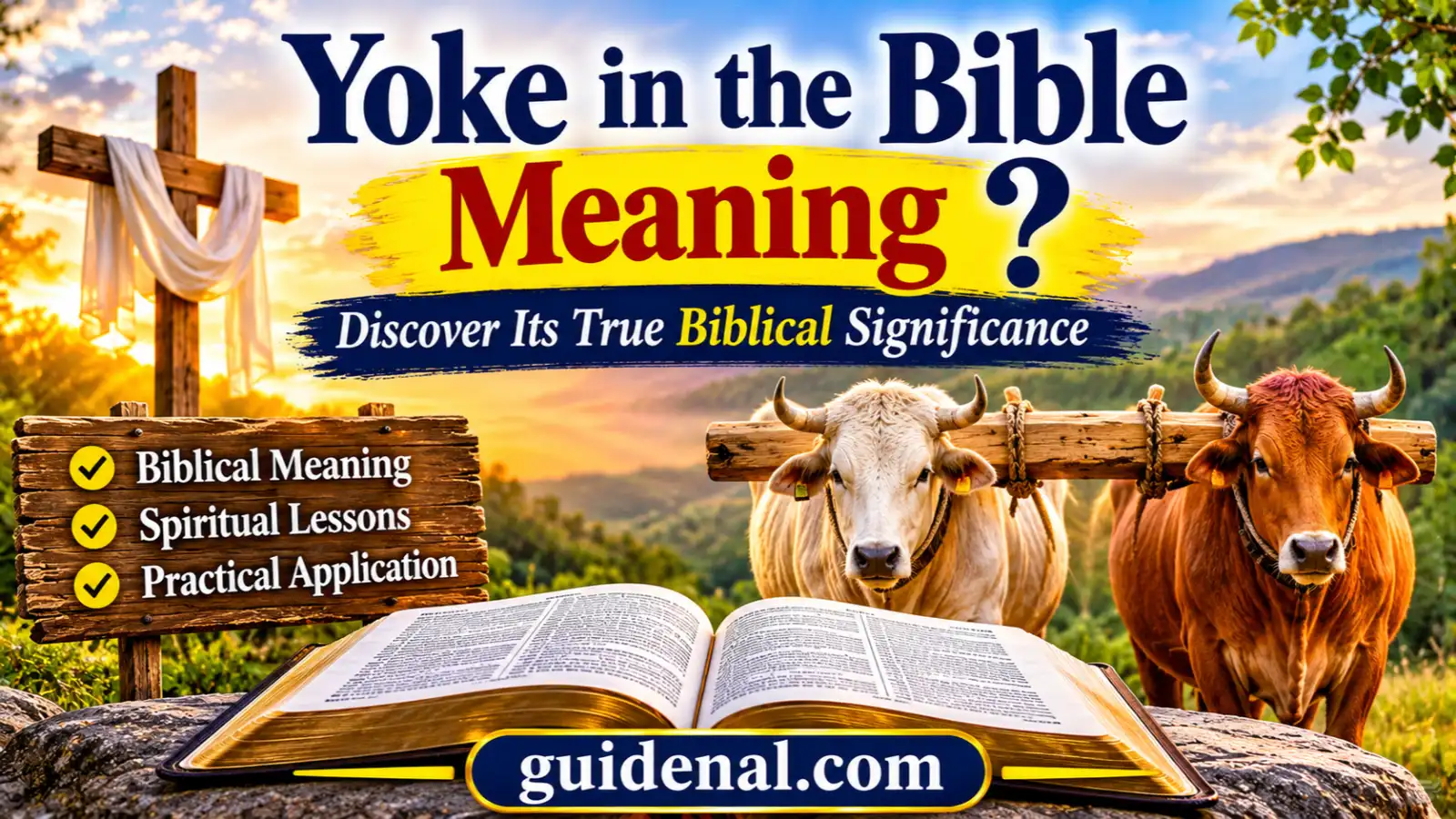
The word yoke may seem like an ordinary farming term, but in the Bible, it carries a much deeper message. It can describe hard labor, slavery, spiritual bondage, responsibility, and even the relationship between a believer and God. When Jesus invited people to take His yoke upon them, He offered something very different from the heavy burdens they already carried.
Perhaps you have read Matthew 11:29 and wondered why Jesus used the word yoke. Does it represent a burden, a commitment, or a promise of peace? And why does the Bible sometimes describe a yoke as something that must be broken?
These questions reveal an important biblical truth: not every yoke leads to the same destination. Some represent oppression and slavery, while others point to obedience, discipleship, and rest in Christ.
Understanding the Meaning of a Yoke in the Bible

A yoke is a wooden farming tool placed across the necks of animals, usually oxen, to help them pull a plow or carry a load together. In ancient times, farmers used yokes to control the direction of their animals and make their work easier to manage.
The Bible uses this familiar farming object to explain several spiritual truths.
In Scripture, a yoke can represent:
- Bondage: A picture of slavery, oppression, and captivity.
- Burden: The weight of difficult responsibilities or suffering.
- Authority: Submission to a ruler, master, or governing power.
- Obedience: A willingness to follow God’s direction.
- Discipleship: Learning from Jesus and living according to His teachings.
- Partnership: Sharing a responsibility or walking in agreement with someone.
In the Old Testament, the yoke often appears in connection with slavery, forced labor, and oppression. For example, the Israelites suffered under Pharaoh’s harsh rule in Egypt. Their experience illustrates how a cruel master can place a heavy burden on others.
God also used the image of a yoke to describe the consequences of Israel’s disobedience and the oppression they experienced under foreign rulers.
In the New Testament, Jesus gives this symbol a beautiful new emphasis. In Matthew 11:29–30, He invites weary people to take His yoke and learn from Him. His invitation is not to enter another form of cruel slavery. Instead, it is a call to follow a gentle and humble Savior.
The original Hebrew word commonly translated as yoke is ol (עֹל). In Greek, the word is zygos (ζυγός). Both words refer to a physical yoke and can also carry figurative meanings involving authority, submission, or burdens.
Understanding this background helps us see why the Bible uses the same symbol to describe both oppression and faithful service.
Best Bible Verses About the Yoke and Their Meanings
The following 20 Bible verses reveal how the meaning of a yoke changes depending on its biblical context. All quotations below are from the King James Version (KJV).
1. Matthew 11:29 – Take My Yoke Upon You
Bible Verse (KJV):
“Take my yoke upon you, and learn of me; for I am meek and lowly in heart: and ye shall find rest unto your souls.”
What This Verse Means:
Jesus spoke these words to people who were tired and burdened. Many carried the weight of daily struggles, religious expectations, and difficult circumstances.
Jesus invited them to take His yoke and become His disciples. His yoke represents a relationship of learning, obedience, and following His direction.
Notice that Jesus describes Himself as meek and lowly in heart. He is not a harsh master who enjoys making people suffer. He is a loving Savior who leads with compassion.
Life Application:
You do not have to face every burden alone. Bring your worries to Jesus and learn to trust His guidance. Let His words shape your decisions instead of allowing fear to control your life.
2. Matthew 11:30 – Jesus Offers a Light Burden
Bible Verse (KJV):
“For my yoke is easy, and my burden is light.”
What This Verse Means:
Jesus explains the difference between His leadership and the heavy demands people often experience.
His yoke is easy because He is a loving and compassionate Master. This does not mean Christian life will always be free from hardship. Following Christ still requires faith, sacrifice, patience, and obedience.
However, believers do not have to carry the impossible weight of earning God’s love or saving themselves through their own efforts.
Life Application:
When life becomes overwhelming, remember that Jesus does not invite you into hopelessness. Trust His grace, follow His teachings, and allow Him to guide you through difficult seasons.
3. Jeremiah 30:8 – God Promises to Break the Yoke
Bible Verse (KJV):
“For it shall come to pass in that day, saith the LORD of hosts, that I will break his yoke from off thy neck, and will burst thy bonds, and strangers shall no more serve themselves of him:”
What This Verse Means:
Jeremiah delivered a message of hope to God’s people during a period of suffering and captivity.
The yoke represents the oppression Israel experienced under foreign powers. God promised that their bondage would not last forever.
This verse reveals God’s concern for His people and His power to bring restoration after a season of suffering.
Life Application:
If you are experiencing a difficult season, remember that suffering does not have to define your future. Keep trusting God’s character and seek His wisdom as you take faithful steps toward freedom.
4. Leviticus 26:13 – God Breaks the Yoke of Bondage
Bible Verse (KJV):
“I am the LORD your God, which brought you forth out of the land of Egypt, that ye should not be their bondmen; and I have broken the bands of your yoke, and made you go upright.”
What This Verse Means:
God reminded Israel that He had rescued them from slavery in Egypt.
The broken yoke represented freedom from Pharaoh’s authority and the restoration of their dignity. They were no longer supposed to live as slaves.
The verse also reminds Israel that their freedom came from God’s saving power, not their own strength.
Life Application:
Remember the ways God has helped you through difficult situations. Let His faithfulness strengthen your trust in Him. Use the freedom He gives you to live with gratitude and obedience.
5. Isaiah 10:27 – The Yoke Shall Be Destroyed
Bible Verse (KJV):
“And it shall come to pass in that day, that his burden shall be taken away from off thy shoulder, and his yoke from off thy neck, and the yoke shall be destroyed because of the anointing.”
What This Verse Means:
Isaiah spoke about God’s judgment against Assyria, a powerful nation that had oppressed His people.
The yoke represents the burden of foreign domination. God promised that the oppression would come to an end.
The final expression in this verse has received different explanations in biblical interpretation. Its central message, however, is God’s power to remove the burden of oppression.
Life Application:
Do not place your ultimate hope in human power or circumstances. Remember that God remains sovereign even when life feels beyond your control.
6. Jeremiah 28:13 – A Broken Wooden Yoke
Bible Verse (KJV):
“Go and tell Hananiah, saying, Thus saith the LORD; Thou hast broken the yokes of wood; but thou shalt make for them yokes of iron.”
What This Verse Means:
This verse comes from Jeremiah’s confrontation with the false prophet Hananiah.
Jeremiah had used a wooden yoke as a sign of Judah’s coming submission to Babylon. Hananiah broke that yoke, claiming that Babylon’s power would soon end.
God responded through Jeremiah with a warning. The wooden yoke would be replaced by an iron one, showing that Judah’s situation would become even more difficult.
This passage teaches that false promises of easy solutions can lead people away from God’s truth.
Life Application:
Do not accept every message simply because it sounds encouraging. Test spiritual claims against Scripture and seek wise, trustworthy biblical guidance.
7. Acts 15:10 – A Yoke That Was Difficult to Bear
Bible Verse (KJV):
“Now therefore why tempt ye God, to put a yoke upon the neck of the disciples, which neither our fathers nor we were able to bear?”
What This Verse Means:
Peter spoke these words during the Jerusalem Council.
Some believers argued that Gentile Christians needed to follow the Jewish practice of circumcision to be saved.
Peter challenged this teaching because salvation comes through the grace of the Lord Jesus Christ, not through the ability to keep the entire law.
Here, the yoke represents an unbearable religious requirement being placed upon believers as a condition of salvation.
Life Application:
Never measure your salvation by human rules or religious performance. Obey God’s Word, but remember that salvation is a gift of grace through faith in Jesus Christ.
8. Galatians 5:1 – Do Not Return to the Yoke of Bondage
Bible Verse (KJV):
“Stand fast therefore in the liberty wherewith Christ hath made us free, and be not entangled again with the yoke of bondage.”
What This Verse Means:
Paul wrote to Christians who were being pressured to depend on circumcision and the law for their standing before God.
He reminded them that Christ had brought them into spiritual freedom.
The yoke of bondage describes returning to a system of religious dependence that treats human performance as the foundation of salvation.
Paul was not teaching that Christians should ignore God’s commandments. He was teaching that obedience must flow from faith and grace rather than an attempt to earn salvation.
Life Application:
Stand firm in the freedom Christ provides. Do not let guilt, fear, or human expectations replace your confidence in God’s grace.
9. 2 Corinthians 6:14 – Do Not Be Unequally Yoked
Bible Verse (KJV):
“Be ye not unequally yoked together with unbelievers: for what fellowship hath righteousness with unrighteousness? and what communion hath light with darkness?”
What This Verse Means:
Paul uses the picture of two animals joined under one yoke to explain the importance of spiritual agreement.
When animals have different strengths or directions, working together becomes difficult. Similarly, Christians can experience serious conflict when they enter close partnerships that pull them away from their commitment to Christ.
This passage is especially important when considering relationships, marriage, and partnerships that deeply influence spiritual direction.
It does not teach Christians to avoid all relationships with unbelievers. Rather, it warns against partnerships that compromise their loyalty to God.
Life Application:
Consider whether your closest relationships encourage you to grow in faith. Choose relationships built on honesty, respect, and shared commitment to biblical values.
10. Jeremiah 27:2 – The Yoke as a Sign of Submission
Bible Verse (KJV):
“Thus saith the LORD to me; Make thee bonds and yokes, and put them upon thy neck,”
What This Verse Means:
God instructed Jeremiah to make yokes and place them around his neck as a prophetic sign.
This unusual act illustrated the submission of several nations to Babylon under God’s judgment.
The physical yoke communicated a message that words alone might not have made as clear.
It showed that the coming political situation was part of God’s announced judgment against those nations.
Life Application:
This passage reminds us that God’s messages deserve careful attention. Do not ignore biblical warnings or assume that every difficult situation will disappear without repentance and wisdom.
11. Jeremiah 27:8 – The Consequences of Rejecting the Yoke
Bible Verse (KJV):
“And it shall come to pass, that the nation and kingdom which will not serve the same Nebuchadnezzar the king of Babylon, and that will not put their neck under the yoke of the king of Babylon, that nation will I punish, saith the LORD, with the sword, and with the famine, and with the pestilence, until I have consumed them by his hand.”
What This Verse Means:
Jeremiah warned surrounding nations that resisting Babylon’s rule would bring serious consequences.
In this historical setting, accepting the yoke meant submitting to the political authority God had allowed to rise.
This was a specific prophetic message concerning Judah and the surrounding nations. It should not be treated as a general command for Christians to accept every form of human authority without question.
Life Application:
Learn to distinguish between godly submission, wise humility, and harmful control. Scripture calls believers to respect authority while remaining faithful to God.
12. Lamentations 3:27 – Bearing a Yoke in Youth
Bible Verse (KJV):
“It is good for a man that he bear the yoke in his youth.”
What This Verse Means:
Lamentations was written in the aftermath of Jerusalem’s destruction.
The yoke in this verse can be understood as discipline, hardship, or learning to live under difficult circumstances.
The writer recognizes that suffering can teach humility and dependence on God.
This does not mean every painful experience is good or that suffering should be ignored. Rather, it highlights the value of learning faithfulness during difficult seasons.
Life Application:
Develop patience, responsibility, and faith while you are young. Allow difficult experiences to teach you wisdom without letting them destroy your hope.
13. Hosea 11:4 – God’s Gentle Leadership
Bible Verse (KJV):
“I drew them with cords of a man, with bands of love: and I was to them as they that take off the yoke on their jaws, and I laid meat unto them.”
What This Verse Means:
God describes His relationship with Israel using the picture of a loving parent caring for a child.
He had guided His people with compassion, provided for them, and treated them with tenderness.
The image of removing the yoke from an animal’s jaw suggests kindness and relief rather than harsh treatment.
This verse reveals the compassionate heart of God despite Israel’s repeated unfaithfulness.
Life Application:
Remember that God’s character is marked by love and compassion. When you feel weak or overwhelmed, approach Him with confidence and trust in His care.
14. Deuteronomy 28:48 – The Yoke of Oppression
Bible Verse (KJV):
“Therefore shalt thou serve thine enemies which the LORD shall send against thee, in hunger, and in thirst, and in nakedness, and in want of all things: and he shall put a yoke of iron upon thy neck, until he have destroyed thee.”
What This Verse Means:
Moses warned Israel about the consequences of abandoning God’s covenant.
The iron yoke represented severe oppression, hardship, and foreign domination.
Unlike a wooden yoke, which could be broken, an iron yoke communicated the seriousness of the coming judgment.
The passage belongs to the covenant warnings given to Israel under the Mosaic Law.
Life Application:
Take your relationship with God seriously. Let His Word guide your choices and remember that disobedience can have consequences in our lives and relationships.
15. Isaiah 9:4 – God Breaks the Oppressor’s Yoke
Bible Verse (KJV):
“For thou hast broken the yoke of his burden, and the staff of his shoulder, the rod of his oppressor, as in the day of Midian.”
What This Verse Means:
Isaiah describes God’s promise to deliver His people from oppression.
The reference to Midian recalls the victory God gave Gideon and Israel in Judges 7, when a small army defeated a much larger enemy through God’s power.
The yoke represents the weight of oppression, while its removal points to God’s saving work.
The surrounding passage also looks forward to the promised child and the hope associated with His reign.
Life Application:
When you face challenges that seem impossible, remember that God’s power is greater than human strength. Place your confidence in Him rather than in your own abilities.
16. Job 30:22 – A Picture of Overwhelming Suffering
Bible Verse (KJV):
“Thou liftest me up to the wind; thou causest me to ride upon it, and dissolvest my substance.”
What This Verse Means:
Although this verse does not directly use the word yoke, it belongs to a passage that describes Job’s overwhelming suffering.
Job felt that his life had become unstable and that he had lost control of his circumstances.
His words show the emotional weight of prolonged suffering.
This is useful when studying the broader biblical theme of burdens, although it should not be treated as a direct teaching about the yoke itself.
Life Application:
You can be honest with God about your pain. Job’s story reminds us that faith does not require pretending that everything is easy.
17. Isaiah 58:6 – Breaking the Yoke of Injustice
Bible Verse (KJV):
“Is not this the fast that I have chosen? to loose the bands of wickedness, to undo the heavy burdens, and to let the oppressed go free, and that ye break every yoke?”
What This Verse Means:
God challenged Israel’s understanding of fasting.
The people were practicing religious activities while neglecting justice, mercy, and compassion.
God explained that true worship should lead to practical love. Breaking the yoke meant helping oppressed people, removing unjust burdens, and treating others with dignity.
This passage shows that faith is not limited to private religious activities. It should shape how we treat people.
Life Application:
Look for ways to help those carrying difficult burdens. Support people who experience injustice, show compassion to the vulnerable, and make your faith visible through loving actions.
18. Nahum 1:13 – Freedom From Oppression
Bible Verse (KJV):
“For now will I break his yoke from off thee, and will burst thy bonds in sunder.”
What This Verse Means:
Nahum delivered a message of judgment against Nineveh, the powerful capital of Assyria.
Assyria had oppressed many nations, including God’s people.
The broken yoke symbolized the end of that oppression. God promised that the power holding His people down would not last forever.
The verse emphasizes God’s authority over nations and His concern for justice.
Life Application:
Do not assume that injustice will continue forever. Trust God’s righteous character and continue choosing what is good, even when circumstances are difficult.
19. 1 Timothy 6:1 – Serving Under Authority
Bible Verse (KJV):
“Let as many servants as are under the yoke count their own masters worthy of all honour, that the name of God and his doctrine be not blasphemed.”
What This Verse Means:
Paul addresses Christian servants living under the social and economic conditions of the Roman world.
The expression under the yoke refers to people living in servitude.
Paul instructed Christian servants to act with integrity and respect so that their conduct would not bring dishonor to the gospel.
This verse describes an ancient social reality. It should not be used to defend slavery or excuse exploitation.
Life Application:
Where you have responsibilities, approach them with honesty and integrity. At the same time, remember that every person has dignity and deserves fair treatment.
20. Matthew 23:4 – The Heavy Burdens of Religious Leaders
Bible Verse (KJV):
“For they bind heavy burdens and grievous to be borne, and lay them on men’s shoulders; but they themselves will not move them with one of their fingers.”
What This Verse Means:
Jesus criticized religious leaders who placed difficult demands on others without showing genuine compassion.
They expected people to follow burdensome rules while failing to live out the mercy and humility God desired.
Although the verse uses the image of heavy burdens rather than the word yoke, it connects closely with the biblical theme of oppressive religious expectations.
Life Application:
Do not make Christian faith unnecessarily difficult for others. Teach biblical truth with love, humility, and compassion. Help people grow closer to Jesus rather than discouraging them with human expectations.
Biblical Themes Connected to the Meaning of a Yoke
The biblical meaning of a yoke connects with several important themes throughout Scripture. These connections help us understand how God calls His people to live.
1. Freedom Through God’s Redemption
One of the strongest themes associated with the yoke is freedom.
In Exodus 6:6, God promised to rescue Israel from Egyptian bondage. He did not forget His people when they suffered under Pharaoh.
The Exodus became a powerful picture of redemption. God delivered His people from slavery and brought them toward the Promised Land.
This story also helps Christians understand salvation through Jesus Christ. Through His death and resurrection, Jesus provides freedom from sin and reconciliation with God.
Spiritual Lesson: True freedom is not simply living without responsibilities. It means belonging to God and walking in His grace.
2. Obedience to God
A yoke can also represent submission and obedience.
Jesus invited His followers to take His yoke and learn from Him in Matthew 11:29.
Discipleship requires more than believing certain facts about Jesus. It means allowing His teachings to influence our actions, relationships, and priorities.
Obedience is not a way to purchase God’s love. It is a response to the love and grace He has already shown.
Spiritual Lesson: Following Jesus means trusting His direction even when His way differs from our personal desires.
3. Grace Instead of Religious Bondage
Acts 15:10 and Galatians 5:1 warn against placing unnecessary religious burdens on believers.
The early church faced disagreements about whether Gentile Christians needed to follow certain Jewish practices to receive salvation.
The apostles taught that salvation comes through the grace of Jesus Christ.
Christians are still called to holiness and obedience, but they must not confuse spiritual growth with earning God’s acceptance.
Spiritual Lesson: Live in gratitude for God’s grace rather than trying to prove your worth through religious performance.
4. Love and Compassion
Isaiah 58:6 teaches that genuine worship should include helping people who are oppressed.
God does not desire empty religious activities that ignore the suffering of others.
The biblical picture of breaking a yoke reminds us to care about justice, mercy, and human dignity.
Spiritual Lesson: Use your time, resources, and influence to make life easier for people who are struggling.
5. Rest and Peace in Jesus Christ
Matthew 11:28–30 connects the yoke with spiritual rest.
Jesus does not promise a life without difficulties. Instead, He invites people to find rest in His presence and learn from His gentle leadership.
The Holy Spirit also helps believers grow in faith, patience, and peace.
Spiritual Lesson: You can experience spiritual peace even when your circumstances remain challenging. Keep your heart close to Christ.
Biblical Symbolism of the Yoke
The yoke is one of the Bible’s most meaningful everyday objects. Its spiritual symbolism becomes clearer when we consider how it was used in ancient life.
1. The Yoke as a Symbol of Bondage
In ancient farming and labor systems, a yoke could represent control and forced service.
Deuteronomy 28:48 uses an iron yoke to describe the severe oppression Israel would experience because of covenant disobedience.
The symbolism communicates a loss of freedom and the painful weight of serving another power.
Spiritual Meaning: Bondage can describe a condition in which something exercises controlling authority over a person’s life. The Bible points people toward freedom through God’s truth and redemption.
2. The Yoke as a Symbol of Authority
A person or nation under a yoke was often under the authority of another ruler.
Jeremiah 27 uses this image to describe the nations that would come under Babylonian rule.
This shows that a yoke could communicate political submission, not simply physical hardship.
Spiritual Meaning: Every person must consider which authority shapes their decisions. Christians are called to recognize Jesus Christ as Lord and follow His teachings.
3. The Yoke as a Symbol of Discipleship
Jesus uses the yoke in Matthew 11:29 to describe the relationship between Himself and His followers.
In ancient times, a yoke joined animals together for work. Jesus uses this familiar picture to invite people into a life of learning and following Him.
His invitation emphasizes His gentle character.
Spiritual Meaning: Christian discipleship means walking with Jesus, learning His ways, and allowing His Word to direct your life.
4. The Yoke as a Symbol of Partnership
A yoke joins two animals so they can work together.
This physical picture helps explain Paul’s warning about being unequally yoked in 2 Corinthians 6:14.
The verse highlights the importance of spiritual agreement in relationships and partnerships that deeply shape a believer’s life.
Spiritual Meaning: The people closest to you can influence your direction. Choose relationships that respect your commitment to Christ.
5. The Yoke as a Symbol of Discipline
Lamentations 3:27 connects bearing a yoke in youth with learning through difficulty.
The passage reminds readers that hardship can develop patience, humility, and wisdom.
However, it does not mean that every painful experience is a punishment from God.
Spiritual Meaning: Difficult seasons can become opportunities to grow in character when we respond with faith and seek God’s wisdom.
Practical Lessons About the Yoke for Christians Today
The biblical teaching about the yoke is not limited to ancient farming or Israel’s history. It offers several important lessons for everyday Christian living.
1. Bring Your Burdens to Jesus
Many people carry emotional, spiritual, and personal burdens without asking for help.
Jesus invites the weary to come to Him in Matthew 11:28.
Prayer gives believers an opportunity to bring their worries before God. You do not need to hide your struggles or pretend to be strong all the time.
Practical Step: Set aside time each day to pray honestly about the things troubling your heart.
2. Learn to Recognize Unhealthy Burdens
Not every responsibility is a burden you should continue carrying.
Some people experience pressure from unhealthy relationships, unrealistic expectations, or religious demands that are not supported by Scripture.
Galatians 5:1 reminds Christians not to return to spiritual bondage.
Practical Step: Examine the expectations influencing your decisions. Ask whether they agree with biblical truth and encourage healthy spiritual growth.
3. Choose Relationships That Strengthen Your Faith
Second Corinthians 6:14 encourages believers to consider spiritual compatibility in important relationships.
This does not mean avoiding everyone who has different beliefs. Christians are called to love their neighbors and share the gospel.
However, close relationships should not consistently pressure you to abandon your faith.
Practical Step: Build friendships with people who respect your values and encourage honesty, love, and spiritual maturity.
4. Practice Humility and Obedience
Jesus describes Himself as meek and lowly in heart.
His example shows that true spiritual strength does not require pride or harshness.
Obedience means listening to God’s Word and putting it into practice.
Practical Step: When making difficult decisions, consider what Scripture teaches before following personal feelings or outside pressure.
5. Help People Carry Their Burdens
Isaiah 58:6 teaches that God values justice and compassion.
A Christian should not add unnecessary weight to someone else’s life. Instead, believers should look for ways to serve and encourage others.
Practical Step: Offer practical help to someone who is struggling. A kind conversation, a meal, or a sincere prayer can make a meaningful difference.
6. Trust God’s Timing During Difficult Seasons
Some biblical passages describe God removing the yoke of oppression. However, Scripture does not promise that every problem will disappear immediately.
Job, Jeremiah, and many other faithful servants experienced long seasons of difficulty.
Their stories remind us that faithfulness can continue even when circumstances are painful.
Practical Step: Continue praying, seeking wise counsel, and taking responsible steps while trusting God’s character.
7. Make Jesus the Center of Your Life
The most important lesson from Matthew 11:29–30 is that Jesus invites people to learn from Him.
He does not call believers to follow a system of fear or endless religious performance.
He calls them to a relationship marked by faith, grace, love, and obedience.
Practical Step: Read the Gospels regularly. Pay attention to the words and actions of Jesus, and look for ways to follow His example.
FAQs:
1. What Does a Yoke Mean Spiritually in the Bible?
A yoke can spiritually represent bondage, authority, responsibility, obedience, or discipleship. Its meaning depends on the passage. In Matthew 11:29, Jesus uses the yoke to describe learning from Him and following His leadership.
2. What Does Jesus Mean by Taking His Yoke?
In Matthew 11:29–30, Jesus invites people to become His disciples and learn from His gentle and humble character. Taking His yoke means accepting His leadership, following His teachings, and trusting Him rather than trying to carry life’s burdens alone.
3. What Does Breaking the Yoke Mean in the Bible?
Breaking the yoke often represents freedom from oppression, slavery, or harmful authority. Isaiah 58:6 uses this image to describe removing injustice and helping oppressed people. Jeremiah 30:8 also connects breaking the yoke with deliverance from foreign domination.
4. What Is the Meaning of Being Unequally Yoked?
Being unequally yoked means entering a close partnership in which people have conflicting spiritual commitments. Second Corinthians 6:14 warns Christians against relationships that compromise their faith. The principle is especially relevant to marriage and other deeply influential partnerships.
5. What Is the Difference Between God’s Yoke and the Yoke of Bondage?
God’s yoke, as described by Jesus, represents discipleship, loving authority, and following Christ. The yoke of bondage represents oppression or dependence on a system that cannot provide true spiritual freedom. Jesus offers rest through His grace and leadership.
6. Does the Bible Say That Christians Should Carry Burdens?
Yes. Galatians 6:2 teaches believers to bear one another’s burdens. However, Matthew 11:28–30 also shows that Christians can bring their personal struggles to Jesus. The Bible encourages both mutual support and dependence on God.
7. What Is the Hebrew Meaning of Yoke?
The common Hebrew word for yoke is ol (עֹל). It refers to a wooden device placed on animals for pulling loads. In biblical passages, it can also represent slavery, oppression, authority, or submission.
8. What Does an Iron Yoke Represent in the Bible?
An iron yoke often represents severe oppression and difficult bondage. Deuteronomy 28:48 uses this image to describe the suffering Israel would experience under foreign domination. It communicates a heavier and more difficult form of submission than an ordinary wooden yoke.
Conclusion:
The biblical meaning of a yoke goes far beyond an ancient farming tool. Throughout Scripture, it represents bondage, oppression, authority, responsibility, and discipleship.
In the Old Testament, God repeatedly promised to deliver His people from oppressive yokes. In the New Testament, Jesus offered something deeply encouraging: an invitation to follow Him and discover rest for the soul.
His yoke does not mean that Christians will never experience hardship. It means that they can live under the loving leadership of a Savior who understands their struggles.
You do not have to earn God’s love through endless religious performance. You are invited to trust His grace, learn from His Word, and walk faithfully with Jesus Christ.
When life feels heavy, remember His beautiful invitation:
Matthew 11:28 (KJV):
“Come unto me, all ye that labour and are heavy laden, and I will give you rest.”
Let this promise encourage you today. Whatever responsibilities or challenges you face, keep your heart close to Christ. His wisdom will guide you, His grace will strengthen you, and His love will remain a foundation for your faith.

I am a content writer at Guidenal, where I create easy-to-understand, well-researched, and reader-focused guides inspired by biblical teachings. Working alongside Naqash Ayub, I strive to deliver trustworthy content that helps readers grow in faith and find practical answers from Scripture.
1 thought on “Yoke in Bible Meaning: What Scripture Reveals About Burdens Bondage and Freedom”